Introduction: 323 How-To-Draw Prompts Review
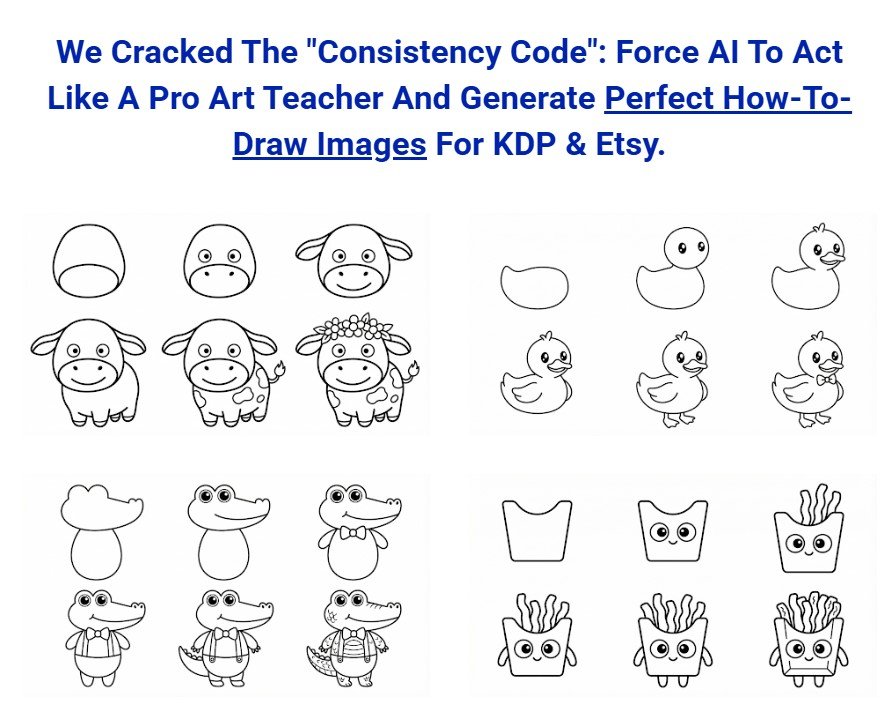
Parents are buying “screen-free” activity books like never before—especially books that give kids a fast win: follow a few simple steps and end up with a cute drawing they’re proud of. That’s the core reason “How to Draw” books keep rising on Amazon, Etsy, and in classroom resources.
The problem is that most creators hit a wall the moment they try to produce step-by-step drawing pages at scale:
- Drawing 300+ clean tutorials by hand is slow and expensive.
- Hiring illustrators can be cost-prohibitive for low-priced books.
- And while AI can generate single cute characters easily, it often struggles to keep the same character consistent across multiple steps (the head shape changes, eyes move, the pose morphs, lines get messy, etc.).
That’s exactly what 323 How-To-Draw Prompts claims to solve.
This review breaks down what the product is, who it’s for, how it works (especially with Gemini Advanced / “Pro” or “Thinking” mode), what’s included, the real-world use cases (KDP, Etsy, Teachers Pay Teachers), and the important limitations you should know before you build a business around it.
Note: The sales page for this product references a specific bestseller story and large revenue numbers. In this review, I’ll treat those as marketing case-study claims—interesting as motivation, but not guaranteed or independently verified. Your results will depend on product quality, compliance, pricing, competition, and execution.
Overview: 323 How-To-Draw Prompts Review
Creator: paulogro
Product: 323 How-To-Draw Prompts
Launch Date: 2026-Jan-05
Front-End Price: $17.00
Guarantee: 30-Day Money Back Guarantee
Niche: 323 How-To-Draw Prompts, how to draw book KDP, Gemini Advanced prompts
Support: Еffесtіvе Rеѕроnѕе
Recommend: Highly recommend!
Contact Info: info@epicfastcash.com

323 How-To-Draw Prompts Review: What Is 323 How-To-Draw Prompts?
323 How-To-Draw Prompts is a prompt pack designed to help you generate step-by-step “how to draw” tutorial images using AI—specifically optimized (per the product’s positioning) for Gemini Advanced.
Instead of asking an AI tool something vague like “make a step-by-step drawing tutorial of a dinosaur,” the pack provides prompts engineered to push the model into producing:
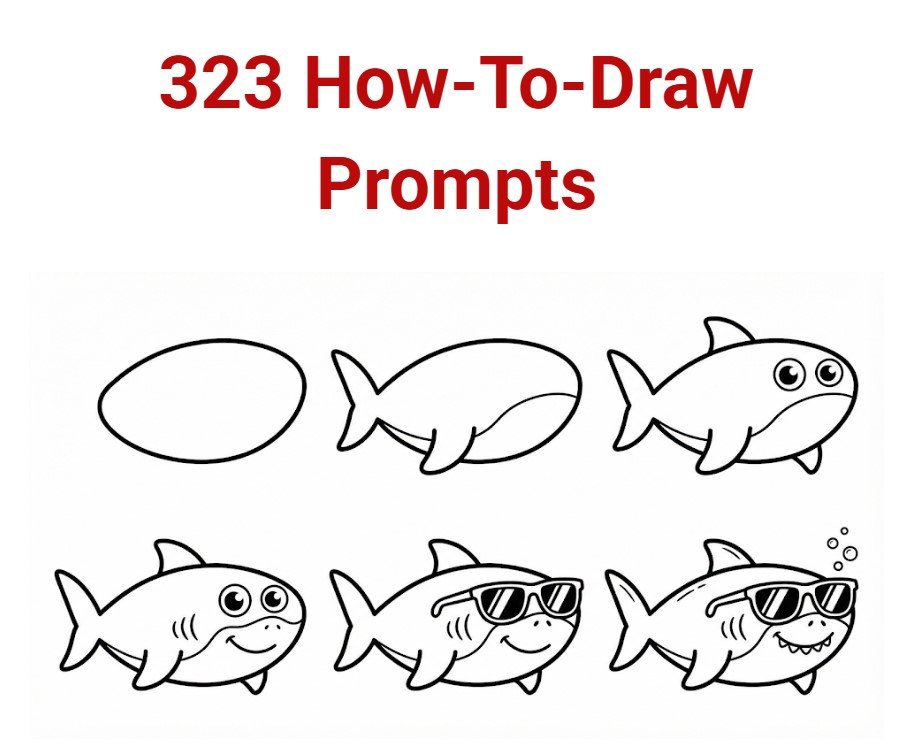
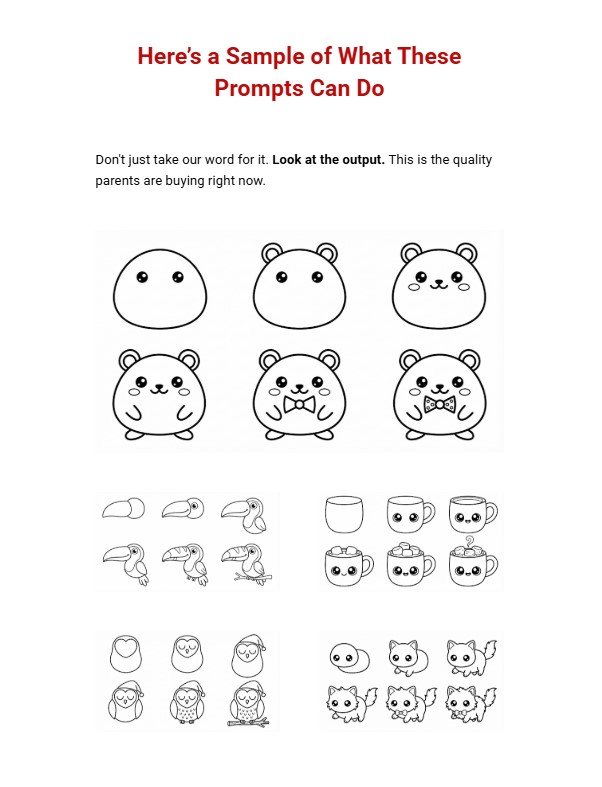
- A clean multi-step progression (commonly a 6-step build)
- A consistent character or object that doesn’t “morph” each step
- Minimal distractions: typically a white background, simple line style, kid-friendly shapes
- Output that can be placed into templates for:
- Amazon KDP books (paperbacks)
- Etsy printables
- Classroom worksheets
In short: it aims to turn AI into a reliable “art teacher” that builds a drawing in small, predictable increments.

Why “How to Draw” Books Are Exploding (The Screen-Free Trend): 323 How-To-Draw Prompts Review
The product’s sales narrative leans heavily on one big market force: parents wanting screen-free activities that actually work.
That trend is real, and it’s not hard to see why:
1) Parents want less screen time—but still need independent play
Many families are trying to reduce tablet/phone time. But parents also need activities that:
- keep kids engaged for more than 3 minutes
- don’t require constant adult supervision
- don’t create a huge mess
“How to draw” books hit a sweet spot: a pencil and paper is enough.
2) Kids crave “quick wins”
A big reason step-by-step drawing books sell: children can finish a page quickly and feel proud.
Coloring books are calming, but they don’t always deliver the same “I made this” feeling. Drawing tutorials do—especially when the steps are simple and the final image looks cute.
3) The category is evergreen
Kids keep being born. They keep turning 4, 5, 6, 7. Parents keep searching for:
- boredom busters
- rainy-day activities
- travel activities
- gift ideas
So even when individual trends change (dinosaurs spike, then unicorns spike), the core demand stays.
4) Strong perceived value vs. low-content books
A “how to draw” book feels like it teaches a skill:
- fine motor skills
- visual sequencing
- confidence-building
- patience and focus
That perceived value can support higher pricing than notebooks, journals, or generic pattern books.
The Real Bottleneck: AI “Consistency” Across Steps: 323 How-To-Draw Prompts Review
Anyone who has tested AI image generation for instructional art pages runs into the same issue:
AI is great at “one image” and weak at “one image split into 6 consistent steps”
A standard image model will often:
- change proportions between step 2 and step 4
- alter the face (eyes, mouth, head shape)
- add extra limbs or remove details
- shift style from thin lines to shaded art
- accidentally introduce background artifacts
That inconsistency is deadly for kids’ drawing tutorials because children rely on predictability.
Why free or basic models often fail
Lower-tier models can generate a cute character, but step-by-step “build order” is a more complex instruction. You’re asking for:
- a strict layout
- a controlled progression
- “additive” logic (each step adds something, nothing changes)
- consistent stroke weight and viewpoint
Many models interpret that loosely.
So the product positions its prompts as a solution: prompts designed to enforce a consistent, teacher-like progression.
How These Prompts Claim to Fix the Problem: 323 How-To-Draw Prompts Review
The product frames its method as a “consistency code”—a set of prompt rules meant to reduce hallucinations and keep steps stable.
While the exact wording varies, the core mechanisms described are easy to understand and (in principle) reasonable for prompt engineering:
1) A fixed “invisible grid” layout
The prompt instructs the AI to output multiple steps arranged cleanly—commonly a 2×3 or 3×2 style page layout—on a white background.
Goal: a print-ready page you can drop into a book template.
2) “Feature freezing” / locked character identity
This is the heart of it: the prompt emphasizes that:
- step 1 establishes the core shapes
- each next step adds lines
- nothing from previous steps is redrawn differently
Goal: stop the AI from “improving” the drawing halfway through.
3) A kid-friendly art style
The prompts aim for:
- simple shapes
- thick/clean outlines
- minimal detail
- cute, wide-set eyes (common in kawaii styles)
Goal: make the final drawing achievable for young children.
4) “No text, no borders” output rules
Many creators want raw art only—no numbers, no labels, no boxes—so they can add typography in Canva or InDesign later.
Goal: faster layout, consistent book branding.
Important reality check
Even great prompts don’t “guarantee perfection,” because:
- model outputs can vary
- the platform may update
- the same prompt can produce different compositions across attempts
But a good prompt framework can reduce retries and produce more usable pages per generation.
What You Actually Get (323 Prompts + 40 Niches): 323 How-To-Draw Prompts Review
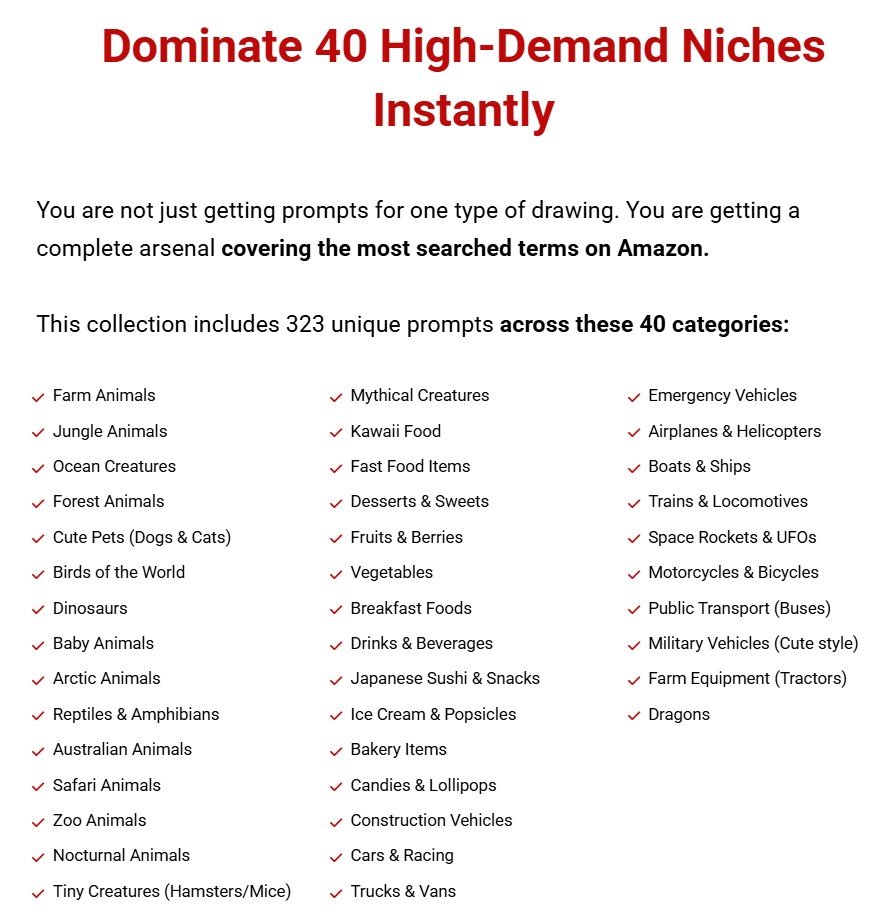
The pack contains 323 prompts, organized across 40 categories (the exact list may be presented slightly differently depending on the vendor, but the general scope includes animals, food, vehicles, and fantasy).
Here’s why that matters from a business standpoint:
- You’re not limited to one book idea.
- You can test multiple micro-niches quickly.
- You can build a series (Book 1: Farm Animals, Book 2: Ocean Creatures, etc.).
- You can create Etsy bundles aligned to seasonal demand (summer ocean packs, winter arctic packs).
Category coverage (as advertised)
Typical included niches:
- Farm, jungle, ocean, forest animals
- Pets, birds, baby animals
- Dinosaurs, reptiles, arctic animals
- Mythical creatures (dragons, etc.)
- Kawaii food, desserts, sushi, drinks
- Construction vehicles, emergency vehicles, trains, rockets, and more
From an SEO/product strategy perspective, those are smart choices because they map to common parent searches:
- “how to draw animals for kids”
- “how to draw dinosaurs step by step”
- “how to draw cute food”
- “vehicle drawing book for boys/girls”
How to Use 323 How-To-Draw Prompts with Gemini Advanced: 323 How-To-Draw Prompts Review
The product states it’s optimized for Gemini Advanced, emphasizing a higher-reasoning mode (often described as “Pro” or “Thinking” mode depending on the interface).
A practical workflow looks like this:
Step 1: Open Gemini Advanced and select the strongest model option available
If the UI allows model selection, pick the mode that:
- spends more time reasoning
- supports image generation (or image output)
- tends to follow formatting instructions better
If you use a weaker mode, you may get:
- inconsistent steps
- messy spacing
- style drift
Step 2: Paste a prompt and generate
Use one prompt per concept (e.g., “cute dinosaur,” “fire truck,” “ice cream”).
If the output is close but not perfect, don’t panic—use controlled iteration:
- ask for “same layout, same character, fix step 4 consistency”
- specify “same viewpoint, no rotation”
- reinforce “additive only, do not redraw earlier steps”
Step 3: Download and organize assets immediately
Create folders by niche:
- Animals → Dinosaurs
- Vehicles → Construction
- Food → Desserts
This becomes valuable later when you’re assembling books and Etsy sets.
Step 4: Place into a template (Canva, Affinity Publisher, InDesign, PowerPoint)
Most creators build:
- an interior template with margins + bleed awareness
- repeated page structure for speed
- consistent headings (if you choose to add text)
Step 5: Export print-ready PDFs for KDP or printable PDFs for Etsy
For KDP, you’ll want to confirm:
- trim size (8.5×11 is common for kids’ activity books)
- margins (gutter margin matters)
- 300 DPI images (or high-resolution vector-like line art)
323 How-To-Draw Prompts Review: Publishing Workflows – KDP, Etsy, TPT, and More
One reason prompt packs like this appeal to creators is that the same assets can be repurposed across multiple channels (assuming your license permits it and you’re following platform rules).
1) Amazon KDP (Paperback “How to Draw” Books)
Typical book structure that sells:
- Title page
- “How to use this book” page (encourage practicing and repeating)
- 40–100 tutorial pages
- Bonus pages: blank practice sheets, “draw your own” prompts
Best practice: Keep the first 10 pages especially easy. Parents don’t want a book that frustrates their child.
Series strategy:
Instead of one giant “everything” book, consider:
- How to Draw Cute Animals (Vol. 1)
- How to Draw Dinosaurs
- How to Draw Vehicles
- How to Draw Cute Food
Series can build brand recognition.
2) Etsy Printables (Instant Downloads)
Etsy buyers like:
- themed packs (10–30 pages)
- seasonal bundles
- classroom-friendly sets
Strong product ideas:
- “Dinosaur Draw-Along Pack (20 pages)”
- “Construction Vehicle Drawing Steps”
- “Kawaii Food Drawing Worksheets”
Conversion tip: Etsy thrives on listing photos. Show:
- 2–3 sample pages
- a close-up of line quality
- a mockup of kids using the sheets
3) Teachers Pay Teachers (TPT)
Teachers buy:
- early finisher activities
- sub plans
- art centers
- fine motor skill practice pages
To make it classroom-ready:
- include a simple instruction header
- include a name/date line
- include a blank “practice box” under each tutorial
4) Homeschool bundles and “morning basket” resources
Homeschoolers often value:
- reusable units
- themed learning packs
- “do this independently” activities
Bundle idea:
- “Ocean Unit: Draw + Fact Cards + Coloring Pages”
5) Content marketing (YouTube Shorts, TikTok, Pinterest)
Step-by-step drawing is naturally engaging content:
- show step 1 → step 6 quickly
- add a voiceover: “Pause and draw with me”
- link to your book or printable in the description
Pinterest in particular can be powerful for printables and kids’ activities if you create pins for each niche.
Quality Check: What Makes a “Good” How-To-Draw Page?
If you want to compete with top sellers, your pages must feel effortless to follow. Here’s what to look for when judging AI-generated outputs:
The 7-point checklist
- Same character identity across all steps (especially eyes and head shape)
- Additive progression (each step adds lines; nothing disappears)
- Consistent viewpoint (no rotation midway through)
- Line weight consistency (no sudden thick-to-thin changes)
- Clean white background (no gray noise, no artifacts)
- No distracting shading (unless your book is for older kids)
- Final step looks “complete” but still drawable by your target age group
If your output fails #1–#3, it’s not ready. That’s where prompt quality and model choice matter most.
📊 Pricing & OTOs – 323 How-To-Draw Prompts
| Package | Price | What You Get | Best For |
|---|---|---|---|
| Front-End | $17 (One-Time) | ✔ 323 How-To-Draw Prompts ✔ Beginner-friendly step-by-step ideas ✔ Perfect for kids’ books, printables, and low-content publishing | New creators testing the market |
| OTO 1 – 757 Prompts | $27 (One-Time) | ✔ 757 fresh prompts ✔ Deeper variety & niche coverage ✔ Ideal for 500-page mega guides ✔ Publish nonstop for 12+ months | Serious publishers scaling fast |
| OTO 2 – 2,889 Prompts | $67 (One-Time) | ✔ 2,889 prompts across 107 categories ✔ Fantasy, holidays, animals, education ✔ Perfect for bundles & 200-page books | High-volume creators & Etsy sellers |
| OTO 3 – 7,560 Prompts | $97 (One-Time) | ✔ 7,560 prompts in 280 categories ✔ Ready for Gemini Pro 6-step grids ✔ Books, downloads, premium vault access | Power users & full-time publishers |
🔥 Quick Value Breakdown
- $17 FE → Start fast with proven prompts
- $27 OTO 1 → Scale content without burnout
- $67 OTO 2 → Dominate multiple niches
- $97 OTO 3 → Lifetime drawing prompt vault
💡 No monthly fees. No subscriptions. One-time payments only.
Pros, Cons, and Honest Limitations: 323 How-To-Draw Prompts Review
No prompt pack is magic. Here’s a balanced view based on how these products typically perform, and what’s implied by the product’s positioning.
Pros
1) Time savings
If the prompts reduce retries and produce usable pages quickly, that’s a big advantage versus manual illustration.
2) Built for a proven format
Step-by-step drawing books are not a speculative niche. They’ve sold for years, and the “screen-free” angle strengthens demand.
3) Broad niche coverage
323 prompts across animals, food, vehicles, fantasy makes it easier to test multiple book ideas and Etsy bundles.
4) Template-friendly output goals
By discouraging text, borders, and labels, the outputs are easier to standardize in your own layout system.
Cons / Limitations
1) Gemini Advanced is a paid requirement
That adds a monthly cost. If you’re bootstrapping, it matters.
2) Results can still vary
Even with strict prompts, you may need to regenerate or tweak instructions.
3) Competition is real
If a niche is hot, other creators will enter it. You’ll need differentiation (more on that below).
4) You still need publishing skills
Prompts don’t handle:
- cover design
- keyword research
- category selection
- book formatting
- customer satisfaction (quality control)
5) You must handle compliance and originality carefully
AI-assisted publishing is allowed in many contexts, but you must follow platform rules and avoid infringing on copyrighted characters, brands, or trademarked terms.
Alternatives (Midjourney, DALL·E, Free Tools, Hiring Illustrators): 323 How-To-Draw Prompts Review
If you’re deciding whether this prompt pack is worth it, compare it against realistic alternatives:
Option A: Free or basic AI models
- Pros: cheap
- Cons: often worse at multi-step consistency and strict layout; more retries; more cleanup
Option B: Midjourney-style image generation
- Pros: beautiful art styles, strong aesthetics
- Cons: multi-step instructional consistency is not its default strength; may require heavy iteration and post-processing
Option C: DALL·E / other image tools
- Pros: can follow instructions well in some cases
- Cons: may still drift across steps; layout control varies
Option D: Hire an illustrator
- Pros: best consistency, most professional
- Cons: expensive, slower, harder to scale to hundreds of drawings
Option E: Draw them yourself (Procreate/Illustrator)
- Pros: total control, unique style
- Cons: slow unless you’re already an artist
Where 323 How-To-Draw Prompts fits:
It’s for creators who want a scalable pipeline, and who are willing to use a higher-tier model to reduce inconsistency.
Legal, Policy, and Ethics (KDP Rules + AI Content): 323 How-To-Draw Prompts Review
This section matters more than most people think—especially in kids’ products.
1) Avoid copyrighted characters and brands
Do not create “how to draw Pikachu,” “how to draw Elsa,” “how to draw SpongeBob,” etc. Even “inspired by” can be risky.
Stick to:
- generic dinosaurs
- original cute animals
- generic vehicles
- original fantasy creatures
2) Check Amazon KDP’s current AI/content rules
Platforms evolve. Before publishing, verify:
- AI disclosure requirements (if applicable)
- content restrictions for low-content vs. activity books
- metadata rules (keywords must not be misleading)
3) Don’t publish low-effort duplicates
If you generate hundreds of near-identical pages and publish dozens of barely-different books, you’re more likely to get poor reviews or account issues.
4) Licensing: understand what you can sell
This is crucial:
- What rights does the prompt pack grant you?
- Are generated images allowed for commercial use?
- Any restrictions on resale, redistribution, or use in templates?
Also check Gemini’s current terms regarding generated outputs.
5) Quality and child experience
Kids notice when steps don’t make sense. Parents notice even faster (and leave reviews).
Your long-term success comes from:
- clean progression
- appropriate difficulty
- thoughtful book structure
Who This Is Best For (And Who Should Skip It): 323 How-To-Draw Prompts Review
Best for:
- KDP publishers who want to expand into higher-value kids’ activity books
- Etsy printable sellers building themed activity bundles
- Homeschool resource creators
- Teachers/TPT sellers who want consistent worksheet-style art
- Non-artists who can handle basic layout and listing creation
Probably not for:
- People who want “press button, get bestseller” results
- Creators unwilling to pay for Gemini Advanced (or any paid AI tier)
- Anyone not prepared to learn formatting, keyword research, and compliance
- Those expecting zero iteration (you may still need retries)
How to Stand Out in a Competitive Market: 323 How-To-Draw Prompts Review
Even if the prompts generate great pages, your competitive advantage usually comes from packaging, positioning, and user experience.
Here are practical differentiation ideas that don’t require being an artist:
1) Choose a clear age range and design for it
- Ages 4–6: fewer details, chunkier shapes, fewer steps
- Ages 7–10: more steps, more variety, mild complexity
Put the age range on the cover and in the description—parents love clarity.
2) Add practice space intentionally
A common complaint: “My kid needs room to try it.”
Include:
- a blank practice box under each tutorial, or
- a facing page for practice (left tutorial, right blank)
3) Turn it into a themed experience
Instead of “How to Draw Cute Animals,” try:
- “How to Draw Cute Animals: Forest Adventure Edition”
- include mini story prompts: “Draw this fox sneaking through the woods”
4) Add bonus “creative mode” pages
After every 10 tutorials, add:
- “Now change the face!”
- “Add a hat!”
- “Draw a background!”
Kids feel ownership, and parents perceive higher educational value.
5) Build a recognizable brand style
Pick consistent:
- line thickness
- eye style
- page header style
- character vibe (kawaii, cartoon-simple, etc.)
Consistency across books leads to repeat buyers.
Final Verdict: 323 How-To-Draw Prompts Review
323 How-To-Draw Prompts is built around a real, profitable product format: simple step-by-step drawing pages that create quick wins for kids and deliver screen-free value for parents. Its main promise—improving AI consistency across multi-step tutorials—is also a genuine pain point that many creators face when trying to produce these books at scale.
If you already understand (or are willing to learn) the basics of:
- prompt iteration
- page layout and print formatting
- platform compliance (KDP/Etsy/TPT)
- differentiation through packaging and brand
…then a structured prompt pack like this can be a practical way to speed up production and explore multiple niches without hiring an illustrator.
If you’re hoping for a shortcut that eliminates competition, quality control, or publishing know-how, you’ll likely be disappointed—because the market rewards good books, not just generated images.
Frequently Asked Questions: 323 How-To-Draw Prompts Review
Is 323 How-To-Draw Prompts beginner-friendly?
If you can copy/paste prompts and use Canva (or similar), you can use it. The bigger learning curve is usually publishing (formatting, covers, keywords), not the prompts themselves.
Do I need Gemini Advanced specifically?
The product positions Gemini Advanced as the recommended requirement for best consistency. In general, stronger paid models tend to follow strict multi-step instructions better than free tools.
Can I use the outputs in Amazon KDP books?
Often yes—if the AI tool’s terms and the prompt pack’s license allow commercial use, and you comply with KDP policies. Always verify the latest rules before publishing.
Will this help me earn $10,000/month?
No prompt pack can promise that. Revenue depends on niche choice, differentiation, ad strategy (if any), reviews, and product quality. Treat large income claims as aspirational examples, not expected outcomes.
What niches are most likely to sell?
Historically strong:
- animals (farm/ocean/jungle)
- dinosaurs
- vehicles (construction/emergency)
- cute food/kawaii
But your best niche is often the one you can execute with the clearest audience and strongest listing.
How many pages should a “how to draw” book have?
Common ranges:
- 40–60 pages for a focused niche
- 80–100 pages for “ultimate” collections
Add practice pages to increase value.