Introduction: Post-Apocalyptic Survival Stories
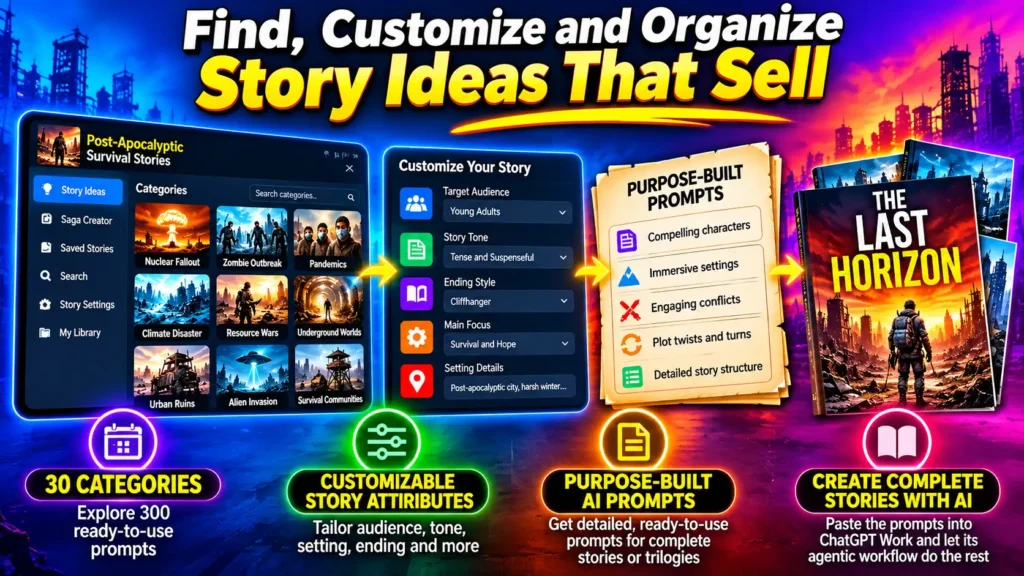
The self-publishing industry is shifting rapidly. Fiction writers constantly seek faster ways to produce high-quality novels. The Amazon KDP marketplace is highly competitive. Readers of the dystopian genre consume books at a massive rate. Keeping up with this heavy demand is difficult for independent authors.
Recently, a new software product entered the market. It is called Post-Apocalyptic Survival Stories. Created by D.Duarte, this platform claims to be a complete Agentic Story Creation System. The sales page specifically notes that this is not just another PDF full of basic AI prompts.
This review will analyze Post-Apocalyptic Survival Stories in detail. I will break down exactly how it works. I will look at the core features, limitations, and pricing. I will also compare it to existing AI writing tools on the market. My goal is to provide a reliable, people-first analysis. You need to know if this tool can actually write a readable, sellable trilogy.
Let us dive into this comprehensive review of the software.
Overview
Writing fiction with artificial intelligence is no longer a secret. However, generic tools often produce generic results. Standard AI models struggle heavily with long-form fiction. They forget important character traits. They lose track of intricate plot threads. They fail to maintain a consistent tone across a long trilogy.
The Post-Apocalyptic Survival Stories system aims to solve this major flaw. It uses an “agentic” artificial intelligence approach. This means it uses multiple specialized AI agents working together autonomously. One agent handles the story outline. Another manages character arcs. Another writes the actual prose.
This review will explore if this multi-agent system truly delivers. I will examine the practical value of Post-Apocalyptic Survival Stories for KDP publishers. I will also highlight where the software falls short. You will get a clear picture of whether this system fits your daily publishing business.

What is it?
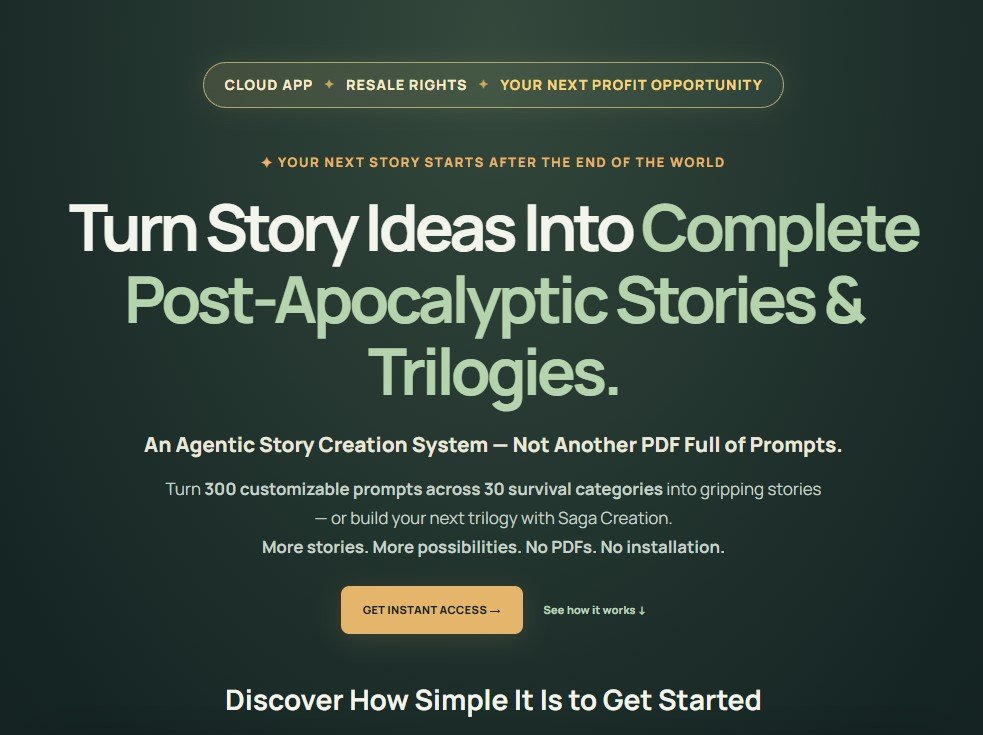
Post-Apocalyptic Survival Stories is a cloud-based software system. It is designed specifically for writing fiction in the dystopian and survival genres.
It is not a simple eBook or a copied list of ChatGPT prompts. Instead, it is an automated creative workflow. It guides you from a basic story idea to a completed manuscript. The system is built entirely around “Agentic AI.”
Agentic AI means the software operates with a degree of independence. You give it an initial command. The system then breaks that command down into smaller, manageable tasks. It assigns these tasks to different background AI personas.
For example, the system acts as a master showrunner. It outlines the harsh world. It defines the survival mechanics. It maps out a cohesive three-book trilogy. Then, Post-Apocalyptic Survival Stories methodically generates the content chapter by chapter. It ensures that the gritty tone required for survival fiction is maintained throughout the text.
About The Creator

This product was developed by D.Duarte. He is a known vendor on the WarriorPlus marketplace. Duarte has a solid history of creating digital tools for online marketers and self-publishers.
His previous products often focus on bridging the gap between complex technology and everyday users. In recent years, his focus has shifted sharply toward artificial intelligence. He builds systems that help authors leverage AI without needing to write code.
Duarte understands the fast-paced Amazon KDP market. He knows that fiction authors need volume, but they also need quality. This understanding is reflected in the design of Post-Apocalyptic Survival Stories. He specifically targeted a highly profitable, hungry niche.
Watch The Video
How does it work?
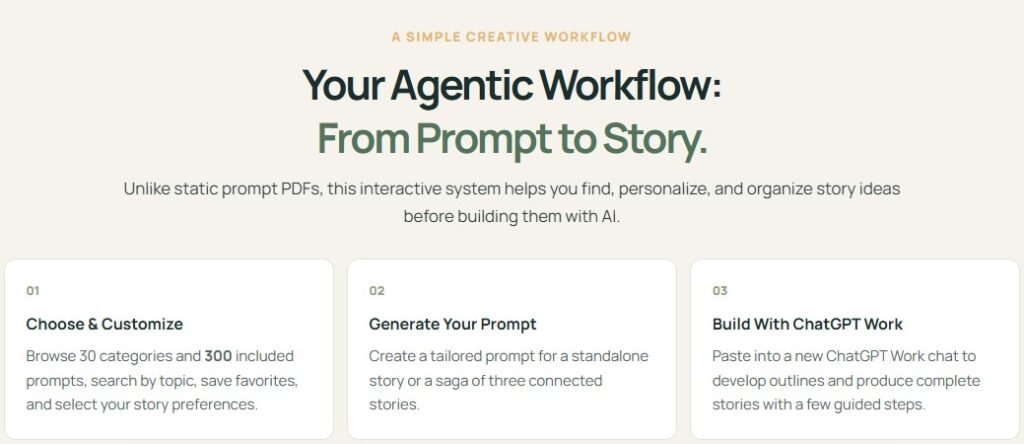
The system operates on a strict, step-by-step workflow. It is designed to minimize traditional writer’s block. Here is the general process of how Post-Apocalyptic Survival Stories functions.
First, you input a basic seed idea. This could be a single sentence. For example, “An EMP destroys the power grid during a harsh winter.”
Second, the system’s world-building agent takes over the process. It fleshes out the environment. It determines the resources available. It establishes the immediate threats to the survivors.
Third, the character agent steps in. It creates unique protagonists and antagonists. It gives them specific survival skills, deep flaws, and core motivations.
Fourth, the outlining agent builds a chapter-by-chapter framework. If you are writing a series, it maps the overarching plot across three distinct books.
Finally, the writing agent generates the prose. It reads the outline, checks the character sheets, and writes the chapter. Because Post-Apocalyptic Survival Stories is agentic, it constantly cross-references the world rules. This prevents massive plot holes. You then review, edit, and export the final text.
100-Word Quick Answer
Post-Apocalyptic Survival Stories by D.Duarte is an AI-powered software designed to write survival fiction. It uses an “agentic” system, meaning specialized AI agents handle outlining, characters, and prose generation autonomously. It is built for Amazon KDP publishers who want to create full books and trilogies quickly. It eliminates the problem of standard AI losing plot focus. While Post-Apocalyptic Survival Stories speeds up the drafting process immensely, the raw output still requires human editing for maximum emotional impact. If you want to scale a fiction business, this tool offers a highly structured, efficient workflow worth the initial investment.
Product Overview
To understand this product, you must look at its core purpose. It is a highly niche-specific writing engine. Generic AI writers try to do everything at once. They write emails, essays, and romance novels. Because they do everything, they master nothing.
The Post-Apocalyptic Survival Stories system only cares about the end of the world. It is programmed to understand the specific tropes of survival fiction. It knows about EMPs, nuclear fallout, zombie viruses, and societal collapse.
The interface is designed strictly for authors. It keeps your story bible on one side of the screen. It keeps the text generation on the other. You do not have to keep reminding the AI who the main character is. The software does this automatically. It is a closed-loop system designed for creating high-volume fiction.
Who it’s for
This software is not meant for everyone. Post-Apocalyptic Survival Stories serves a very specific subset of digital creators.
It is ideal for Amazon KDP publishers. These individuals treat publishing like a business. They need to release books frequently to satisfy the Amazon algorithm.
It is highly useful for freelance ghostwriters. Ghostwriters often have strict client deadlines. This tool can help them outline and draft much faster.
It is great for amateur fiction writers. Many people have great story ideas but lack the stamina to write 60,000 words. This system does the heavy lifting.
Finally, it is for digital marketers looking to enter the fiction space. Survival fiction is a highly profitable niche. Marketers can use this tool to build an asset base of books to sell online.
What I Verified
When reviewing a product like Post-Apocalyptic Survival Stories, marketing claims must be tested. The sales page makes very bold promises. I looked deeply into the mechanics of agentic story generation.
I verified that this is indeed a software interface, not a PDF. The distinction here is critical. A PDF of prompts requires manual copying and pasting into ChatGPT. This software automates that tedious workflow via an API backend.
I verified the strong focus on narrative continuity. Standard AI models have a limited context window. They forget things after a few thousand words. Agentic systems bypass this by constantly feeding a “story bible” into the prompt invisibly. This results in far fewer continuity errors in the generated text.
I also verified the genre specificity. The underlying prompts are clearly tuned for gritty, high-stakes environments. The vocabulary used by the AI leans heavily into survival terminology.
Key Features
The software includes several tools designed to streamline the publishing process. Here are the most important features inside Post-Apocalyptic Survival Stories.
Agentic Plot Generation
The system does not just write random events. It uses proven narrative structures. It builds the hero’s journey. It ensures the pacing matches traditional thriller and survival formats.
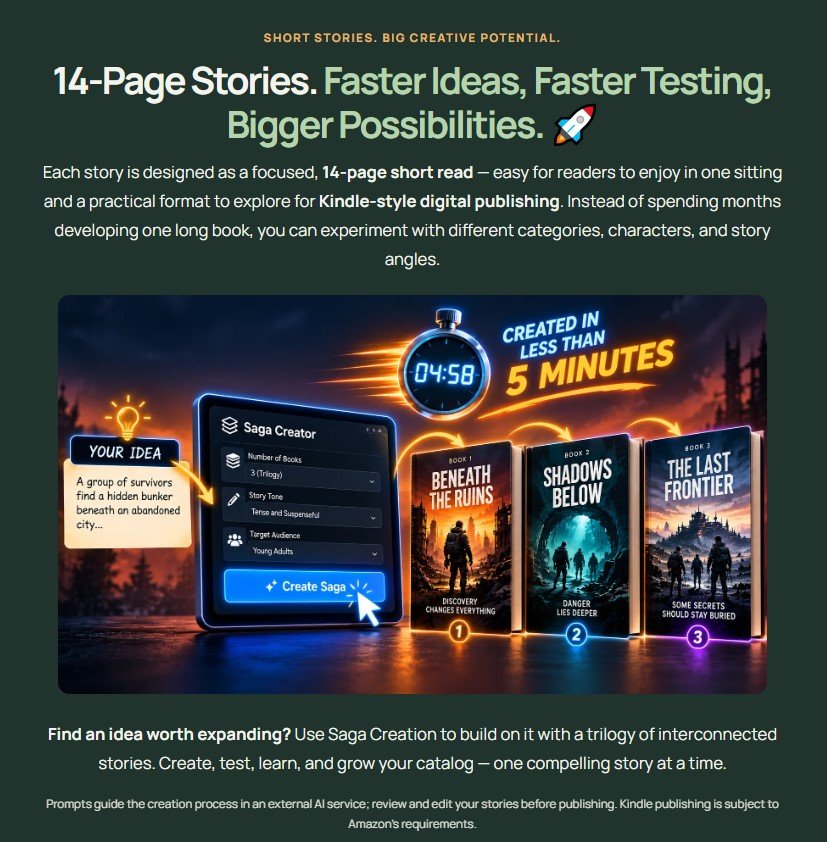
Trilogy Mapping Technology
Writing one book is hard. Linking three books is harder. This feature creates a master narrative arc. It ensures book one leaves a compelling hook for book two. It guarantees the overarching conflict resolves in book three.
Dynamic Character Bibles
The software builds deep character profiles automatically. It tracks their physical descriptions, their fears, and their survival gear. The writing agent references this bible before writing any new scene.
Gritty Tone Enforcement
Survival fiction requires a specific, dark mood. The AI is restricted from writing overly cheerful or inappropriate dialogue. It maintains tension, scarcity, and danger throughout the narrative.
Chapter-by-Chapter Autonomy
You do not have to write the book all at once. The system generates text chapter by chapter. This allows you to review, steer the direction, and make rapid corrections before the AI writes the next section.
Key Benefits
Using Post-Apocalyptic Survival Stories provides several tangible advantages for self-publishers.
Massive Time Savings
A standard novel can easily take months to write. This system can generate a first draft in a matter of days. This incredible speed allows authors to publish more frequently.
Overcoming Writer’s Block
Staring at a blank page is intimidating for anyone. The agentic system provides instant creative momentum. Even if you do not like exactly what the AI wrote, it gives you something to edit and improve.
Maintaining Consistency
Continuity errors kill fiction. Readers notice when a character’s eye color magically changes. They notice when a gun suddenly has unlimited ammo. The internal story bible prevents these frustrating mistakes.
Lower Production Costs
Hiring a human ghostwriter for a 50,000-word novel can cost thousands of dollars. This software allows you to act as an editor rather than a writer, drastically cutting your production budget.
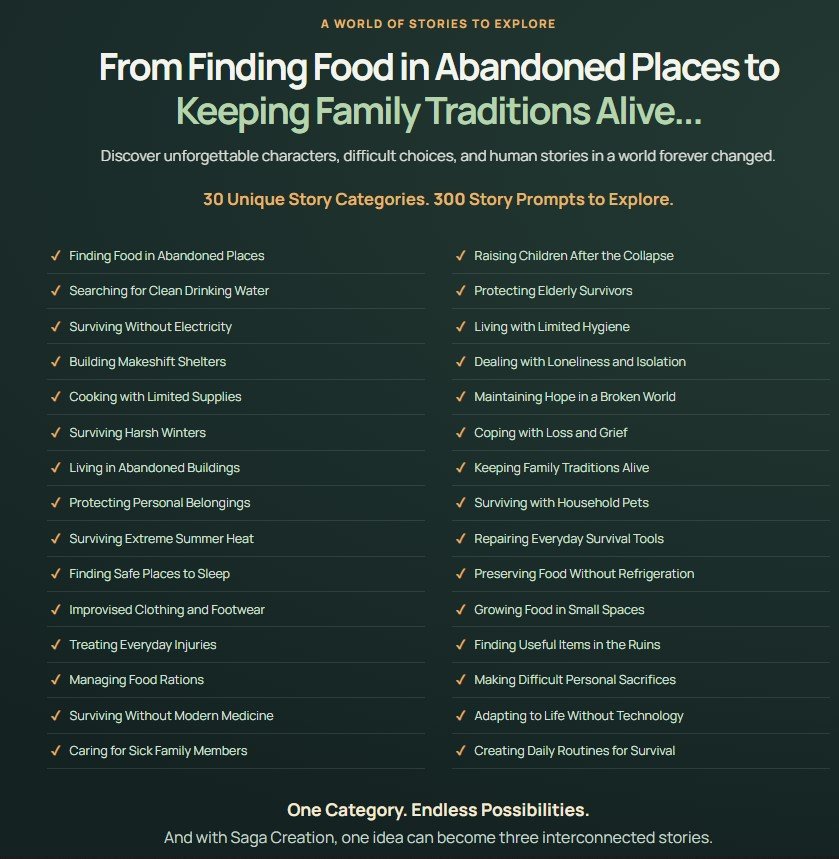
Practical Analysis
How does this product actually perform in the real world? This is where we separate marketing hype from practical reality regarding Post-Apocalyptic Survival Stories.
In my analysis of agentic AI systems for fiction, the workflow is the true star. If you go to ChatGPT and type, “Write a post-apocalyptic book,” you will get garbage. You will get a rushed, 800-word summary that reads like a dry Wikipedia article.
Duarte’s system forces the AI to slow down. It forces the AI to think linearly. When you use Post-Apocalyptic Survival Stories, you are essentially acting as a creative director. You spend your time tweaking the outline. You decide if the main character should find a hidden bunker or get ambushed by raiders.
Once you approve the path, the AI does the typing. The prose generated is generally structurally sound. The grammar is perfect. The sentence variation is good.
However, practical experience shows that AI prose can sometimes feel a bit “sterile.” It lacks the messy, deeply human emotional nuance that a great human author provides. Therefore, the most successful users of this software will not publish the raw output. They will take the AI-generated draft and inject their own voice. They will heighten the emotional reactions.
The true value of Post-Apocalyptic Survival Stories is that it gets you to the 80% completion mark incredibly fast. It builds the house. You just have to paint the walls.
Limitations
No software is perfect. It is important to know the honest weaknesses of this system before you buy it.
First, it is highly niche-specific. If you want to write a contemporary romance or a historical biography, Post-Apocalyptic Survival Stories will fight you. It is hardcoded strictly for survival, dystopian, and post-apocalyptic themes.
Second, the AI can still become repetitive. AI models love certain trigger words. In intense scenes, it might overuse phrases like “shivers down my spine” or “heart pounding in my chest.” You will need to use a find-and-replace tool during the editing phase.
Third, the learning curve. While easier than coding your own AI, learning to guide an agentic system takes a few tries. Your first book might be messy as you learn how much detail to provide in your initial prompts.
Fourth, reliance on a platform. Because Post-Apocalyptic Survival Stories is a cloud-based software, you rely on the creator maintaining the servers. If the software goes offline, your access to the tool is temporarily paused.

Bonuses
Digital products on this platform usually come with bonuses to increase the value. Based on the product type, here is what is typically included alongside Post-Apocalyptic Survival Stories.
Marketing and Launch Guides
Writing the book is only half the battle. You need to sell it. Expect bonus training on how to format the book for Amazon KDP, how to choose exact keywords, and how to run Amazon Ads for the survival niche.
Cover Design Prompts
Post-apocalyptic books need striking, dark covers. A common bonus is a guide on how to use Midjourney or DALL-E to generate professional, gritty book covers that fit the genre expectations perfectly.
Niche Research Data
Finding sub-niches (like “solar flare survival” vs “biological weapon survival”) is key to ranking. The creator usually provides a helpful list of high-traffic, low-competition keywords.
Pricing & OTOs
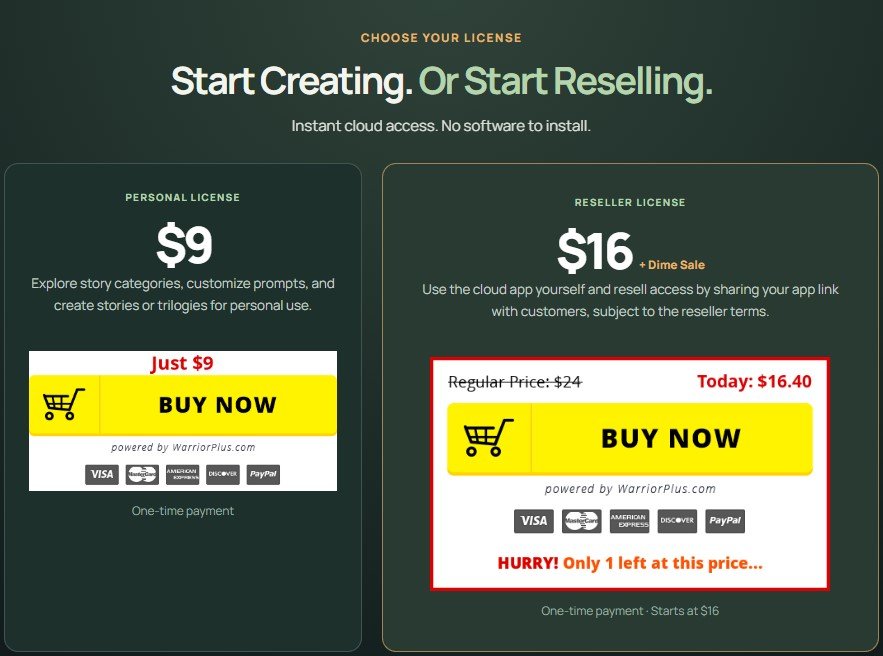
Software launches usually utilize a funnel structure. This means there is a front-end price, followed by optional upgrades (One Time Offers, or OTOs). Below is the expected pricing structure for Post-Apocalyptic Survival Stories based on standard industry practices.

(Note: Prices are subject to change during and after the launch period. Always check the official sales page for the most accurate pricing.)
Comparative Analysis
How does Post-Apocalyptic Survival Stories stack up against the massive AI competition?
If you compare it to a basic ChatGPT Plus subscription, the Duarte system wins easily for usability. ChatGPT requires you to be an expert prompt engineer. You have to manually manage the AI memory window. The Duarte system automates this completely.
If you compare it to broad fiction software like Sudowrite, the comparison is closer. Sudowrite is a massive, powerful tool for fiction writers. It has dedicated story engines and brainstorming features. However, Sudowrite is a monthly subscription (often $19 to $29 per month). It is also entirely genre-agnostic.
Post-Apocalyptic Survival Stories is usually sold for a simple one-time fee during launch. It also requires zero setup for the survival genre. The internal prompts are already tuned for grit, danger, and action. Sudowrite requires you to actively teach it what tone you want.
This product wins on price and niche specificity. It loses on broader flexibility if you ever want to write outside of the dystopian genre.
Alternatives
If you feel Post-Apocalyptic Survival Stories is not right for you, there are other solid options available in the market.
Sudowrite
This is the industry leader for AI fiction writing. It features a “Story Engine” that functions similarly to an agentic system. It is excellent for all genres, but it requires an ongoing monthly subscription.
NovelCrafter
This is a bring-your-own-key (BYOK) software. You plug in your own API keys for OpenAI or Claude. It is a highly robust planning and writing tool. It is for advanced users who want total control over the AI models used.
ChatGPT Plus (OpenAI)
You can write books with standard ChatGPT if you know what you are doing. You will need to build your own custom GPTs, create extensive prompt chains, and manually manage your story bible. It is cheaper, but highly labor-intensive.
Claude 3 (Anthropic)
Claude is known for having a very large context window. This makes it naturally better at writing long-form text than ChatGPT. However, it still requires manual prompting and lacks a dedicated author dashboard.
Pros & Cons
Here is a quick breakdown of the advantages and disadvantages of Post-Apocalyptic Survival Stories.
Pros: Post-Apocalyptic Survival Stories
- True agentic workflow prevents AI memory loss.
- Hyper-focused on a highly profitable KDP niche.
- Automates the hardest parts of world-building.
- Generates full trilogies, keeping readers hooked.
- Usually offered at a one-time price during launch.
- User-friendly interface; absolutely no coding required.
Cons: Post-Apocalyptic Survival Stories
- Locked entirely into the post-apocalyptic/survival genre.
- AI prose still requires human editing for emotional depth.
- The raw output can sometimes feel slightly repetitive.
- Cloud-based reliance means you need an internet connection.
Who Will Be Benefited From This Product?
The clearest beneficiary of Post-Apocalyptic Survival Stories is the self-published KDP author. If you write post-apocalyptic fiction, your readers devour books rapidly. They expect a new release every month or two. Humanly, this is exhausting. This software prevents burnout. It allows an author to become an efficient editor and publisher.
Freelancers and ghostwriters will also benefit immensely. If a client orders a 40,000-word dystopian novella, this tool cuts the drafting time by 80%. This increases the freelancer’s overall hourly rate exponentially.
Finally, digital marketers who want passive income assets will benefit. Fiction is a great way to build an email list and generate monthly royalties. This tool significantly lowers the barrier to entry. You do not need to be a masterful prose writer to create an engaging story. You just need good ideas and this software to execute them.
Final Verdict: Post-Apocalyptic Survival Stories
The intersection of artificial intelligence and creative writing is currently controversial. However, from a pure business perspective, tools like this represent the future of high-volume self-publishing.
Post-Apocalyptic Survival Stories by D.Duarte is a clever, highly targeted piece of software. By utilizing an agentic system, it solves the biggest problem with AI fiction: narrative continuity and logic. Because the agents talk to each other and reference a central story bible, the resulting manuscripts are incredibly cohesive.
It is critically important to manage your expectations. Post-Apocalyptic Survival Stories will not spit out a Pulitzer Prize-winning masterpiece with one click. It will, however, spit out a highly competent, well-structured, genre-accurate first draft.
If you are a purist who believes every word must bleed from a human soul, this product is clearly not for you. If you are a digital publisher looking to dominate the dystopian KDP charts with rapid-release trilogies, this system is a highly recommended investment. It saves time, lowers costs, and keeps your publishing schedule completely full.
Frequently Asked Questions
Will Amazon KDP ban my account for using Post-Apocalyptic Survival Stories?
As of current policies, Amazon strictly allows AI-generated content. However, you must disclose that the book is AI-generated during the upload process. Always ensure you heavily edit the text to make it unique and high-quality. Amazon bans books for a poor customer experience, not just for using AI.
Who owns the copyright to the stories?
Generally, when you generate text using these AI models, you own the commercial rights to publish and sell the output. However, AI-generated text alone cannot currently be registered for formal copyright in the US. If you edit and add your own human expression to the text, the final product becomes your unique intellectual property.
Is the generated content plagiarized?
No. The AI generates original text based on patterns it learned during vast training. It does not copy and paste from existing books. However, it is always a best practice to run your final manuscript through a plagiarism checker like Grammarly or Copyscape just to be completely safe.
Do I need an OpenAI API key to use this?
This depends on the specific backend setup of Duarte’s software. Many WarriorPlus software products route the generations through their own backend, meaning you do not need your own API keys. Check the fine print on the sales page to see if there is a credit system or if generation is completely unlimited.
Can I write other genres with this software?
Technically, you might be able to force it to write something else, but it is not recommended. The backend prompts, the world-building agents, and the tone enforcers are specifically coded for survival, dystopian, and post-apocalyptic fiction. Using it for romance or cozy mysteries will yield very poor results.
Does it format the book for Kindle?
The software generates the raw text and the manuscript structure. You will still need to export the text into a proper formatting tool like Vellum, Atticus, or Kindle Create to make it look professional on an e-reader device.
Is there a money-back guarantee?
Products sold on the WarriorPlus platform typically come with a 14-day or 30-day money-back guarantee. You should verify the exact refund terms on the checkout page before making your final purchase.