Introduction

The digital publishing landscape has changed dramatically over the past few years. Independent authors and digital entrepreneurs no longer rely solely on traditional publishing houses to reach global readers. Platforms like Amazon Kindle Direct Publishing, IngramSpark, Draft2Digital, and Gumroad have democratized book distribution. Anyone with an internet connection can upload a manuscript and sell it worldwide. However, the barrier to entry has shifted from distribution to production. Creating formatted ebooks, designing print-ready covers, and building mathematically accurate puzzle books still requires significant time and technical skill.
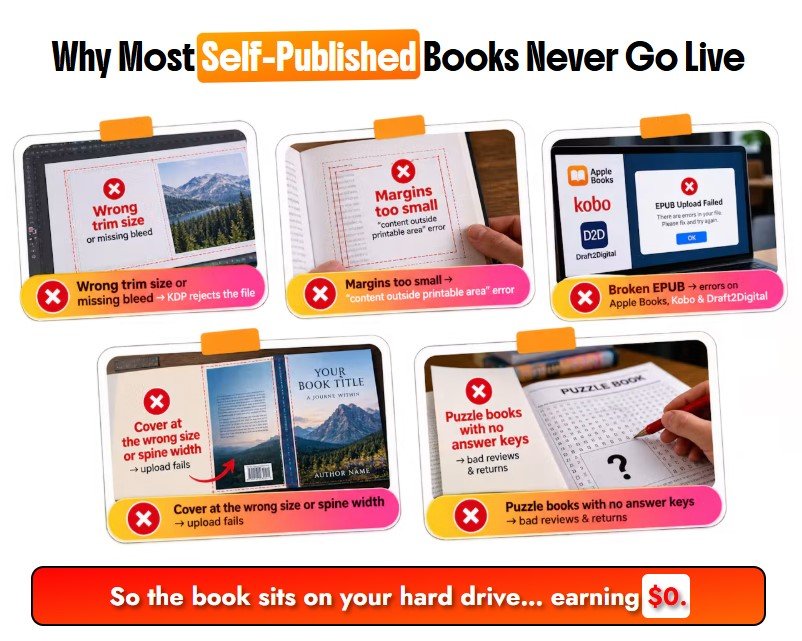
Many aspiring publishers struggle with the technical specifications of digital storefronts. Amazon KDP rejects files if the bleed settings are off by a fraction of an inch. Aggregators like Draft2Digital flag EPUB files that contain broken HTML tables or unembedded fonts. Meanwhile, hiring freelance ghostwriters, graphic designers, and typesetters on platforms like Fiverr or Upwork quickly drains a beginner’s budget. A single custom puzzle book interior can cost hundreds of dollars to commission manually.
This production bottleneck has created a massive demand for specialized automation tools. Software developers are now combining artificial intelligence with programmatic layout engines to speed up book creation. One of the latest entries into this space is Self-PublishMistry AI. This product combines cloud-based creation software with step-by-step publishing training. It claims to generate ebooks, puzzle books, and low-content books in minutes.
In this comprehensive review, we will examine Self-PublishMistry AI from an objective, practical perspective. We will look past the marketing language on the sales page. Instead, we will evaluate how the software actually functions, what technical problems it solves, and where its limitations lie. You will learn about its core features, pricing tiers, realistic use cases, and how it compares to established industry alternatives. This analysis is designed to help you make an informed financial decision before investing in this publishing suite.
Overview
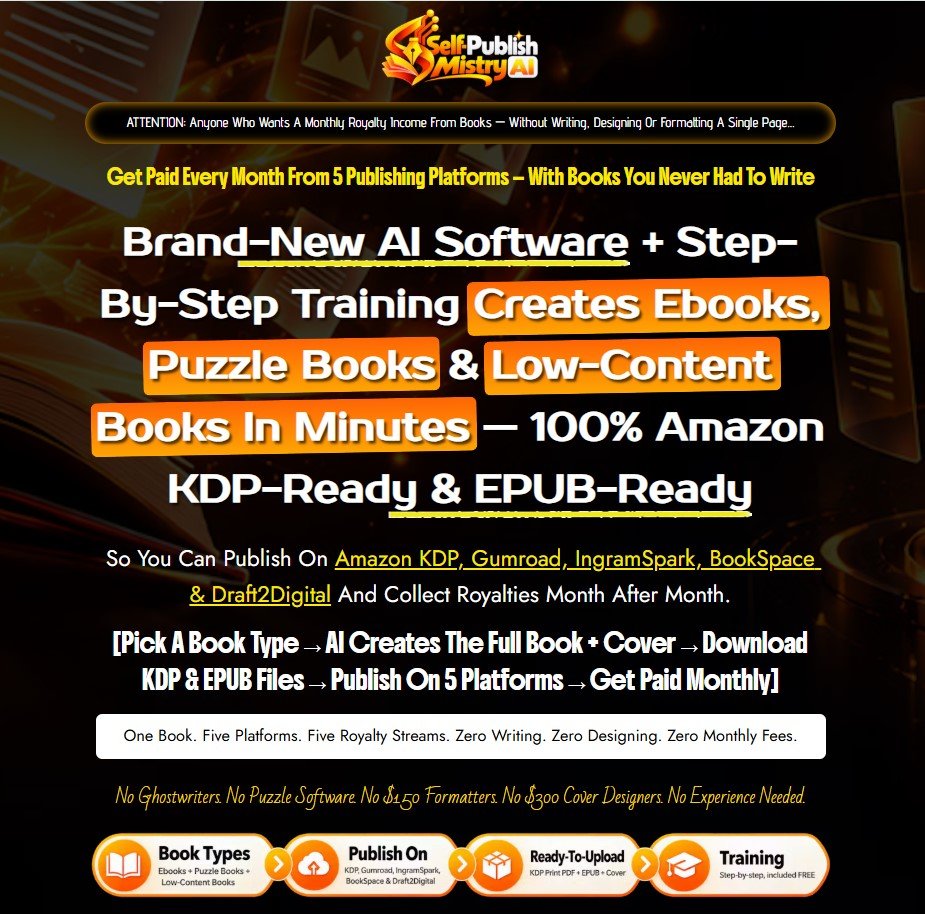
Self-PublishMistry AI is a hybrid digital product launched by software vendor Uddhab Pramanik. It consists of two primary components. The first component is a cloud-based software application powered by artificial intelligence and algorithmic template generators. The second component is an instructional training curriculum that walks users through the mechanics of self-publishing across multiple digital storefronts.
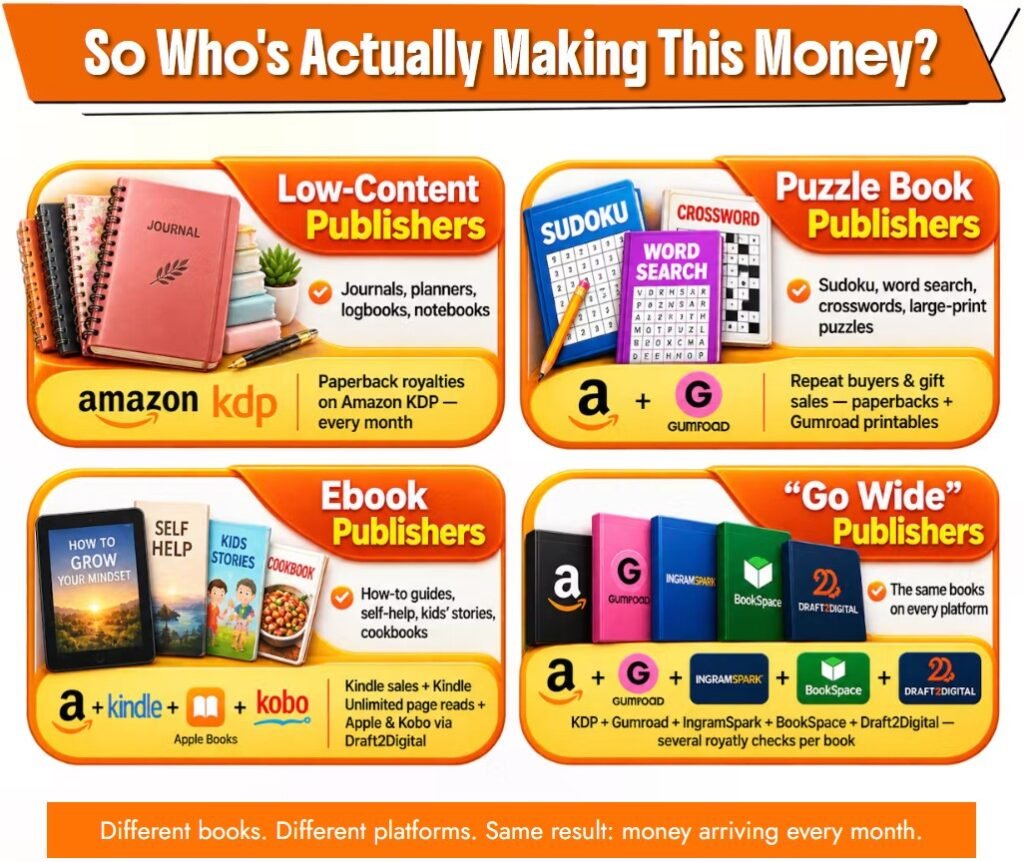
The software targets three specific segments of the independent publishing market. First, it addresses high-content books, such as non-fiction ebooks and short instructional guides. Second, it targets medium-content books, which include activity books, crosswords, word searches, Sudoku, and logic puzzles. Third, it covers low-content books, such as lined journals, daily planners, habit trackers, and logbooks. By combining these three categories into a single dashboard, the platform attempts to replace multiple separate subscriptions.
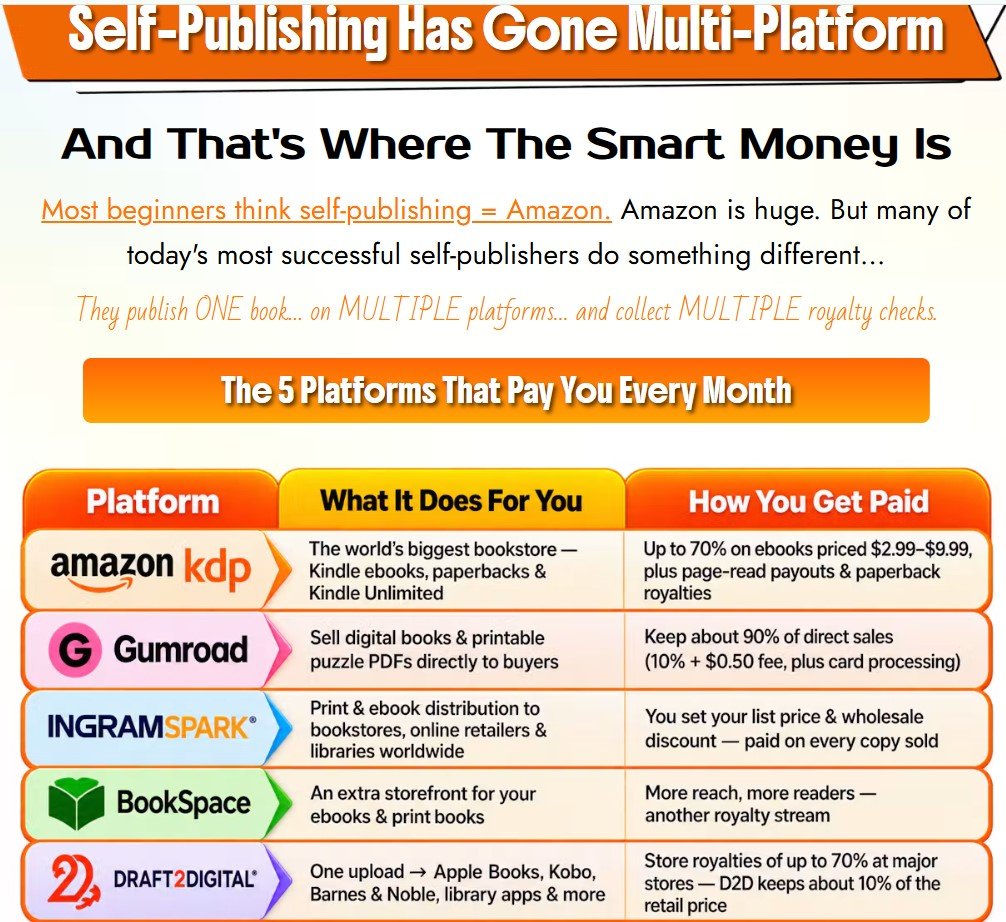
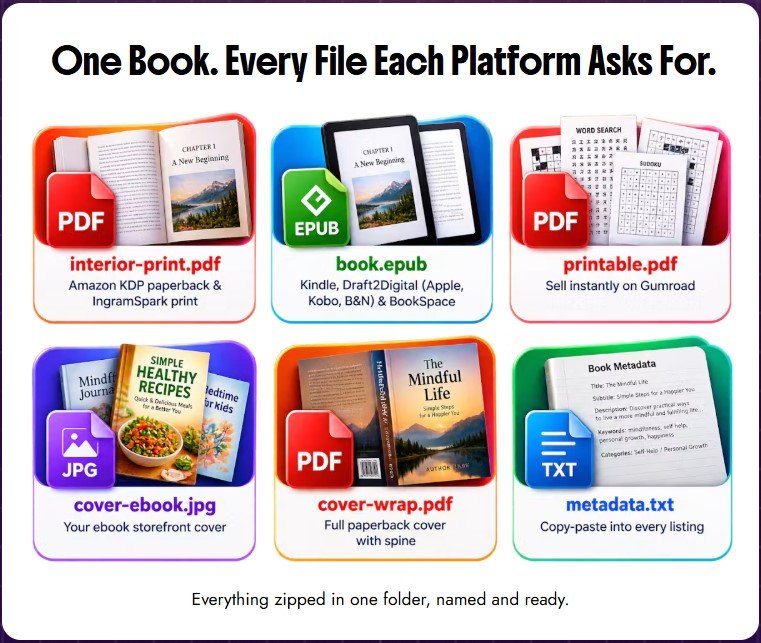
A major focal point of the product is file compatibility. Creating content is only half the battle in self-publishing. Formatting that content so that automated retail quality checks accept it is often the harder part. Self-PublishMistry AI exports files in both print-ready PDF formats and reflowable EPUB formats. This dual compatibility allows users to target print-on-demand platforms like Amazon KDP and IngramSpark alongside digital ebook distributors like Draft2Digital, BookSpace, and Gumroad.
Rather than positioning itself strictly as a text generator, the system acts as an end-to-end production workspace. It includes tools for niche keyword research, manuscript drafting, puzzle grid calculation, interior page typesetting, and cover design. While it automates much of the heavy lifting, success with the platform still requires human oversight, market research, and quality control.

What is it?
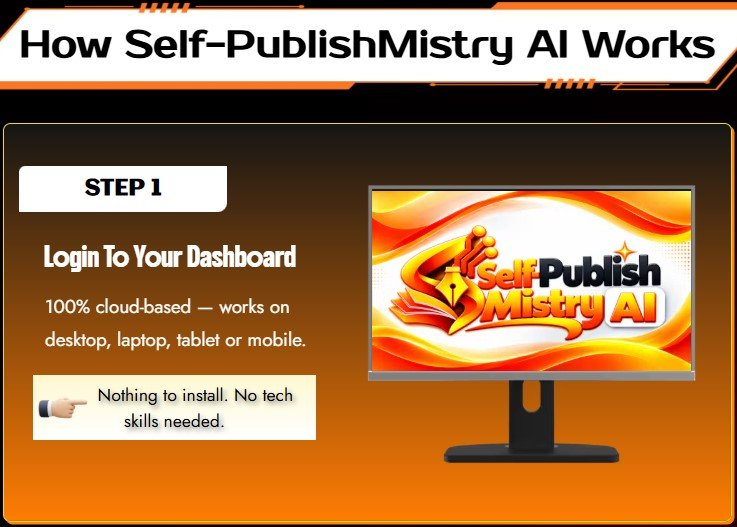
At its core, Self-PublishMistry AI is an all-in-one browser-based book production studio. You do not need to download or install heavy software packages onto your computer. Everything runs in the cloud through a standard web browser. The platform integrates Large Language Model technology for text generation with specialized graphic and mathematical scripts for layout and puzzle creation.
When you look at the software architecture, it functions as a bridge between raw ideation and final retail formatting. Standard AI chatbots like ChatGPT can write chapters of text, but they cannot export a properly margined 6×9-inch PDF with mirrored gutters for print binding. Conversely, graphic design tools like Canva allow you to design page layouts, but they cannot automatically generate fifty unique Sudoku grids with corresponding answer keys at the back of the book. Self-PublishMistry AI combines both capabilities under one roof.
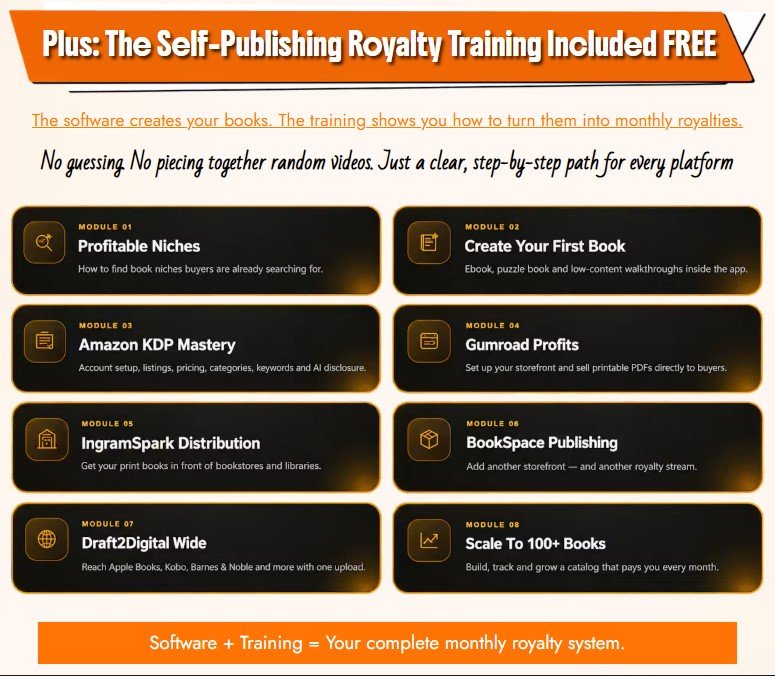
The software is accompanied by a structured training module. This educational side of the product is designed for beginners who have never uploaded a book before. The training explains how to set up accounts on Amazon KDP, Gumroad, IngramSpark, BookSpace, and Draft2Digital. It covers tax interviews, metadata optimization, pricing strategies, and category selection.
It is important to understand what this tool is and what it is not. It is a production accelerator designed to reduce the time and cost required to assemble publishable book files. It is not a magical machine that guarantees passive income overnight. The software builds the digital assets, but the user remains responsible for choosing profitable niches, editing the generated output for accuracy, and managing their publishing accounts responsibly.

About The Creator

Self-PublishMistry AI was developed and brought to market by Uddhab Pramanik. Pramanik is an established software vendor and digital product creator who frequently launches applications on major affiliate marketplaces. Over the past several years, his development team has focused heavily on artificial intelligence wrappers, cloud automation tools, and digital asset generators aimed at solo entrepreneurs and small marketing agencies.
Understanding the creator’s background is helpful when evaluating software in this price bracket. Vendors who operate in the launchpad marketplace ecosystem typically build tools designed for accessibility and speed. Their applications prioritize user-friendly dashboards, low one-time entry prices, and template-driven workflows over complex enterprise customization.
Pramanik’s previous software releases follow a familiar pattern. They bundle multiple digital utilities into a centralized dashboard to help beginners bypass steep technical learning curves. While these tools generally deliver good value at their front-end price points, buyers should know what to expect regarding the business model. Launches from this vendor ecosystem almost always feature a multi-tiered sales funnel. The base version of the software gives you core functionality with usage caps, while optional upgrades unlock unlimited usage, additional templates, and commercial licensing. Knowing this structure upfront helps you navigate the purchasing process without surprises.
Watch The Sales Video
How does it work?

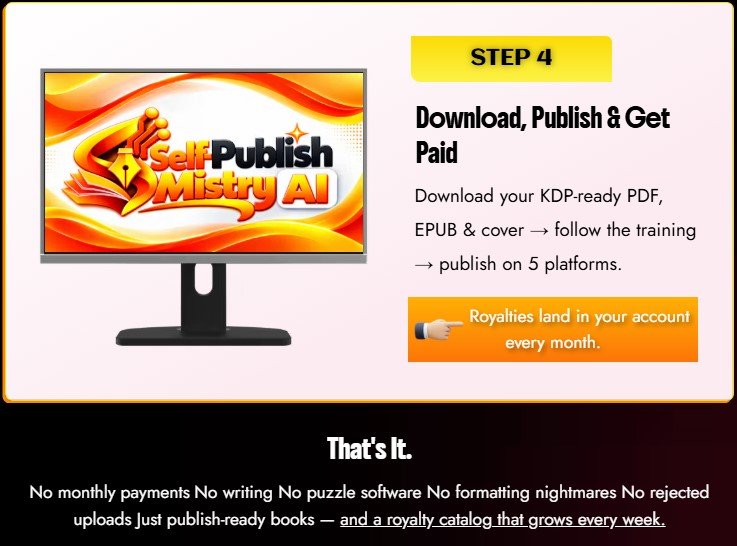
The operational workflow inside Self-PublishMistry AI follows a logical sequence that mirrors standard publishing pipelines. The software breaks the book creation process down into four distinct stages. These stages are research, content generation, layout formatting, and file export.
During the first stage, you use the built-in research tools to identify what type of book to create. You enter broad seed keywords into the dashboard. The system analyzes search volume trends and competition metrics related to book marketplaces. This helps you spot sub-niches with active buyer demand, such as large-print word search books for seniors or budget planners for college students.
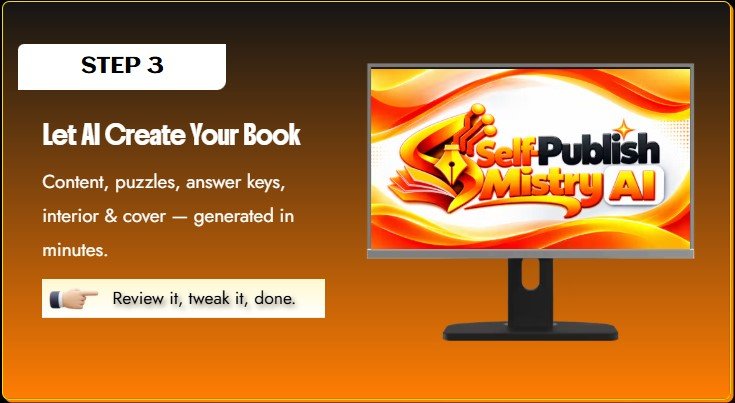
In the second stage, you select the specific creation module that matches your project. If you are building an ebook, you enter a topic prompt, select a tone of voice, and let the AI generate a chapter outline. Once you approve the outline, the software drafts the chapters sequentially. If you are building a puzzle book, you choose the puzzle type, set the difficulty level, define the grid dimensions, and select the number of pages. The software’s mathematical algorithms then generate unique puzzles and automatically compile the solution keys at the end of the document. If you are building a low-content book, you select from pre-built interior templates such as lined pages, gratitude prompts, or meal trackers.
The third stage focuses on visual assembly and formatting. Using the built-in editor, you select your trim size. Common options like 6×9 inches for trade paperbacks or 8.5×11 inches for activity books are pre-configured. The software automatically sets the outer margins and inner gutter widths based on page count. You can adjust fonts, add page numbers, insert headers, and customize visual elements. At this stage, you also use the cover creator module to design a front cover, spine, and back cover that match your exact page dimensions.
The final stage is exporting and publishing. With a single click, you compile the project into your required format. For print-on-demand books, you export a high-resolution PDF file that adheres to Amazon KDP and IngramSpark print specifications. For digital narrative books, you export a validated EPUB file. You then take these files and follow the step-by-step training videos to upload them to your chosen retail platforms.
Watch The Demo Video
100-word quick answer
Self-PublishMistry AI is a cloud-based software and training suite that automates the creation of ebooks, puzzle books, and low-content journals. It is built for self-publishers targeting Amazon KDP, IngramSpark, Draft2Digital, and Gumroad. Its main strength lies in combining AI text generation with automated puzzle math and print-ready KDP formatting in one dashboard. This saves beginners from buying multiple separate tools. However, the front-end version has usage limits, and AI-generated text still requires human editing to meet quality standards. It is a solid, budget-friendly production accelerator for entry-level publishers who want to streamline book formatting.
Product overview
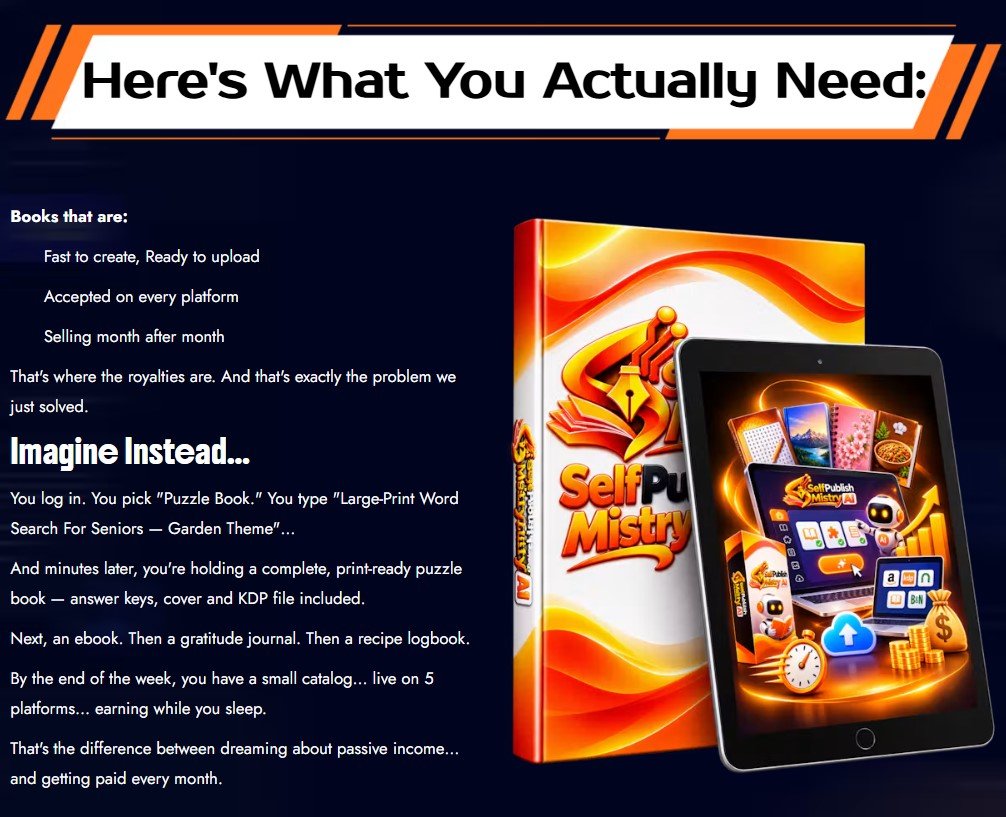
To truly understand how Self-PublishMistry AI functions in daily use, we need to look closer at its workspace environment. When you log into the web application, you are greeted by a central control panel. This dashboard divides your workflow into separate modules based on the asset you want to build. There is no coding required, and you do not need prior experience with desktop publishing programs like Adobe InDesign.
The platform handles three primary content architectures. The first architecture is text-heavy digital and print manuscripts. Here, the software acts as an AI writing assistant combined with an automated typesetter. It pulls information based on your prompts, structures it into logical chapters, generates a clickable table of contents, and formats the body text into clean paragraphs.
The second architecture is algorithmic puzzle generation. This is arguably the most valuable technical component of the suite. Building puzzles manually in spreadsheet software or graphic editors is painfully slow. Inside Self-PublishMistry AI, the puzzle engine uses backend scripts to generate fresh grids on demand. You can feed it a custom list of vocabulary words for a themed word search, and it will scatter those words across a grid while filling the remaining spaces with random letters. It simultaneous records the exact coordinates of the answers to generate a matching solution page.
The third architecture is repetitive template layout for low-content publishing. Books like daily planners, workout logs, and music manuscript papers rely on clean, repeating vector lines and boxes. The software provides a library of modular page elements. You can mix and match these elements, duplicate them across a hundred pages instantaneously, and bind them into a single interior file.
Alongside the software sits the instructional academy. This training is delivered through screen-recorded video lessons. It bridges the gap between having a finished file on your hard drive and actually having a live product listing generating sales online.

Who it’s for
Self-PublishMistry AI is designed for specific groups of digital creators. It is not meant for award-winning literary novelists who spend five years crafting a single masterpiece. Instead, it serves volume-oriented independent publishers and side-hustlers who treat book creation as a scalable digital asset business.
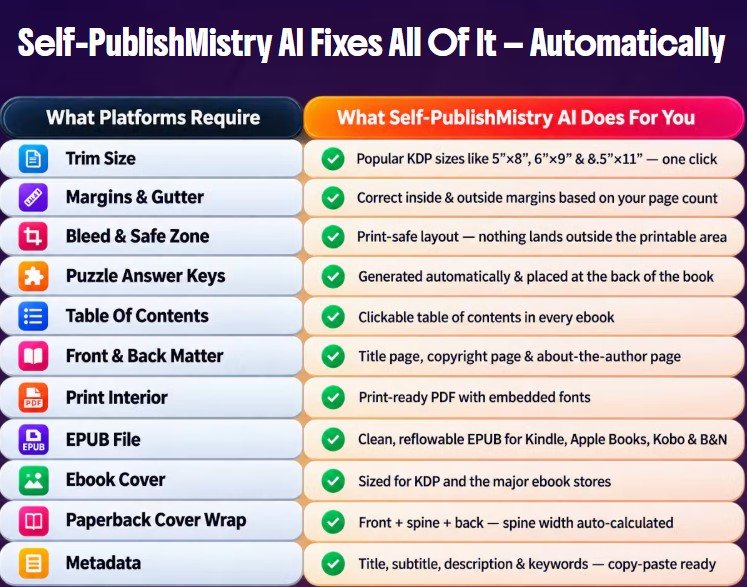
First and foremost, this software is built for complete beginners entering the Amazon KDP ecosystem. Newcomers often get overwhelmed by technical jargon like bleed, no-bleed, trim size, gutter margins, and spine width calculations. Because the software presets these dimensions automatically, beginners can focus on niche selection and book concepts without getting stuck in formatting rejections.
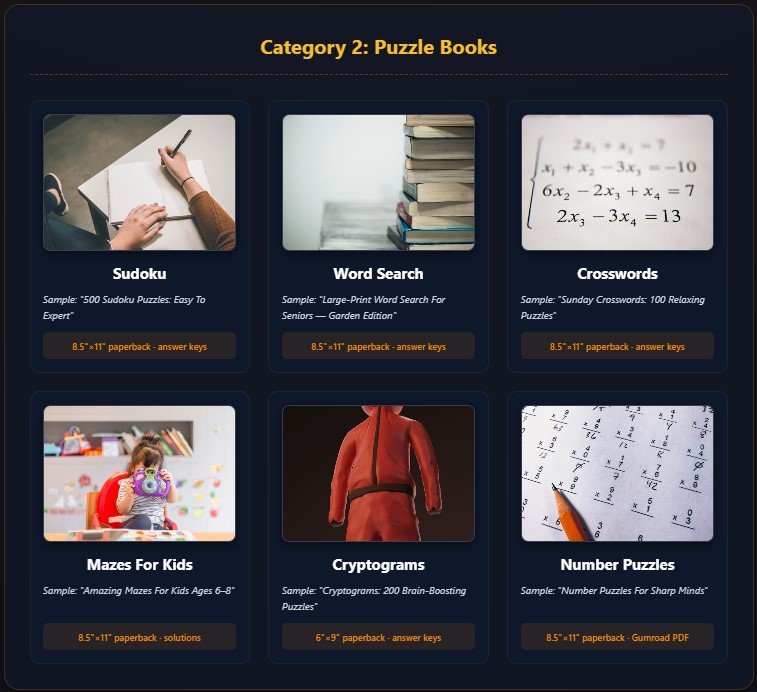
Second, the platform is highly suitable for puzzle and activity book creators. The medium-content book market on Amazon is consistently active. Parents buy maze and coloring books for kids, while adults buy Sudoku and crossword books for travel and cognitive exercise. Creators in this space need a way to produce fresh, unique puzzle grids rapidly without violating anyone else’s copyright.
Third, the tool caters to digital marketers and content creators who use platforms like Gumroad or their own websites. If you run a blog, a YouTube channel, or an email newsletter, you can use the ebook module to quickly compile informational guides, lead magnets, and printable workbooks to sell directly to your audience.
Finally, educators, teachers, and homeschooling parents can find strong utility here. Creating customized vocabulary crosswords, math worksheets, and reading logs for students takes hours of prep time. This software allows educators to generate printable educational activities tailored to specific lessons in just a few minutes.

What I verified
When evaluating software in the digital publishing space, it is critical to separate sales page enthusiasm from operational reality. During my analysis of Self-PublishMistry AI and the marketplaces it targets, I verified several crucial facts regarding how the tool interacts with real-world publishing standards.
First, I verified the platform compatibility claims. Amazon KDP, IngramSpark, and Draft2Digital all accept PDF and EPUB files generated by third-party software, provided those files meet strict technical baselines. For print books, KDP requires fonts to be fully embedded, images to be high resolution, and margins to account for binding thickness. Self-PublishMistry AI uses standardized trim templates (such as 6×9 and 8.5×11 inches) that align with these exact platform baselines. This means the technical output is genuinely compatible with major print-on-demand printers.
Second, I verified the regulatory environment regarding AI content on Amazon KDP. The sales page emphasizes how easy it is to publish AI books, which is technically true. However, publishers must know that Amazon updated its content guidelines regarding artificial intelligence. When you upload a book created with Self-PublishMistry AI to Amazon KDP, Amazon’s publishing workflow explicitly asks if your text or images were “AI-Generated.” You are required by Amazon’s terms of service to check “Yes” if the software generated the core manuscript without heavy human rewriting. Disclosing this does not penalize your book’s ranking, but failing to disclose it accurately can put your KDP account at risk.
Third, I verified the distinction between low-content and medium-content distribution across platforms. The sales page lists Amazon KDP, IngramSpark, and Draft2Digital together. While KDP accepts lined journals and low-content planners, aggregators like IngramSpark and Draft2Digital have strict rules against distributing blank journals or simple notebooks into global retail channels. However, they do accept full-text ebooks. Therefore, you will use the ebook EPUB output for Draft2Digital, while reserving the puzzle and low-content PDF outputs specifically for Amazon KDP and direct-to-consumer platforms like Gumroad.

Key Features
Self-PublishMistry AI packs a substantial number of tools into its central interface. Below is a detailed examination of the core features that actually impact your daily workflow.
The first major feature is the AI Ebook Manuscript Generator. This module allows you to create structured non-fiction books, how-to guides, and children’s stories from simple text prompts. Rather than spitting out a single wall of disorganized text, the generator works in stages. It builds a title, proposes a multi-chapter outline, and writes each chapter individually. This staged approach helps maintain topical coherence across longer documents and prevents the AI from losing track of the subject halfway through the book.
The second core feature is the Multi-Format Puzzle Engine. This is a dedicated algorithmic builder that constructs several classic puzzle varieties. It includes generators for crosswords, word searches, Sudoku (across varying difficulty tiers from easy to extreme), number mazes, shape mazes, cryptograms, and word scrambles. Crucially, the engine includes an automated solution tracker. Every time it builds a puzzle on page ten, it automatically renders the corresponding solved grid at the back of the manuscript. This eliminates the tedious task of manually matching puzzles to answer keys.
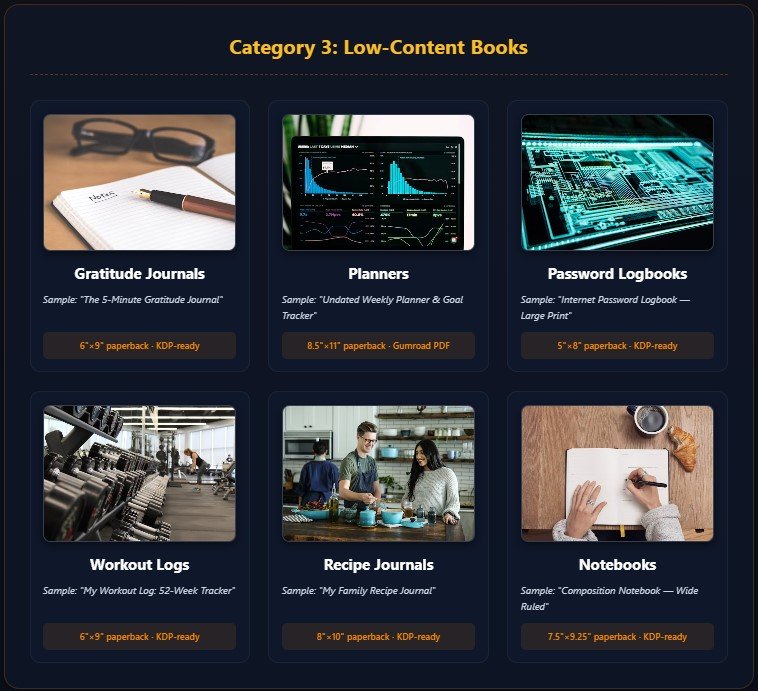
The third important feature is the Low-Content Interior Designer. This module features a library of pre-formatted templates for stationary-style books. It includes layouts for daily planners, weekly schedules, budget trackers, gratitude journals, recipe books, fitness logs, and simple lined or dot-grid notebooks. Users can customize the typography, swap out graphic borders, and duplicate page layouts to reach their desired page count (typically between 100 and 120 pages for standard KDP paperbacks).
The fourth key feature is the Automated KDP Trim and Margin Calibrator. Formatting errors are the number one reason beginners give up on self-publishing. When you select your desired book dimensions inside Self-PublishMistry AI, the workspace automatically locks in the required safe zones, bleed margins, and gutter spacing. This ensures that text and puzzle grids do not get cut off by the industrial guillotines used during Amazon’s printing process.
The fifth feature is the Built-In Book Cover Studio. A book will not sell on digital storefronts without an appealing cover. Furthermore, print-on-demand platforms require a single wrap-around cover file that includes the back cover, spine, and front cover calculated down to the millimeter based on paper type (white vs. cream) and exact page count. The software includes a drag-and-drop canvas alongside AI image generation capabilities to help you assemble compliant covers without needing Photoshop.
The sixth feature is the Dual-Engine File Exporter. Once your manuscript is complete, the software compiles the project into either a print-ready PDF or a digital EPUB file. The PDF compiler flattens layers and embeds fonts for physical printing. The EPUB compiler structures chapters with clean metadata so digital e-readers like Kindle, Apple Books, and Kobo can display the text smoothly across different screen sizes.
The seventh feature is the Niche and Keyword Research Utility. Before you build a book, you need to know what buyers are typing into search bars. This built-in tool pulls search suggestions and analyzes niche competitiveness. It helps you craft book titles, subtitles, and the seven backend keyword boxes required during the Amazon KDP upload process.
Finally, the product includes the Step-By-Step Publishing Academy. This video training course walks you through the exact steps of taking your exported files and turning them into live product listings on Amazon KDP, Gumroad, IngramSpark, BookSpace, and Draft2Digital.
Key Benefits
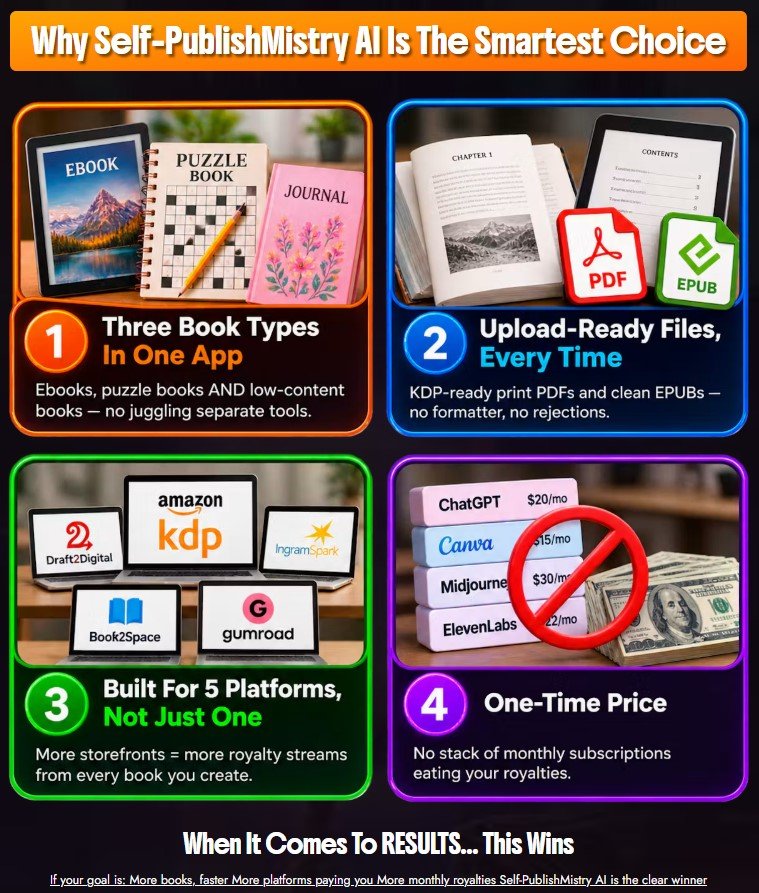
The primary benefit of using Self-PublishMistry AI is significant cost consolidation. If you look at the standard toolkit of an independent publisher, the monthly recurring expenses add up quickly. A publisher might pay for an AI writing tool to draft text, a dedicated puzzle software subscription to make activity grids, a graphic design subscription to format layouts, and a formatting software license to generate clean EPUB files. By housing basic versions of all these utilities inside one dashboard for a single front-end price, this platform drastically lowers the financial overhead for new creators.
The second major benefit is speed of execution. In the puzzle and low-content publishing space, volume and consistency play a major role in discovering winning niches. If it takes you three weeks to manually build one word search book, it will take you a year to test twenty different niche themes. With Self-PublishMistry AI, the mechanical assembly of a 100-page puzzle interior takes minutes rather than weeks. This frees up your time to focus on higher-leverage activities, such as researching underserved niches, crafting high-converting book covers, and writing compelling book descriptions.
Another strong benefit is the elimination of technical formatting friction. Many creative people have great ideas for activity books, educational workbooks, or niche guides, but they quit because they cannot figure out why Amazon KDP keeps rejecting their interior PDF files. Because the software builds its templates around verified print-on-demand specifications, it removes the mathematical guesswork of calculating spine widths and bleed boundaries.
Furthermore, the multi-platform output gives users diversification. Relying exclusively on a single retail giant carries inherent platform risk. Because the software exports standard PDFs and universal EPUB files, you are not locked into one ecosystem. You can sell a printable PDF workbook directly to customers on Gumroad for immediate cash flow while simultaneously listing the paperback version on Amazon KDP for long-term organic discovery.
Practical analysis
To provide genuine value in this review, we need to conduct a practical analysis of how Self-PublishMistry AI fits into the current reality of the self-publishing industry. Software tools are only as effective as the strategy behind them. Let us examine how to actually make this tool work in a competitive market.
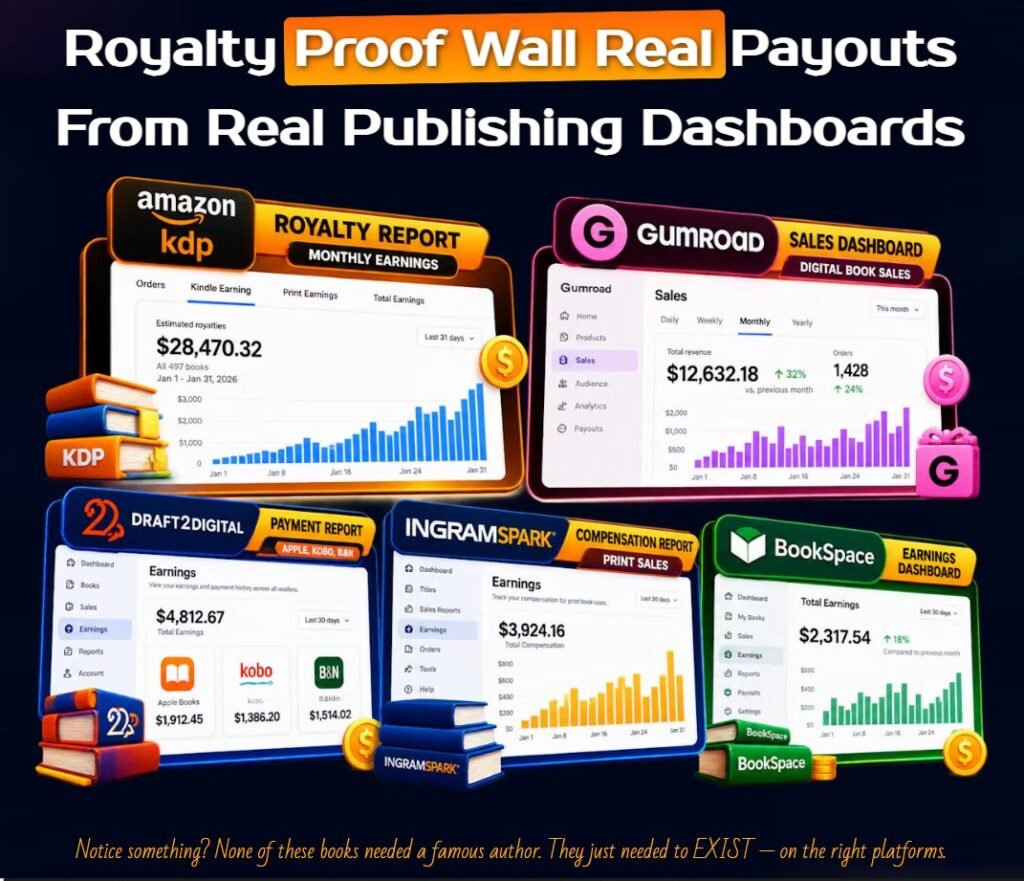
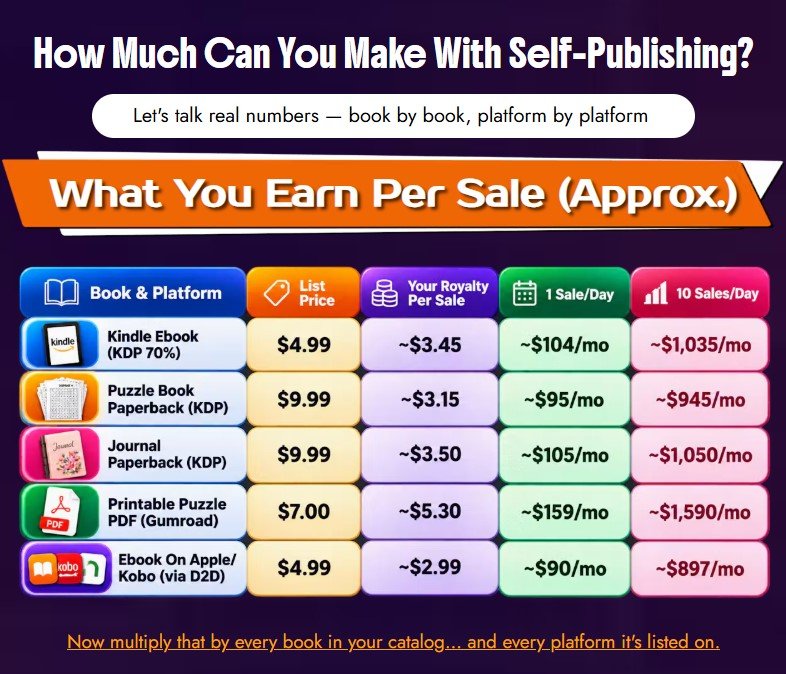
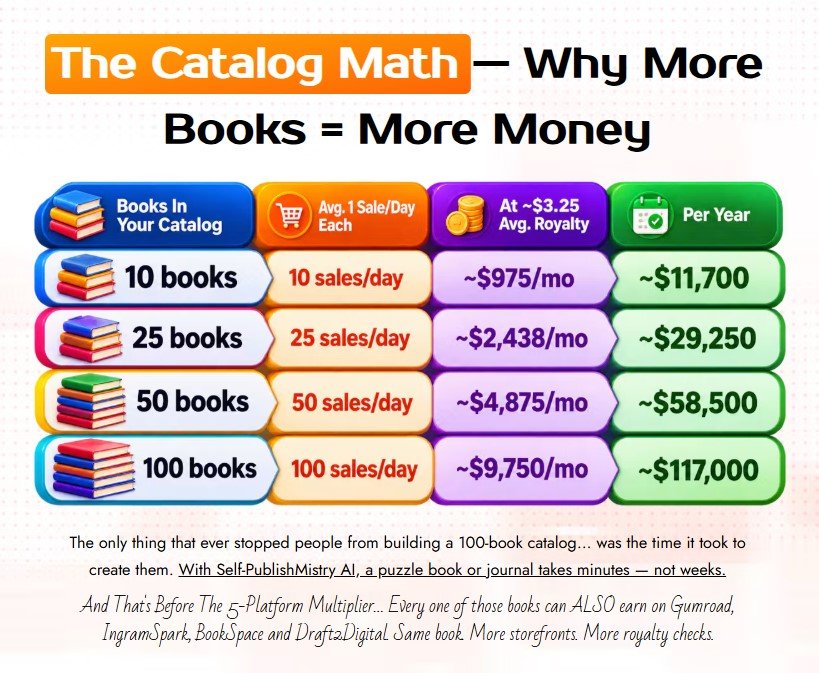
First, let us address the myth of “push-button riches.” The sales page for Self-PublishMistry AI highlights how fast you can generate books and mentions collecting royalties month after month. While the software genuinely generates files in minutes, uploading raw, unedited, one-click files directly to Amazon is a poor business strategy. Thousands of other people buy automated software tools too. If ten thousand people export the exact same unmodified lined journal template and upload it with generic titles, Amazon’s algorithm will suppress those duplicate listings. Consumers simply will not buy them.
Where Self-PublishMistry AI provides immense practical value is when you use it as a baseline foundation and apply human customization. For example, take the puzzle book module. Instead of clicking one button to generate a random, generic Sudoku book, use the software to target a hyper-specific micro-niche. Imagine creating a “Camping & National Parks Road Trip Activity Book for Kids Ages 8-10.” You can use the software to generate themed word searches using actual national park names, mix in some medium-difficulty mazes, and use the AI writing module to add short, fun trivia facts about wildlife at the bottom of each page. By combining the software’s modules creatively, you create a unique, high-value book that stands out from low-effort competitors.
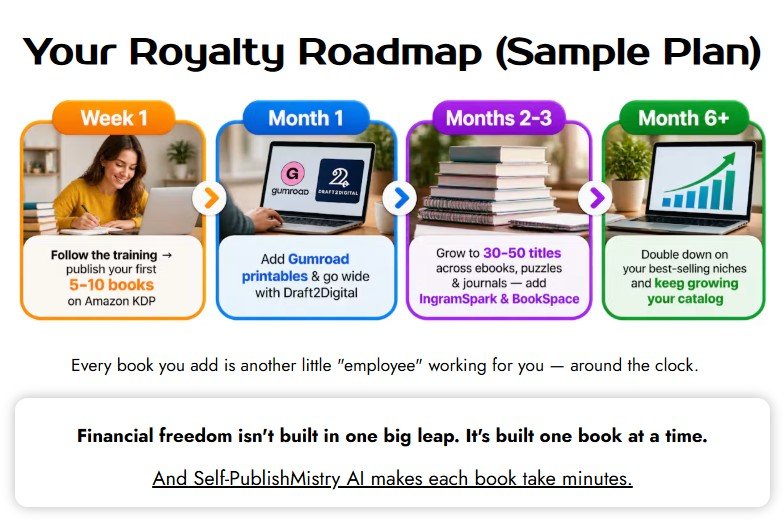
Second, let us analyze the ebook generation workflow. When using the AI writer to produce non-fiction ebooks for KDP or Draft2Digital, you should treat the output as a rough first draft. Large Language Models occasionally repeat phrases or state inaccurate facts. A smart publisher uses Self-PublishMistry AI to do 80% of the heavy lifting—building the outline, drafting the baseline chapters, and formatting the layout. Then, the publisher spends an hour reading through the manuscript, injecting personal insights, verifying facts, and polishing the prose. This hybrid approach produces books that pass platform quality reviews, earn positive reader reviews, and generate sustainable long-term royalties.
Third, consider the Amazon KDP printing economics. When you create puzzle books or coloring books, you should almost always format them in black-and-white interior print rather than color print. Amazon charges significantly higher printing costs for color ink, which eats up your royalty margins. Self-PublishMistry AI excels at generating crisp, high-contrast black-and-white line art and puzzle grids. This keeps your printing costs low (often around $2.15 to $2.50 per 100-page book on KDP), allowing you to price your books competitively at $7.99 to $9.99 while retaining healthy royalty margins on every sale.

Limitations
No software is flawless, and an honest review must point out the limitations and weaknesses of Self-PublishMistry AI so you know what to expect before purchasing.
The first limitation is the template ceiling inside the front-end version. While the base software gives you enough layouts and puzzle types to get started, advanced publishers will notice that the built-in graphic assets and low-content templates are shared among all buyers of the tool. If you do not customize the fonts, headers, or page borders using the editor, your interior pages may look very similar to books produced by other users of the platform.
The second limitation involves the depth of the AI text generator for long-form books. Like most cloud-based AI writing wrappers in this price range, the system works best for short to medium-length non-fiction guides, children’s books, and structured informational content (typically between 3,000 and 12,000 words). If you try to make it write a complex, 80,000-word historical fiction novel with deep character arcs, the AI will lose narrative continuity. It is built for practical publishing, not literary masterpieces.
The third limitation is the upsell structure. As is standard for launches on digital affiliate marketplaces, the initial low price gets you in the door, but several convenient features—such as unlimited monthly creations, extra puzzle varieties, and advanced automation tools—are locked behind optional upgrades (OTOs). While the front-end version is functional for testing the waters, heavy volume publishers will almost certainly feel the need to upgrade to the Unlimited tier.
Finally, because Self-PublishMistry AI is a 100% cloud-based web application, your workflow is completely dependent on an active internet connection and the vendor’s server speeds. During peak launch weeks when thousands of new buyers are logging in simultaneously to render heavy PDF files, you may experience slight delays in file compilation times.

Bonuses
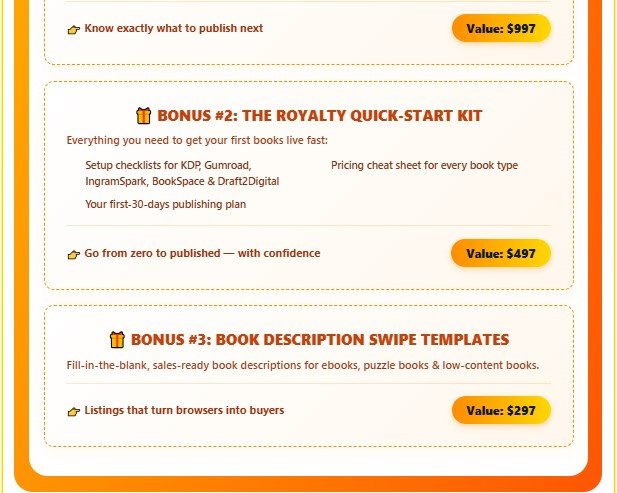
When you purchase Self-PublishMistry AI during its introductory launch period, the vendor includes several supplemental bonuses designed to complement the core software. These bonuses are integrated into your member’s area and focus on expanding your publishing distribution and marketing capabilities.
The first bonus typically includes a collection of Done-For-You (DFY) book covers and interior graphical elements. These extra vector graphics, borders, and page dividers can be uploaded into the software’s canvas editor to help differentiate your low-content journals and puzzle books from standard default templates.
The second bonus package focuses on traffic generation and book marketing. While Amazon KDP has massive built-in organic search traffic, platforms like Gumroad require you to bring your own visitors. This training module covers how to promote your newly generated ebooks and printable workbooks using free social media channels like Pinterest, TikTok, and Facebook groups.
The third bonus often includes a commercial license on the front-end offer during the launch window. This is a practical addition. A commercial license means you are not restricted to publishing books strictly under your own name. You can use Self-PublishMistry AI to generate puzzle interiors, lead magnet ebooks, or formatted manuscripts for freelance clients on platforms like Fiverr or Upwork and keep 100% of the service fees you charge them.
Pricing & OTOs

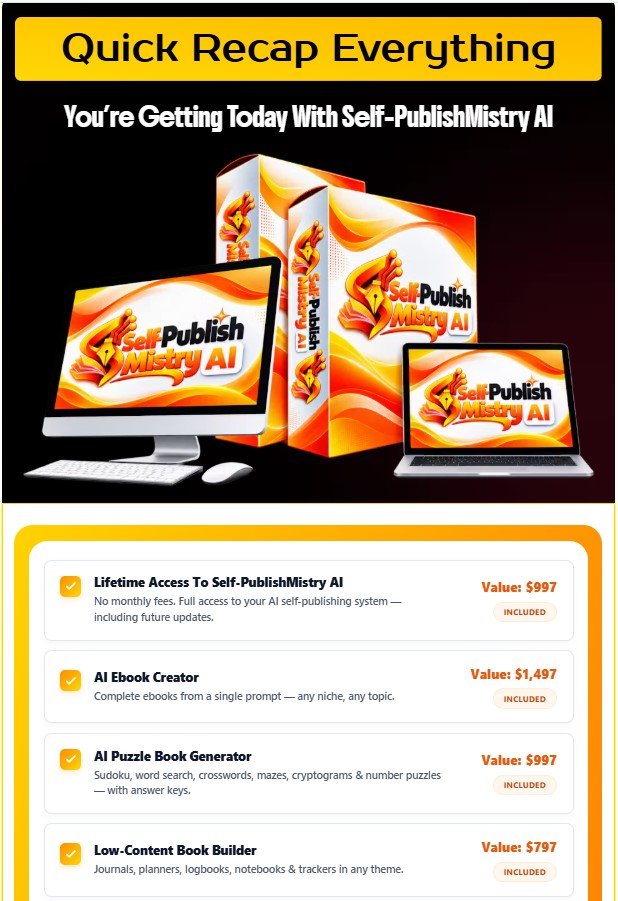
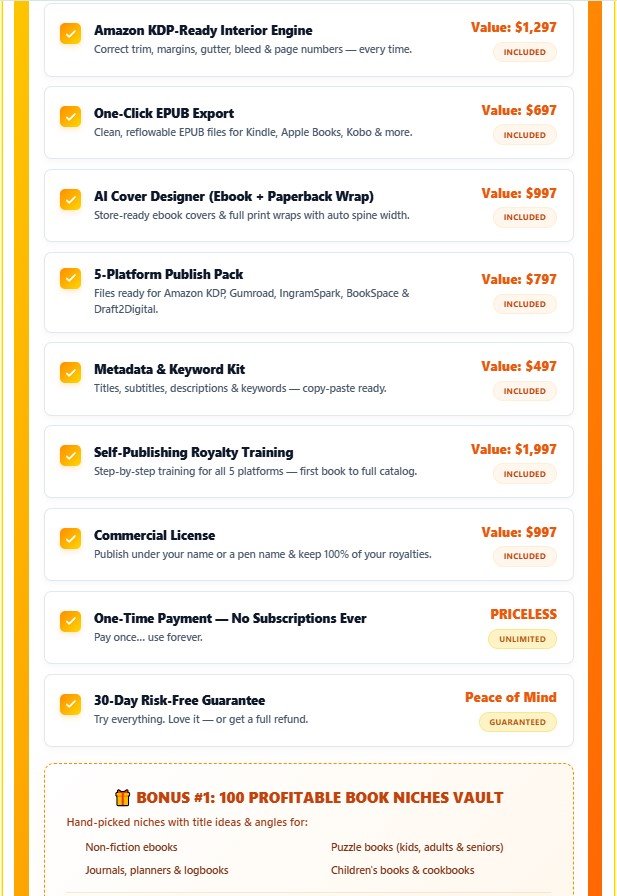
Self-PublishMistry AI uses a tiered pricing model. The front-end software is offered at a very accessible one-time price during the launch period, avoiding mandatory monthly subscriptions. Once you purchase the front-end system, you are presented with several optional One-Time Offers (OTOs) that expand the software’s capabilities.
Below is a clear breakdown of the complete sales funnel, followed by a detailed explanation of what each upgrade entails.
Pricing & OTOs – Self Publish Mistry AI
Discount Coupon Codes:
- SELFPUB35 – 35% OFF
- SELFPUB5 – $5 OFF
Pricing & Funnel Table
| Product / Offer | Price | Sales Page |
|---|---|---|
| Front-End (FE) – Self Publish Mistry AI | Visit Sales Page | |
| OTO 1 – Unlimited Edition | $67 | View OTO 1 |
| OTO 2 – Royalty Plus Unlock | Not Provided | View OTO 2 |
| OTO 3 – DFY Edition | Not Provided | View OTO 3 |
| OTO 4 – Own Bookstore | Not Provided | View OTO 4 |
| OTO 5 – Audio Book Edition | Not Provided | View OTO 5 |
| OTO 6 – Unlimited Traffic | Not Provided | View OTO 6 |
| OTO 7 – Limited-Time Agency Opportunity | $97 | View OTO 7 |
| OTO 8 – 10 High-Converting OTOs | Not Provided | View OTO 8 |
| OTO 9 – White Label License | $197 | View OTO 9 |
Support & Contact
| Support Type | Active Link |
|---|---|
| Support | Contact Support on Facebook |
| Contact | Join Microsoft Teams |
Note: The provided front-end price is $14.95 today, reduced from $17. OTO prices are listed as Not Provided where no price was supplied. Check the sales pages for current prices and coupon availability.
Comparative analysis of the product with the existing products
To properly judge the value of Self-PublishMistry AI, we must compare it against the established tools currently dominating the independent publishing market.
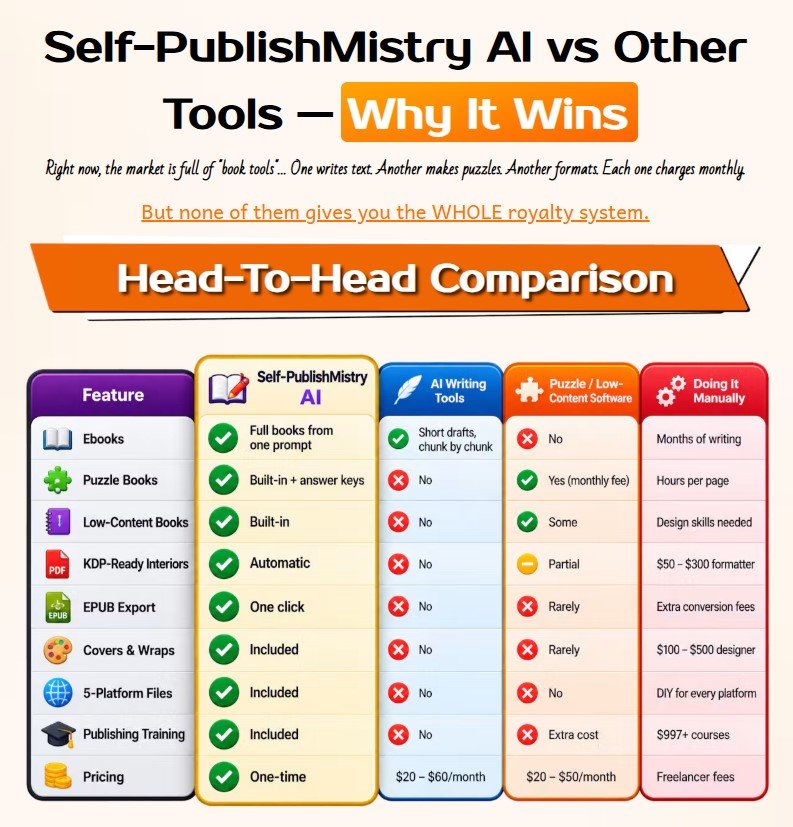
Historically, self-publishers have had to assemble a piecemeal tech stack. If a publisher wanted to write an ebook, they used ChatGPT or Claude for text generation, followed by a dedicated typesetting program like Atticus ($147 one-time) or Vellum ($249 one-time, Mac only) to compile a clean EPUB and print PDF. If that same publisher wanted to create puzzle and low-content books, Atticus and Vellum would be completely useless because they only handle narrative text. The publisher would then have to subscribe to a platform like BookBolt ($9.99 to $19.99 every month) or purchase standalone puzzle scripts to generate activity grids. Finally, they would subscribe to Canva Pro ($12.99 per month) to design covers and combine page layouts.
When you compare Self-PublishMistry AI against these specialized industry heavyweights, a clear trade-off emerges between depth of specialization and breadth of consolidation.
Specialized tools like Atticus offer granular typographical control for novels—such as custom ornamental scene breaks, complex drop caps, and intricate print footnote styling—that Self-PublishMistry AI cannot match. Similarly, dedicated research suites like Publisher Rocket ($199 one-time) pull deeper historical Amazon sales rank data than the basic keyword tool inside this software.
However, Self-PublishMistry AI wins decisively on versatility and entry-level affordability. None of the premium formatting tools like Atticus or Vellum can generate Sudoku grids or word searches. Conversely, low-content tools like BookBolt cannot write a 10-chapter non-fiction ebook and export it as a reflowable EPUB file for Draft2Digital. Self-PublishMistry AI sits in the middle as a Swiss Army knife. It gives beginners 80% of the core functionality of four different software categories for a fraction of the combined cost.
Alternatives
If you are weighing your options before buying Self-PublishMistry AI, it is helpful to look at the top alternatives available today so you can see which tool aligns best with your specific publishing goals.
The first major alternative is BookBolt. BookBolt is widely considered the industry standard for low-content and puzzle book creators on Amazon KDP. It features deep cloud search volume data, a massive library of interior templates, and a solid puzzle generator (available on their higher tier). However, BookBolt charges a recurring monthly subscription of $9.99 to $19.99 per month, and it does not write narrative ebooks or export EPUB files. If you want to avoid monthly fees and want ebook creation included, Self-PublishMistry AI is the more economical choice.
The second alternative is Tangent Templates. Created by veteran KDP publishers, Tangent Templates offers a one-time fee ($59) for a great suite of low-content interior templates, a KDP dimension helper, and basic dynamic page builders. It is a fantastic, community-backed tool for journals and planners. However, Tangent Templates lacks an integrated AI ebook writer, does not have a comprehensive multi-puzzle generator for crosswords and Sudoku, and does not generate EPUB files for wider digital distribution.
The third alternative is the Manual DIY Stack (ChatGPT + Canva + Kindle Create). You can technically publish books without buying any specialized KDP software. You can prompt the free version of ChatGPT to write chapters, format them inside Amazon’s free Kindle Create desktop app, and design your covers manually in the free version of Canva. This route costs zero dollars. However, the drawback is time and puzzle creation. You cannot easily build a 100-page mathematically verified Sudoku or crossword book manually in Canva without spending dozens of exhausting hours copying and pasting grids.
The fourth alternative is Atticus. If your sole focus is writing serious fiction novels or complex non-fiction text books, Atticus ($147) is a superior dedicated formatting and book-writing software. It produces gorgeous print PDFs and validated EPUBs. However, it has zero AI generation features and zero puzzle or low-content capabilities.

Pros & Cons
Every software platform has strengths and weaknesses. Here is a straightforward summary of the pros and cons of Self-PublishMistry AI based on our analysis.
On the positive side, the biggest advantage is the multi-format versatility. Being able to switch from generating a non-fiction EPUB ebook to building a print-ready PDF crossword puzzle book inside the exact same dashboard is remarkably convenient. Second, the built-in KDP margin and trim calibration saves beginners from frustrating file rejection emails. Third, the automatic generation of puzzle answer keys linked to the back of the book eliminates hours of manual layout tracking. Fourth, the inclusion of step-by-step publishing training for five different platforms (KDP, Gumroad, IngramSpark, BookSpace, and Draft2Digital) makes it genuinely beginner-friendly. Finally, the low one-time front-end entry price provides high value compared to tools that charge recurring monthly subscriptions.
On the negative side, the front-end version comes with usage and export limits that will require serious volume publishers to invest in the OTO 1 Unlimited upgrade. Second, the AI-generated text for ebooks can sound formulaic if you do not take the time to edit and humanize the manuscript before publishing. Third, the default low-content templates (like basic lined journals) are accessible to all buyers, meaning you must customize them in the editor to stand out on Amazon. Finally, the multi-step sales funnel contains several high-ticket business upgrades that regular solo publishers do not need and must navigate past during checkout.
Who will be benefited from this product?
When we look at the practical capabilities of Self-PublishMistry AI, several specific groups of users stand to gain the highest return on investment from this software.
First, side-hustlers on a tight budget will benefit immediately. When you are starting an online business, keeping your overhead low is critical. Paying $50 to $100 every single month for multiple software subscriptions puts tremendous pressure on a beginner before they have made their first royalty dollar. Getting an all-in-one production tool for a low one-time fee removes that monthly financial pressure.
Second, publishers focusing on the medium-content activity book niche will benefit heavily from the puzzle engine. Lined journals (pure low-content) are heavily saturated on Amazon KDP. However, medium-content books—such as themed word searches, multi-puzzle variety books, kids’ maze workbooks, and trivia-infused crosswords—have a higher barrier to entry because they are hard to make manually. Self-PublishMistry AI removes that barrier, allowing users to enter the much more lucrative puzzle book market rapidly.
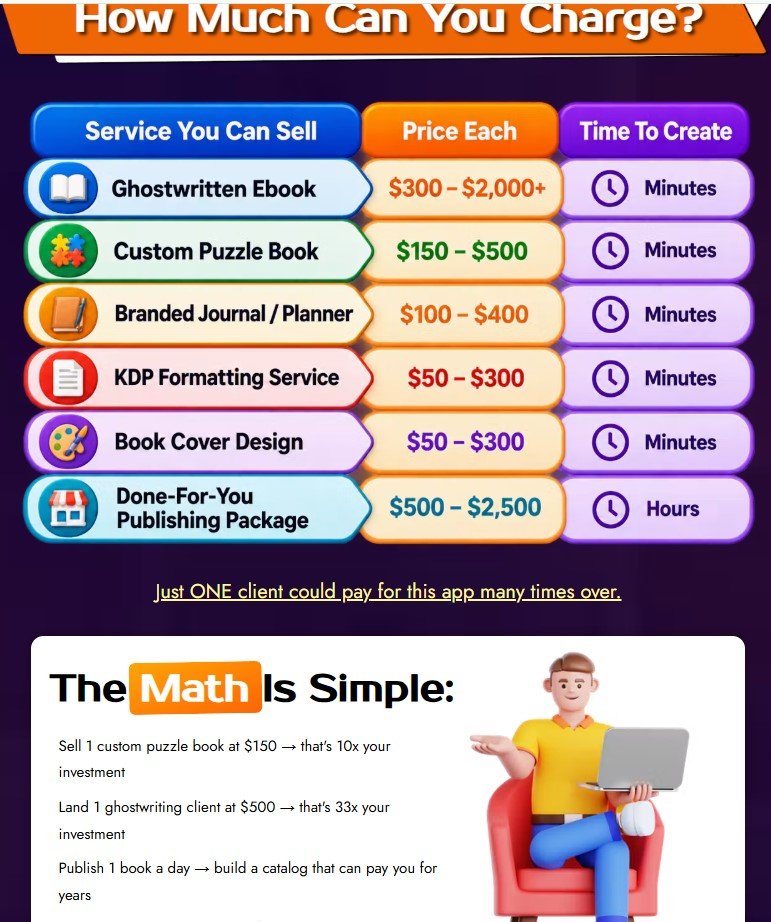
Third, freelance service providers can benefit by using the commercial license to sell book creation services. Many people want to publish puzzle books or lead magnets under their brand name, but they do not want to learn how to use software at all. You can set up a simple gig on Fiverr offering to create custom print-ready puzzle interiors or formatted ebooks, fulfill the orders in twenty minutes using Self-PublishMistry AI, and collect direct client payments without waiting 60 days for Amazon royalty payouts.
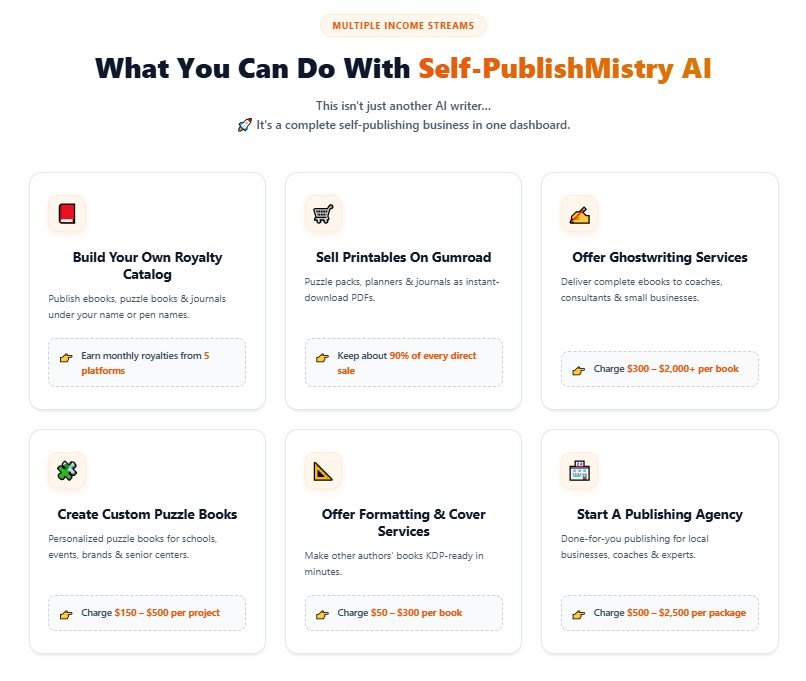
Fourth, niche website owners and bloggers will benefit from the Gumroad and EPUB workflows. If you already have an audience interested in gardening, personal finance, fitness, or parenting, you can use this tool to rapidly create printable planners, activity packs, and short instructional ebooks to sell directly to your followers at 90%+ profit margins.

Final Verdict
After a thorough evaluation of its features, workflows, and market positioning, Self-PublishMistry AI proves to be a highly practical, cost-effective production suite for entry-level and intermediate self-publishers.
It is important to approach this product with realistic, grounded expectations. No software will automatically make you rich just by clicking a button and uploading raw files without thought. The self-publishing marketplaces on Amazon KDP, IngramSpark, and Draft2Digital reward publishers who do proper niche research, care about reader experience, and put effort into customizing their covers and interiors.
When viewed through the lens of a production utility, Self-PublishMistry AI delivers strong value. Its ability to calculate puzzle math, organize answer keys automatically, preset KDP print margins, draft structured ebook chapters, and export both PDFs and EPUBs solves the exact technical hurdles that cause most beginners to quit. Furthermore, the accompanying training provides a clear roadmap for navigating multiple publishing platforms beyond just Amazon.
If you are looking for an affordable way to enter the puzzle book, low-content, and non-fiction ebook markets without getting bogged down by expensive monthly subscriptions or complex graphic design software, Self-PublishMistry AI is a worthwhile investment. My recommendation is to pick up the front-end version to test the workflow, consider the OTO 1 Unlimited upgrade if you plan to publish at volume, and always apply a touch of human creativity to every book you export.
Frequently Asked Questions
Do I need to install any software on my computer to use Self-PublishMistry AI?
No, you do not need to download or install anything. Self-PublishMistry AI is a 100% cloud-based web application. You can access your dashboard from any Windows PC, Mac, Chromebook, or tablet as long as you have a stable internet connection and a modern web browser.
Are the files generated by this software genuinely accepted by Amazon KDP?
Yes. The software is specifically programmed around Amazon KDP’s print-on-demand and Kindle guidelines. It exports flattened, high-resolution PDF files with standard trim sizes and proper margin gutters for paperbacks, as well as standard EPUB files for Kindle ebooks.
Does Amazon KDP allow books created with AI software?
Yes, Amazon KDP permits AI-generated and AI-assisted content on its platform. However, Amazon requires publishers to be transparent. During the KDP upload process, there is a checkbox asking if you used AI tools to generate text or images. You must answer this question honestly according to how you used the software, and you should always review and edit your files to ensure high quality for readers.
Can I create puzzle books where every single puzzle is unique?
Yes. The puzzle engine inside Self-PublishMistry AI uses algorithmic generation rather than static, pre-drawn images. Every time you generate a batch of Sudoku grids, mazes, word searches, or crosswords, the software calculates fresh layouts and generates the exact matching solution pages at the back of your manuscript.
What platforms can I publish on besides Amazon KDP?
Because the software exports standard PDF and universal EPUB files, you own the output files completely and can upload them anywhere. The included training specifically shows you how to publish and sell your books on Amazon KDP, Gumroad, IngramSpark, BookSpace, and Draft2Digital.
Do I have to pay royalties or a percentage of my book sales to the software creator?
No, never. Once you purchase Self-PublishMistry AI, you retain 100% of the rights to the book files you compile and keep 100% of the royalties paid to you by Amazon, Gumroad, or any other retail distributor.
Is the Front-End version enough, or do I need the upgrades?
The $17 Front-End version gives you full access to the core software modules and training, which is plenty to learn the system and publish your first batch of books. However, the Front-End has usage caps on how many assets you can generate. If you plan to build a large catalog of puzzle books or sell freelance services, upgrading to OTO 1 (Unlimited Edition) is recommended so you never hit generation limits.
What if I have never published a book online before?
The product is built specifically with beginners in mind. Aside from the automated formatting presets inside the software, your purchase includes step-by-step video training. These lessons walk you through setting up your publishing accounts, finding profitable keywords, uploading your files properly, and setting your book prices.
Is there a money-back guarantee if the software does not fit my workflow?
Yes, the vendor offers a 30-day money-back guarantee on your purchase. This allows you to log into the dashboard, test the ebook and puzzle generators, review the training videos, and verify that the software meets your personal publishing needs risk-free.