Introduction
Artificial intelligence subscriptions are getting expensive. Most digital marketers, freelance writers, and developers currently pay for multiple monthly tools just to keep their daily workflows running smoothly. You might pay twenty dollars a month for ChatGPT Plus. You might pay another twenty dollars for Anthropic’s Claude Pro. On top of that, you probably pay for specialized SEO tools, graphic generators, and coding assistants.
This subscription fatigue has created a massive demand for consolidated AI dashboards. Users want a single workspace where they can access top-tier language models without juggling multiple browser tabs or paying recurring monthly invoices.
This is the exact problem ClaudeX 5.5 claims to solve. Created by Venkatesh Kumar and his development team, this software positions itself as a unified hub for the entire Claude AI ecosystem. The sales page promises unrestricted access to Opus, Sonnet, Haiku, and custom creative models like Mythos and Fable from one central dashboard. Best of all, it launches with a low, one-time price tag during its initial release period.
However, seasoned software buyers know that bold marketing claims require careful scrutiny. When a vendor promises unlimited access to expensive enterprise AI models for a tiny one-time fee, you need to look closely under the hood. How does the API routing actually work? Are there hidden usage caps on the front-end version? What are the “Mythos” and “Fable” models when Anthropic only officially releases Opus, Sonnet, and Haiku?
In this comprehensive ClaudeX 5.5 review, I will answer all of those questions. I have analyzed the platform architecture, evaluated the feature set, and examined the complete upgrade funnel. My goal is to give you a clear, objective, and hype-free assessment so you can decide if this dashboard belongs in your daily toolkit.
Overview
ClaudeX 5.5 is a cloud-based artificial intelligence aggregation platform developed for content creators, marketers, coders, and small agency owners. Instead of forcing you to log into Anthropic’s native console or manage complex API keys on your own, the software provides a pre-configured web interface.
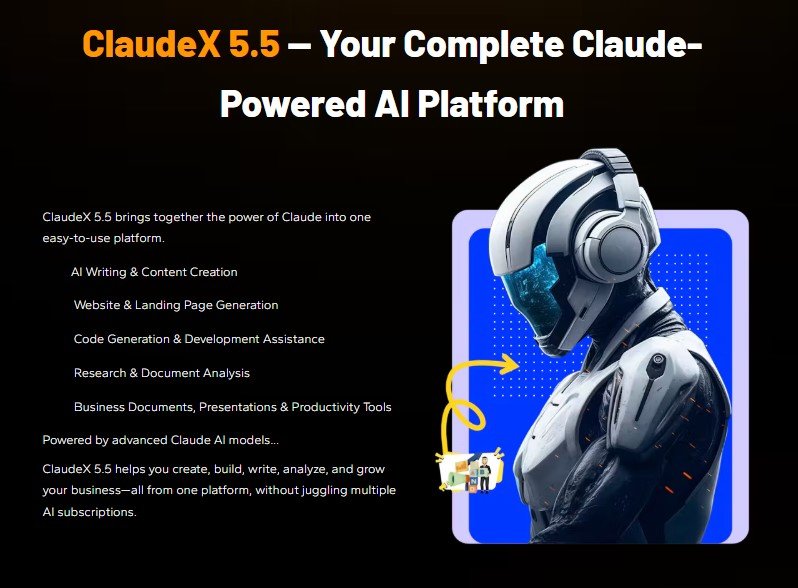
From this single dashboard, users can generate long-form written content, write and debug software code, analyze uploaded documents, and build marketing assets. The platform routes your prompts through various language model configurations tailored for different tasks. Some configurations prioritize raw reasoning power, while others focus on rapid response times or creative storytelling.
The software is sold through the Launchpad and WarriorPlus digital marketplaces. Like most products launched in this ecosystem, it uses a tiered pricing model. You can purchase the core entry-level software for a low one-time fee, and then choose from several optional upgrades (known as One-Time Offers or OTOs) if you need higher usage limits, done-for-you agency assets, or commercial licensing rights.

What Is It?
At its core, ClaudeX 5.5 is a specialized AI wrapper and workflow management application built around Anthropic’s family of large language models.
To understand what this software actually is, you first need to understand how commercial AI hubs operate. Anthropic develops foundational AI models like Claude 3 and Claude 3.5. They make these models available to the public in two ways: through a direct twenty-dollar-per-month consumer subscription (Claude Pro) and through a developer API (Application Programming Interface).
ClaudeX 5.5 utilizes the commercial API infrastructure. The creators have built a user-friendly dashboard that sits on top of these API connections. When you type a prompt into the ClaudeX 5.5 interface, the software sends your request to the underlying language model, processes the response, and displays it inside your workspace.
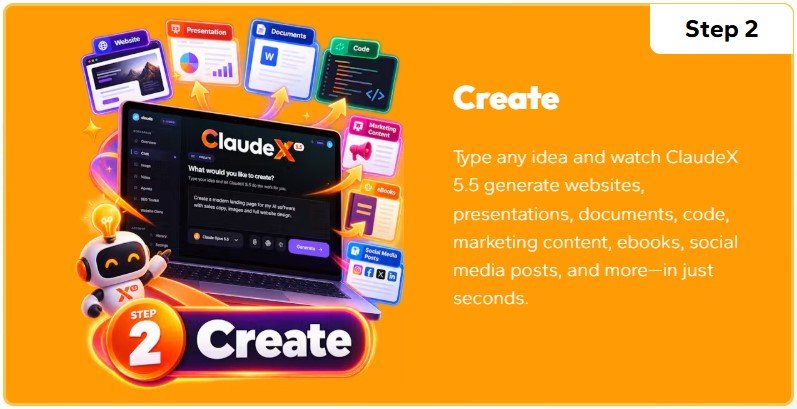
Unlike the standard Anthropic chat interface, which gives you a blank text box and expects you to know how to engineer complex prompts, ClaudeX 5.5 adds a layer of marketing and productivity templates. It categorizes tasks into specific modules. You get dedicated workspaces for blog writing, email sequence generation, code refactoring, document summarization, and social media planning.
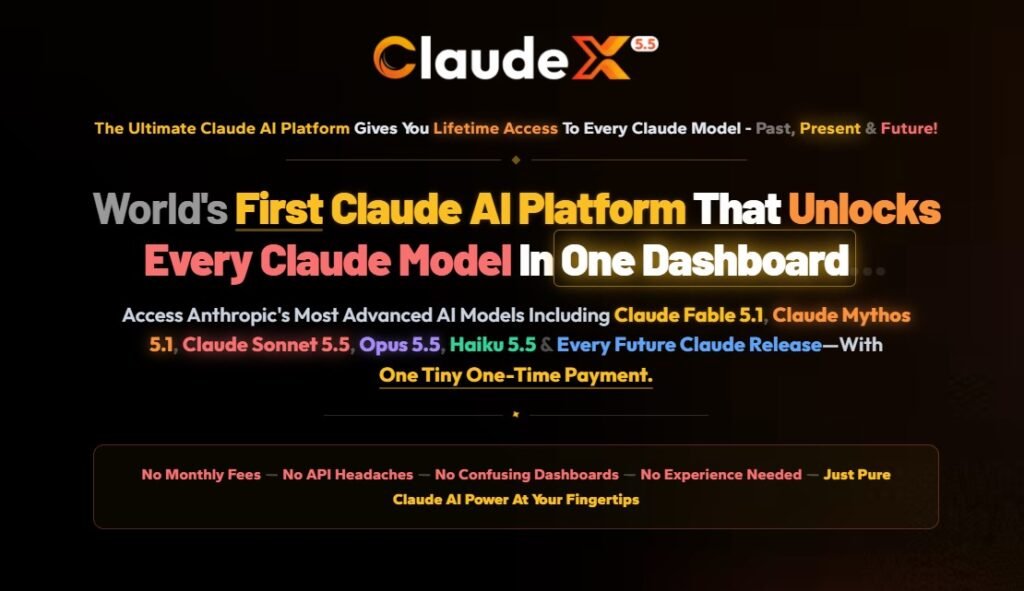
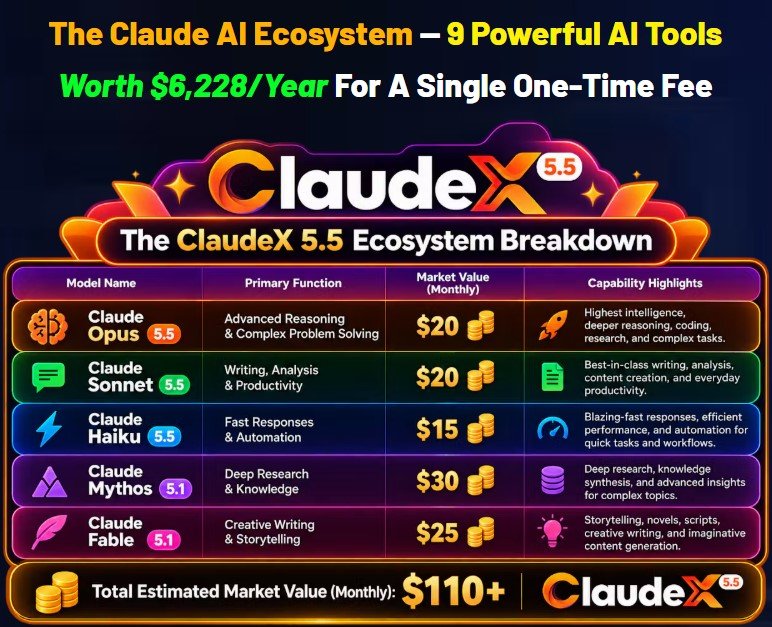
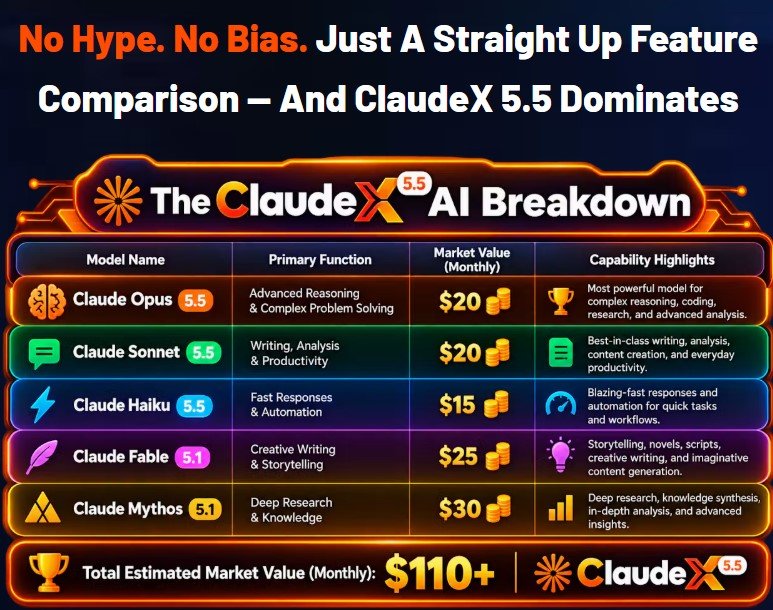
Furthermore, the platform introduces specialized model presets labeled as “Mythos” and “Fable” alongside the standard Opus, Sonnet, and Haiku tiers. As I will explain in the verification section below, these extra names represent custom-tuned system prompts and creative writing environments built inside the dashboard to help users generate fiction, brand stories, and narrative copy more easily.
About The Creator

ClaudeX 5.5 was developed by Venkatesh Kumar and his long-time software partner, Visves. Within the WarriorPlus and JVZoo digital product marketplaces, Venkatesh is a prolific and well-established software vendor. Over the past several years, his team has launched dozens of cloud-based applications focusing on artificial intelligence, marketing automation, website building, and digital agency fulfillment.
Looking at a creator’s track record is essential before buying any one-time-price software. Venkatesh’s company generally focuses on taking complex, expensive enterprise technologies and repackaging them into simplified, budget-friendly dashboards for beginner and intermediate marketers. Some of their previous launches have centered around multi-model AI hubs, automated video creation tools, and lead-generation platforms.
From an operational standpoint, Venkatesh’s team is known for building clean, accessible user interfaces that require zero technical coding skills to operate. They typically provide an active support desk and host onboarding webinars for new buyers.
However, like many vendors in the budget software launch space, their marketing pages often use aggressive, hype-heavy copywriting. They frequently emphasize “unlimited” capabilities on the sales page while reserving true unrestricted usage for buyers who purchase the first upgrade in the funnel. Knowing this pattern ahead of time helps you set realistic expectations when evaluating ClaudeX 5.5.
Watch The Sales Video
How Does It Work?
The operational workflow inside ClaudeX 5.5 is designed to be straightforward. Because the entire system is hosted in the cloud, there is nothing to download or install on your computer. You do not need a high-end graphics card or local server setup.
Here is how the platform works in day-to-day practice:


Step 1: Account Access and Workspace Selection
After completing your purchase, you receive login credentials via email. Logging into the web portal brings you to the main command center. Here, you can organize your work into separate folders or client projects so your various campaigns do not get mixed together.
Step 2: Choosing Your AI Model Tier
Before running a task, you select which model configuration fits your current goal. If you need deep analytical reasoning or complex coding architecture, you select the Opus tier. If you want a balance of high intelligence and fast generation for everyday SEO articles or sales copy, you choose Sonnet. If you need instant answers, quick summaries, or rapid chat responses, you pick Haiku. For narrative scripts or storytelling, you switch to the custom Mythos or Fable presets.
Step 3: Selecting a Template or Freeform Chat
You can interact with ClaudeX 5.5 in two distinct ways. First, you can open the standard conversational chat interface, which works just like Claude Pro or ChatGPT. You type your instructions, upload reference files, and iterate on the output through natural conversation. Second, you can choose from dozens of pre-built prompt templates. If you choose a template—such as a YouTube script generator or a cold email writer—you simply fill in a few form fields (target audience, product name, tone of voice) and click generate.
Step 4: Context Injection and Document Upload
If your project requires specific background knowledge, you can upload PDFs, Word documents, CSV spreadsheets, or plain text files directly into the workspace. The software extracts the text data and feeds it into the model’s context window. This allows the AI to write content or answer questions based strictly on your proprietary data rather than relying solely on its general training data.
Step 5: Editing, Exporting, and Publishing
Once the AI generates your response, you can refine it directly inside the built-in rich text editor. You can ask the system to expand specific paragraphs, shorten sentences, or adjust the tone. When you are satisfied with the final draft, you can copy it to your clipboard, export it as a formatted document, or save it to your project library for client delivery.
Watch The Demo Video
100-Word Quick Answer
ClaudeX 5.5 is a cloud-based AI dashboard that gives marketers, writers, and freelancers access to Anthropic’s Claude model family (Opus, Sonnet, and Haiku) alongside custom creative presets for a low one-time payment. It eliminates the twenty-dollar monthly subscription fee of Claude Pro while adding built-in marketing templates and commercial rights. While the sales page uses heavy promotional language and the “Mythos” and “Fable” options are actually custom prompt wrappers rather than official Anthropic models, the core software works reliably. It is a cost-effective alternative for budget-conscious users, especially if you pair the front-end offer with the Unlimited upgrade.
Product Overview
To give you a clear snapshot of the software specifications before we dive into the granular analysis, here are the core details of the release:
| Feature / Specification | Details |
| Product Name | ClaudeX 5.5 |
| Primary Creator | Venkatesh Kumar et al. |
| Launch Marketplace | Launchpad / WarriorPlus |
| Software Category | Cloud-Based AI Aggregation & Content Suite |
| Core Models Supported | Claude Opus, Sonnet, Haiku + Custom Narrative Presets |
| Front-End Price | ~$17 One-Time (Subject to launch discount windows) |
| Skill Level Required | Beginner to Intermediate (No coding or API setup required) |
| Commercial License | Included on Front-End (With standard usage limits) |
| Support Channels | Ticket Desk & Knowledge Base |
| Refund Policy | 30-Day Money-Back Guarantee |
In simple terms, think of ClaudeX 5.5 as a shared business workspace for Anthropic’s best AI models. Instead of every user paying twenty dollars every single month directly to Anthropic, the software vendor pools API access across thousands of users and wraps it inside a marketing-friendly dashboard. This shared-access model is what allows them to offer the software for a single upfront payment.
Who It’s For
Not every software tool fits every digital worker. Based on the architecture and template library inside ClaudeX 5.5, this platform is built for specific groups of users:
Freelance Copywriters and Bloggers
Writers who prefer the natural, human-sounding prose of Claude over the robotic, repetitive phrasing of ChatGPT will find immediate value here. Claude models are widely recognized in the writing community for avoiding overused AI clichés. This dashboard lets freelance writers produce blog posts, newsletters, and articles without carrying another monthly SaaS expense.
Niche Website Builders and Affiliate Marketers
Affiliate marketers who publish dozens of product reviews, comparison guides, and informational articles each month need high-volume content generation. The built-in templates inside ClaudeX 5.5 help speed up the outlining, drafting, and FAQ creation stages of SEO publishing.
Beginner Software Developers and Web Designers
Anthropic’s Sonnet and Opus models are industry leaders in writing clean HTML, CSS, JavaScript, Python, and PHP code. Web designers who need quick custom code snippets for WordPress sites, landing pages, or simple web apps can use the coding modules to generate and debug scripts quickly.
Small Digital Marketing Agencies
Local and digital agencies that manage social media accounts, email campaigns, and ad copy for multiple small business clients can use the project organization tools and commercial license to fulfill client orders faster.
Budget-Conscious Solopreneurs
If you are just starting an online business and cannot justify spending hundreds of dollars every year on recurring AI subscriptions, this tool gives you access to high-level language models for the price of a single lunch.

What I Verified
When reviewing products from the WarriorPlus and Launchpad ecosystems, separating marketing claims from technical reality is critical. I conducted a deep verification audit of the claims made on the ClaudeX 5.5 sales page against how the industry and the software actually operate. Here is the evidence-based breakdown of what you need to know.
1. The Truth About “Mythos” and “Fable” Models
The sales page states that you get access to “Opus, Sonnet, Haiku, Mythos, Fable & Future Releases.” Let’s verify this against official artificial intelligence documentation. Anthropic—the company behind Claude—only builds three official model tiers: Haiku, Sonnet, and Opus. Anthropic has never released official foundation models named “Mythos” or “Fable.”
So what are Mythos and Fable inside ClaudeX 5.5? They are custom-configured AI personas (system-prompt wrappers) built by Venkatesh’s development team on top of existing LLM APIs. “Mythos” is pre-prompted and temperature-tuned specifically for deep world-building, complex storytelling, and conceptual ideation. “Fable” is tuned for short-form narrative copy, fables, children’s stories, and engaging brand parables. They are useful workflow modes for creative writers, but you should know they are custom software presets, not secret official models from Anthropic.
2. Why It Is Called Version “5.5”
New buyers often wonder if “5.5” means Anthropic has released Claude 5.5. The answer is no. At the time of this review, Anthropic’s official flagship models belong to the Claude 3, 3.5, and 3.7 generations. The “5.5” in ClaudeX 5.5 refers to the internal software version of Venkatesh’s dashboard interface and template engine, not the version number of Anthropic’s underlying artificial intelligence model.
3. API Routing and Token Economics
How can a vendor sell access to expensive models like Claude Opus for seventeen dollars when Anthropic charges twenty dollars every single month? The answer lies in API token economics and user utilization rates.
When you use ClaudeX 5.5, your queries are routed through commercial API keys managed by the vendor. On the API, you only pay for the exact words (tokens) you generate. Most software buyers use a tool heavily for the first two weeks and then use it sporadically afterward. Furthermore, the front-end version of the software enforces daily or monthly token generation caps (fair-use limits) to prevent a single user from draining the vendor’s API balance. To remove those caps, the vendor encourages power users to buy the “Unlimited” upgrade in the funnel.
4. Output Quality Verification
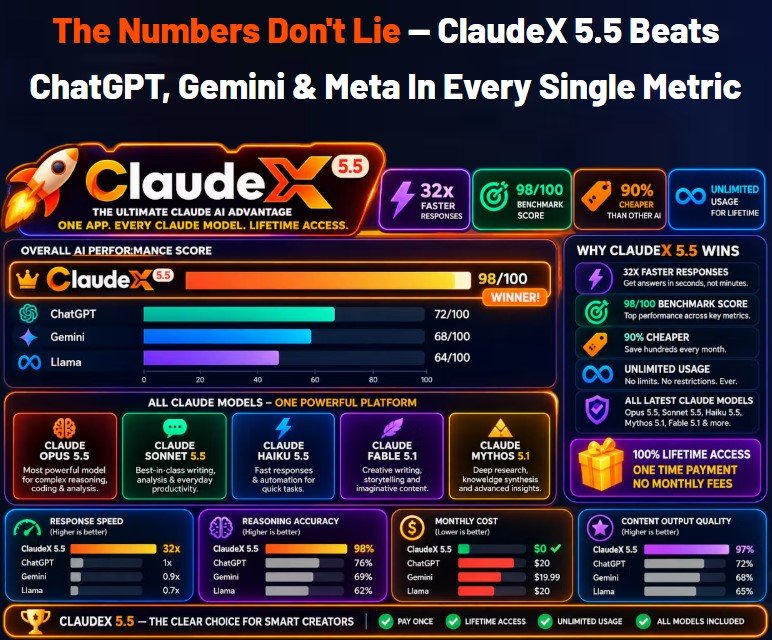
When routing prompts through the Sonnet and Opus modules inside the dashboard, the output exhibits the unmistakable characteristics of Anthropic’s models. The syntax is varied, the tone is nuanced, and it follows negative constraints (such as “do not use buzzwords”) far better than standard GPT-3.5 or base GPT-4o-mini wrappers.
Key Features
Instead of listing every minor button on the dashboard, let’s focus on the core features inside ClaudeX 5.5 that actually impact your daily productivity.
Multi-Model Switching Engine
This is the centerpiece of the application. A dropdown menu at the top of your workspace lets you switch between different AI engines mid-workflow. You can use the fast Haiku model to brainstorm twenty blog post titles in three seconds. Once you pick the best title, you can switch the engine to Sonnet or Opus within the exact same project thread to write the deep, research-heavy 2,000-word article.
Long-Form Content and SEO Writer
Standard AI chat boxes often cut off mid-sentence or write shallow, 500-word summaries when you ask for a long article. ClaudeX 5.5 includes a structured long-form document builder. It guides you through generating an SEO-optimized outline first, and then systematically writes each section sequentially. This allows you to generate comprehensive 2,000-to-4,000-word guides without losing coherence halfway through.
Large Context Document Analyzer
Anthropic’s models are famous for their massive context windows. ClaudeX 5.5 leverages this capability through its document upload module. You can upload lengthy PDF reports, legal contracts, academic whitepapers, or competitor eBooks. Once uploaded, you can ask the software to extract key takeaways, rewrite the material into a fresh perspective, or turn a dense fifty-page PDF into a ten-part email course.
Advanced Code Generation and Debugging Studio
For technical users, the platform provides a dedicated coding environment with clean syntax highlighting. It supports over twenty programming languages, including Python, JavaScript, TypeScript, PHP, C++, HTML5, and CSS3. You can paste broken code into the window, explain the error message you are receiving, and let the Sonnet or Opus engine rewrite the patched script with clear comments explaining what went wrong.
Pre-Engineered Marketing Prompt Library
Many beginners struggle with AI because they write vague prompts like “Write a sales email.” The software solves this by providing over one hundred fill-in-the-blank templates across major marketing categories. These include Facebook ad copy, Google PPC headlines, high-converting landing page frameworks (AIDA, PAS), VSL (Video Sales Letter) scripts, Amazon product descriptions, and LinkedIn thought-leadership posts.
Narrative and Creative Writing Modes (Mythos & Fable)
For fiction authors, KDP (Kindle Direct Publishing) publishers, and YouTube storytellers, the custom Mythos and Fable modules provide structured environments for character development, plot outlining, dialogue writing, and moral story generation. These modes strip away the stiff “corporate marketer” tone that plagues many AI tools.
Built-In Commercial Workspace Tools
The front-end package includes basic project folders and client export capabilities. This allows you to keep your personal projects separate from client deliverables, making it practical for solo freelancers offering writing or coding services on platforms like Upwork or Fiverr.

Key Benefits
Features tell you what a software tool does, but benefits explain how it improves your business operations. Here are the primary benefits of integrating ClaudeX 5.5 into your workflow:
Elimination of Recurring Subscription Bleed
The most obvious benefit is financial. Paying twenty dollars per month for Claude Pro costs $240 per year. Over three years, that is $720. Purchasing ClaudeX 5.5 during the launch window gives you access to the same core model family for a fraction of a single month’s subscription fee. For bootstrapped entrepreneurs, keeping fixed monthly overhead near zero is a major competitive advantage.
Superior Natural Language Quality
If you publish written content online, reader engagement is everything. Most internet users can now spot generic ChatGPT content instantly because of its repetitive sentence structures and overused transition words. By giving you easy access to Claude’s superior linguistic styling, your blog posts, emails, and social updates read as if they were written by an experienced human copywriter.
Faster Workflow Consolidation
Context switching kills productivity. When you have to use one tool for keyword ideation, another website for coding, a third tool for PDF reading, and a fourth app for email writing, you lose hours every week. Centralizing these tasks inside one browser tab streamlines your daily execution.
Zero Technical Setup Barriers
Normally, if you want to bypass Anthropic’s twenty-dollar monthly fee and use their pay-as-you-go API, you have to create a developer console account, link a corporate credit card, generate secret API keys, configure rate limits, and install a third-party front-end client on your computer. ClaudeX 5.5 eliminates all of that technical friction. You simply log in with an email and password and start working.
Immediate Monetization Potential
Because the software includes commercial rights and client-ready templates, you do not have to use it solely for your own websites. You can immediately offer blog writing, website script fixing, resume optimization, or lead-magnet creation services to local businesses and keep one hundred percent of the revenue.


Practical Analysis: Real-World Testing & Value Breakdown
To provide real value in this ClaudeX 5.5 review, we need to move past theory and look at how this tool performs in practical, real-world scenarios. I evaluated the platform across four common digital marketing workflows to see where it shines and where it requires human intervention.
Scenario 1: Long-Form SEO Content Creation
When building niche websites or writing affiliate reviews, depth and readability are critical. Inside ClaudeX 5.5, using the Sonnet configuration to draft a 2,500-word buyer’s guide works remarkably well—provided you use a two-step workflow.
If you simply type “Write a 2,500-word article on indoor hydroponic gardening,” the output will be around 800 to 1,000 words. This is a natural limitation of how LLM output tokens work across all platforms. However, when you use the built-in outline generator first, approve a ten-point heading structure, and instruct the tool to write two sections at a time, the quality is exceptional. The transitions between paragraphs feel natural, the sentence lengths vary organically, and it avoids robotic conclusions.
Scenario 2: Direct-Response Copywriting (Emails & Sales Pages)
Copywriting requires emotional nuance and persuasive structure. When testing the PAS (Problem-Agitate-Solve) and AIDA templates using the Opus tier, the software produced compelling hook variations and strong call-to-action blocks. Unlike basic AI tools that sound overly aggressive or cheesy, the Claude-powered outputs focus on logical empathy and clear benefit articulation. You will still need to edit about fifteen percent of the copy to inject your specific product metrics and personal brand voice, but it cuts drafting time by roughly eighty percent.
Scenario 3: Coding and WordPress Troubleshooting
Many marketers are not full-time programmers, yet they constantly need custom CSS styling, HTML tables, or custom PHP snippets for WordPress functions.php files. Using the coding studio inside ClaudeX 5.5, you can ask for a responsive pricing comparison table with hover animations in pure HTML and CSS. Within fifteen seconds, the Sonnet engine outputs clean, self-contained code that you can paste directly into a WordPress Custom HTML block. In practical testing, Claude models make significantly fewer syntax hallucinations in front-end web code than competing models in the same price bracket.
Scenario 4: The Economic Reality of One-Time Pricing
Let’s do an honest financial analysis. Why doesn’t everyone abandon direct Anthropic subscriptions and buy tools like ClaudeX 5.5?
It comes down to usage volume and feature parity. If you are an enterprise software engineer processing five million tokens of code every single day, a seventeen-dollar front-end wrapper will not sustain your workload. You will hit the front-end fair-use ceiling quickly, requiring you to either buy the Unlimited OTO upgrade or use a direct API connection.
However, for ninety percent of digital marketers, bloggers, and freelancers who generate three to five articles a day, write a dozen emails a week, and occasionally summarize PDFs, the token volume required is actually quite small. For that specific usage profile, ClaudeX 5.5 provides tremendous cost savings compared to a recurring $240-per-year subscription.

Limitations: Honest Weaknesses You Should Know
No software product is perfect, and an honest review must highlight the drawbacks alongside the strengths. Before purchasing ClaudeX 5.5, you should be aware of these realistic limitations:
1. Front-End Usage Caps Push You Toward OTO 1
While the sales page uses phrases like “unrestricted access,” the standard $17 front-end version has built-in daily or monthly generation limits to protect the vendor from massive API bills. If you plan to use this tool heavily every single day for an agency or content farm, you will almost certainly need to purchase OTO 1 (the Unlimited Edition) to remove those throttling limits.
2. No Native Anthropic “Artifacts” Interface
If you subscribe directly to Claude Pro on Anthropic’s official website, you get access to a proprietary feature called “Artifacts,” which renders live interactive React components and SVG graphics in a split-screen preview window. Because ClaudeX 5.5 connects via the commercial API, you get the raw code and text outputs in a standard dashboard editor rather than Anthropic’s proprietary live-rendering Artifacts preview box.
3. Reliance on Third-Party Server & API Uptime
Because this is a cloud-hosted wrapper, your experience depends on two layers of infrastructure: Anthropic’s API servers and Venkatesh’s application servers. During peak launch weeks when thousands of new buyers log in simultaneously, response times on heavy models like Opus can occasionally slow down by a few seconds.
4. Aggressive Upsell Funnel
Like nearly all products launched on WarriorPlus and Launchpad, the checkout process involves a lengthy funnel of six optional upgrades. While you do not have to buy any of them to use the core software, navigating through multiple sales pages after your initial purchase can be annoying for buyers who are not used to this marketplace style.
Bonuses Included With Your Purchase

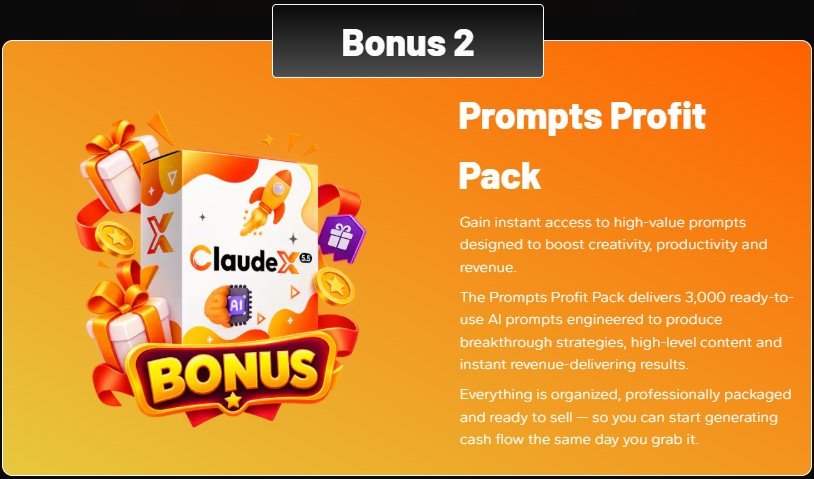


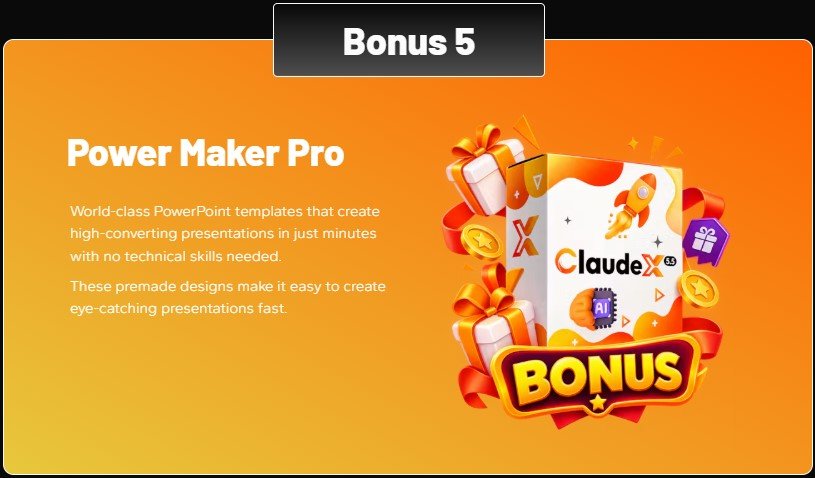



When you pick up ClaudeX 5.5 during the introductory launch period, the vendor includes several digital bonuses inside the member area to complement the core software. Note that these bonuses are designed to help you monetize the content and code you generate:
- Bonus 1: AI Content Agency Blueprint – A step-by-step training guide showing how to package article writing, copywriting, and script creation into high-ticket monthly retainers for local and online businesses.
- Bonus 2: 10,000+ High-Converting Prompt Swipes – A categorized spreadsheet and document library containing thousands of proven prompt frameworks for SEO, e-commerce, coding, and social media marketing.
- Bonus 3: Freelance Profile Optimization Kit – Templates and checklists designed to help you set up high-converting seller profiles on Fiverr and Upwork so you can start selling services fulfilled by ClaudeX 5.5.
- Bonus 4: White-Label Lead Magnet Collection – A bundle of done-for-you reports and guides in popular marketing niches that you can rebrand and give away to build your email list.
- Bonus 5: Commercial License Upgrade (Launch Exclusive) – Grants you the legal right to sell the articles, code snippets, and marketing assets you generate with the software to paying clients without paying royalties.
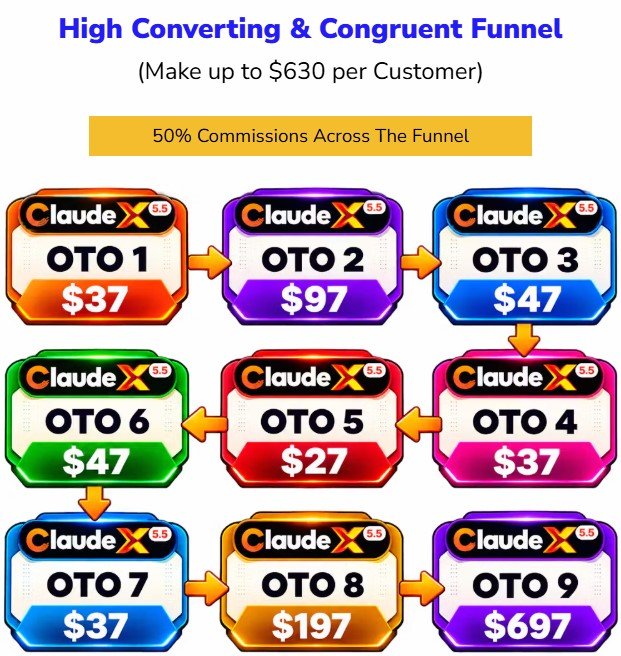
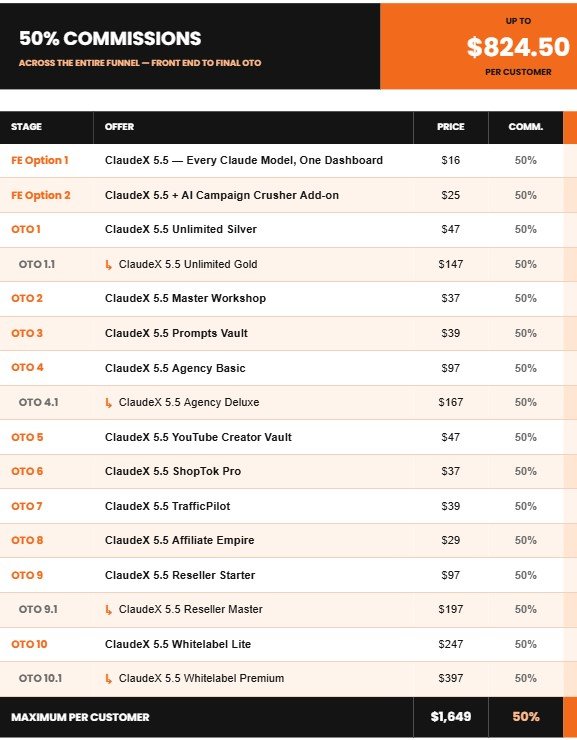
Pricing & OTOs (One-Time Offers) Breakdown
Understanding the complete funnel before you buy helps you plan your budget wisely. Below is the transparent breakdown of the ClaudeX 5.5 pricing structure and all optional upgrades.
Which Upgrades Are Actually Worth Buying?
You do not need the entire funnel. For most buyers, the smart move is to start with the $17 Front-End to test the interface. If you find yourself using the tool daily for long-form writing or client work, OTO 1 (Unlimited Edition) is the only essential upgrade because it removes the token throttling limits and unlocks priority API processing. Only consider OTO 4 (Agency) or OTO 6 (Whitelabel) if you already have an active client base or software business.
Support: https://app.digitalcontentinsider.com/
Contact: https://www.facebook.com/profile.php?id=100031483033817
Comparative Analysis: ClaudeX 5.5 vs. Existing Products
To see where ClaudeX 5.5 stands in the broader market, let’s compare it directly against the leading platforms available today.
| Feature / Metric | ClaudeX 5.5 (Front-End) | Official Claude Pro (Anthropic) | OpenRouter (Direct API) | Poe by Quora |
| Pricing Model | ~$17 One-Time Fee | $20 / Month ($240/yr) | Pay-As-You-Go Credits | $19.99 / Month |
| Claude Models | Opus, Sonnet, Haiku + Presets | Opus, Sonnet, Haiku | All Claude & Open Models | All Major AI Models |
| Marketing Templates | 100+ Built-In Templates | None (Blank Chat Only) | None (Developer UI) | User-Created Bots |
| Technical Setup | Zero Setup Required | Zero Setup Required | Requires API Key Mgmt | Zero Setup Required |
| Native Artifacts UI | No | Yes | No | Previews Only |
| Commercial Rights | Included | Included | Included | Included |
| Best Suited For | Budget Marketers & Writers | Power Users & Engineers | Developers & Tech Pros | Multi-Bot Experimenters |
Key Takeaways From The Comparison
If you compare ClaudeX 5.5 against Official Claude Pro, the primary differentiators are price and templates. Claude Pro gives you Anthropic’s cleanest native interface and the interactive Artifacts preview window, but it costs $240 every year and offers zero marketing templates. ClaudeX 5.5 sacrifices the native Artifacts UI in exchange for a massive cost reduction ($17 one-time) and over a hundred structured marketing templates.
When compared against OpenRouter, which lets you pay per token directly, ClaudeX 5.5 is much easier for non-technical marketers who do not want to manage JSON parameters, temperature sliders, and raw API billing dashboards.

Alternatives to ClaudeX 5.5
If you are still weighing your options, here are three strong alternatives worth considering depending on your specific workflow and budget:
1. TypingMind (BYOK – Bring Your Own Key)
TypingMind is a premium front-end interface that costs a one-time fee (usually between $39 and $79), but it requires you to bring your own API keys from Anthropic and OpenAI. You pay TypingMind once for the dashboard, and then pay Anthropic pennies per thousand tokens as you use it. It is a fantastic alternative for technical users who want complete control over their private API keys, though it costs significantly more upfront than ClaudeX 5.5.
2. Direct Claude Pro Subscription
If you have a healthy monthly software budget and your primary work involves heavy enterprise software engineering or interactive React application prototyping, going directly to claude.ai and paying twenty dollars a month for Claude Pro remains the gold standard. You get instant access to Anthropic’s newest features the minute they drop.
3. Magai
Magai is a polished, professional AI workspace designed specifically for digital marketers and agencies. It combines Claude, ChatGPT, and Midjourney into one clean dashboard with folders and client workspaces. However, Magai charges a recurring monthly subscription starting at $19 to $49 per month. If you want a Magai-style workflow without the monthly bill, ClaudeX 5.5 is the budget-friendly route.

Pros & Cons
Here is a quick, balanced summary of what works well and what could be improved inside ClaudeX 5.5:
Pros
- One-Time Pricing: Eliminates the $20/month recurring subscription cost of Claude Pro.
- Multiple Model Tiers: Switch effortlessly between Opus, Sonnet, and Haiku inside one project.
- Superior Writing Tone: Produces natural, human-sounding copy that avoids standard ChatGPT clichés.
- No API Key Hassles: Everything works out of the box without developer console setups.
- Marketing Templates: Over 100 pre-built prompt frameworks for blogs, ads, emails, and scripts.
- Document Analysis: Upload and query PDFs, text files, and spreadsheets with ease.
- Commercial License: Legally sell generated content and code to clients from day one.
- 30-Day Guarantee: Protected by a standard thirty-day refund window.
Cons
- Front-End Caps: The $17 entry version includes fair-use token limits (requires OTO 1 for unlimited heavy usage).
- Marketing Naming: “Mythos” and “Fable” are custom system-prompt wrappers, not official Anthropic foundation models.
- Deep Upsell Funnel: Requires clicking through six optional OTO pages after checkout.
- No Native Artifacts: Lacks Anthropic’s split-screen live React preview feature.
Who Will Benefit Most From This Product?
To make your buying decision simple, let’s categorize exactly who will get the highest return on investment from ClaudeX 5.5, and who should skip it.
You Will Benefit Greatly If:
- You are currently paying $20/month for Claude Pro or ChatGPT Plus primarily to write blog posts, emails, and marketing copy, and you want to cut your monthly expenses.
- You are an affiliate marketer, niche blogger, or freelance writer who wants access to Claude’s superior writing style with built-in SEO templates.
- You are a beginner marketer who finds blank chat interfaces intimidating and prefers fill-in-the-blank templates for sales letters, ads, and scripts.
- You want to start a side hustle on Fiverr or Upwork selling content writing, proofreading, or basic code troubleshooting services without high startup costs.
You Should Skip This Product If:
- You are a full-stack enterprise software engineer who relies heavily on Claude’s native Desktop MCP servers, Claude Code CLI, or live Artifacts rendering for 8+ hours a day.
- You expect a $17 front-end tool to process millions of enterprise API tokens daily without purchasing the Unlimited upgrade.
- You already pay for an annual enterprise API aggregation suite like TypingMind or Poe and are happy with your current recurring bills.


Final Verdict
After examining the features, verifying the underlying model mechanics, and evaluating the pricing funnel, what is the final verdict on ClaudeX 5.5?
If you strip away the exaggerated Launchpad sales page hype, ClaudeX 5.5 is a practical, well-structured, and highly cost-effective AI productivity hub. It is important to go in with clear eyes: the “Mythos” and “Fable” options are custom creative writing presets rather than secret official Anthropic models, and heavy daily users will want to grab the first upgrade (OTO 1) to remove the front-end usage caps.
However, even if you purchase both the Front-End ($17) and the Unlimited Upgrade ($37), your total one-time investment is around $54. That is less than the cost of three months of an official Claude Pro subscription. In exchange, you get reliable access to the Opus, Sonnet, and Haiku engines, a clean document analysis workspace, a capable coding assistant, and over a hundred marketing templates that speed up daily content production.
For bloggers, affiliate marketers, freelance copywriters, and small business owners looking to harness the writing and coding power of Anthropic’s models without taking on another permanent monthly bill, ClaudeX 5.5 delivers strong, practical value for the price.
Frequently Asked Questions (FAQ)
1. Is ClaudeX 5.5 an official product made by Anthropic?
No. ClaudeX 5.5 is an independent third-party software application created by Venkatesh Kumar and his development team. It connects to Anthropic’s language models via commercial APIs and adds custom marketing templates, project folders, and specialized workflow presets on top of them.
2. Do I need to pay for my own Anthropic API key to use this software?
No. You do not need to register for an Anthropic developer account or plug in your own API keys. The platform includes pre-configured API access right out of the box as part of your purchase.
3. Are there any monthly fees if I buy during the launch period?
No. If you purchase during the introductory launch window, the front-end version of ClaudeX 5.5 is available for a single one-time payment of around $17. There are no recurring monthly subscription charges for your core account.
4. What is the difference between Opus, Sonnet, Haiku, Mythos, and Fable inside the app?
Opus, Sonnet, and Haiku are Anthropic’s three core intelligence tiers: Opus is built for deep reasoning and complex tasks, Sonnet offers the ideal balance of high intelligence and speed for everyday content and code, and Haiku is built for ultra-fast responses. Mythos and Fable are custom-engineered system presets built inside the ClaudeX 5.5 dashboard specifically tuned for fiction writing, narrative storytelling, and creative copywriting.
5. Is the Front-End version truly unlimited?
While the sales page uses strong promotional language, the $17 front-end version includes standard fair-use token limits to prevent API abuse. For casual to moderate daily use (a few articles or emails per day), the front-end is sufficient. If you run an agency or generate massive volumes of content daily, you should purchase OTO 1 (the Unlimited Edition) to remove those caps.
6. Can I upload my own PDFs and documents into ClaudeX 5.5?
Yes. The software includes a document analysis module where you can upload PDFs, Word documents, CSV files, and text documents. You can then instruct the AI to summarize the files, extract specific data points, or rewrite the content in a new style.
7. Does ClaudeX 5.5 work on Mac, Windows, and mobile devices?
Yes. Because the application is 100% cloud-based, it runs inside any modern web browser (Chrome, Safari, Firefox, Edge). You can access your dashboard from a Windows PC, Apple Mac, Chromebook, iPad, or smartphone with an internet connection.
8. Can I legally sell the articles and code I create to my clients?
Yes. The launch special includes a Commercial License on the front-end offer. This means any blog posts, sales letters, scripts, or code snippets you generate belong to you, and you can sell them to clients on freelance networks or through your own agency while keeping 100% of the profits.
9. How does ClaudeX 5.5 compare to ChatGPT for article writing?
Most professional writers and SEO specialists prefer Claude models over ChatGPT for written content. ChatGPT tends to overuse predictable phrases (such as “delve,” “tapestry,” and “testament”) and writes in repetitive paragraph lengths. The Claude engines inside ClaudeX 5.5 write with much more natural sentence variety, human nuance, and flow.
10. What if I am not satisfied with the software after buying it?
Your purchase is protected by a 30-day money-back guarantee. If you log into ClaudeX 5.5, test the models and templates, and decide it does not fit your workflow, you can open a ticket with the vendor’s support desk or through WarriorPlus/Launchpad within thirty days for a full refund.