Introduction: AI Agency Engine

Every week, a new course promises that anyone can start a business from a laptop. Most of them stay vague about the actual work. They talk about freedom and income, but they rarely explain who pays, what the buyer receives, or how the first sale happens.
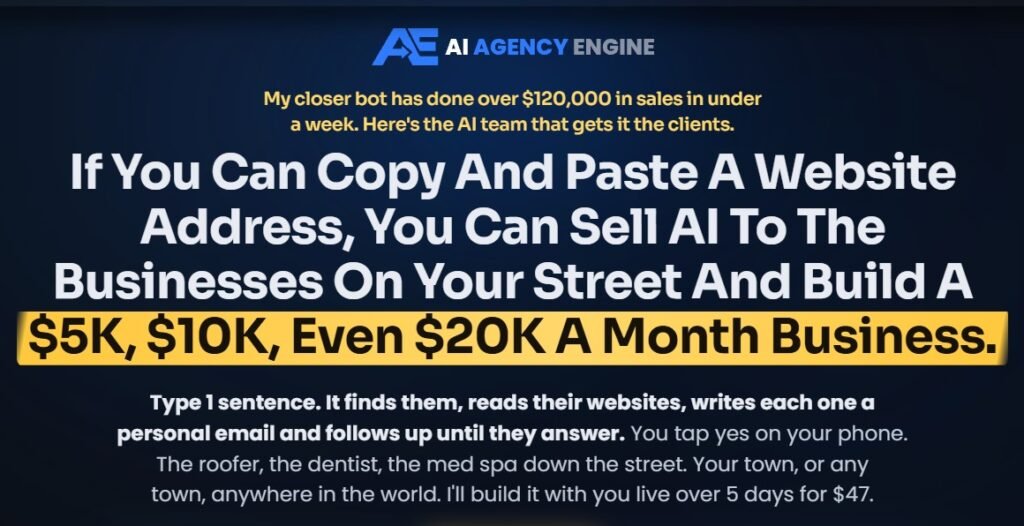
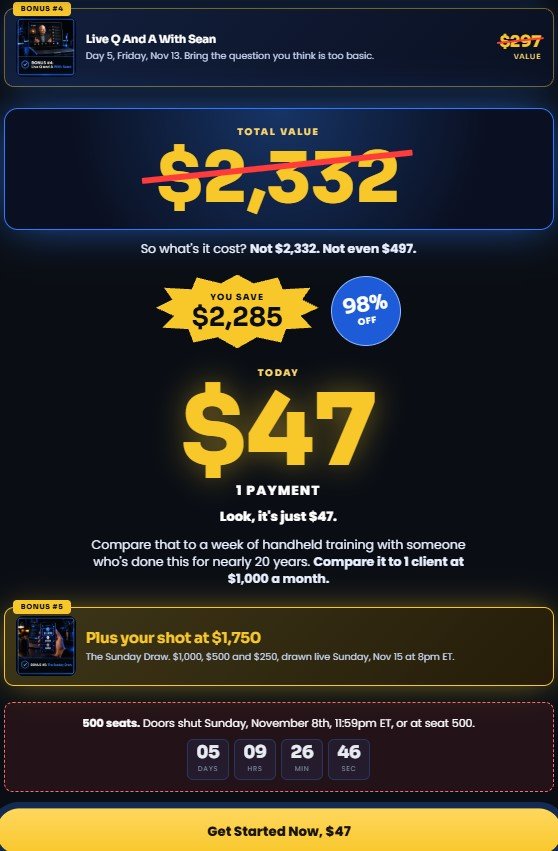
The AI Agency Engine takes a narrower approach. Its sales page says that if you can copy and paste a website address, you can sell AI lead generation services to businesses in your area. It names the buyers: roofers, dentists, and med spa owners. It names the service: automated outreach and follow-up. It names the price, $47, and the format, a five-day live masterclass.
Specific claims are easier to examine than vague ones. That is why this offer deserves a closer look. In this review, I explain what the product is, who created it, how the system is described as working, what it costs, and where it may fall short. I also explain who should consider it and who should skip it.
My goal is to give you enough detail to make your own decision. I am not trying to sell you on the course, and I am not trying to scare you away from it. By the end, you should know what you would be buying, what it would cost in time and money, and what you would still need to figure out on your own.
Keep one point in mind throughout. Results from any online business training depend on effort, skill, local market conditions, and persistence. The income figures on the sales page should be read as targets, not guarantees. I return to this point several times because it matters more than any single feature.
Overview: AI Agency Engine
The AI Agency Engine is a digital training product sold through JVZoo, a long-running online marketplace for digital products. JVZoo is widely used for courses, software, and marketing tools. Products there are usually sold directly by the creator, and other marketers can promote them as affiliates in exchange for commissions.
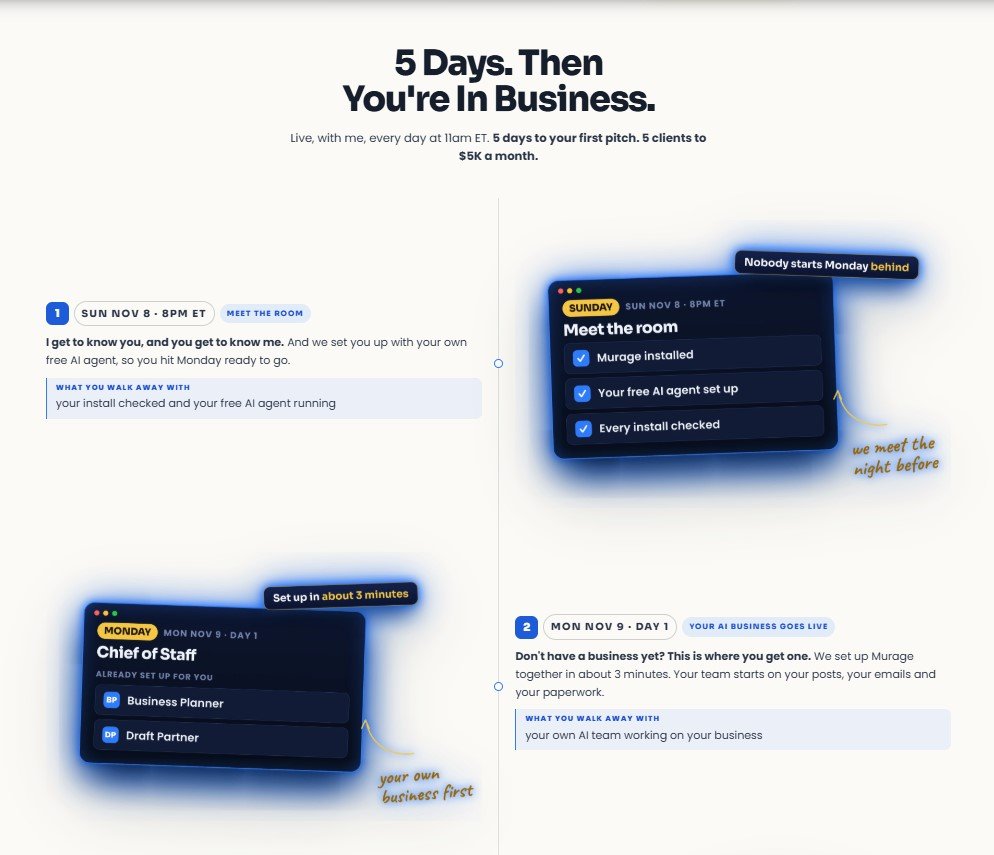
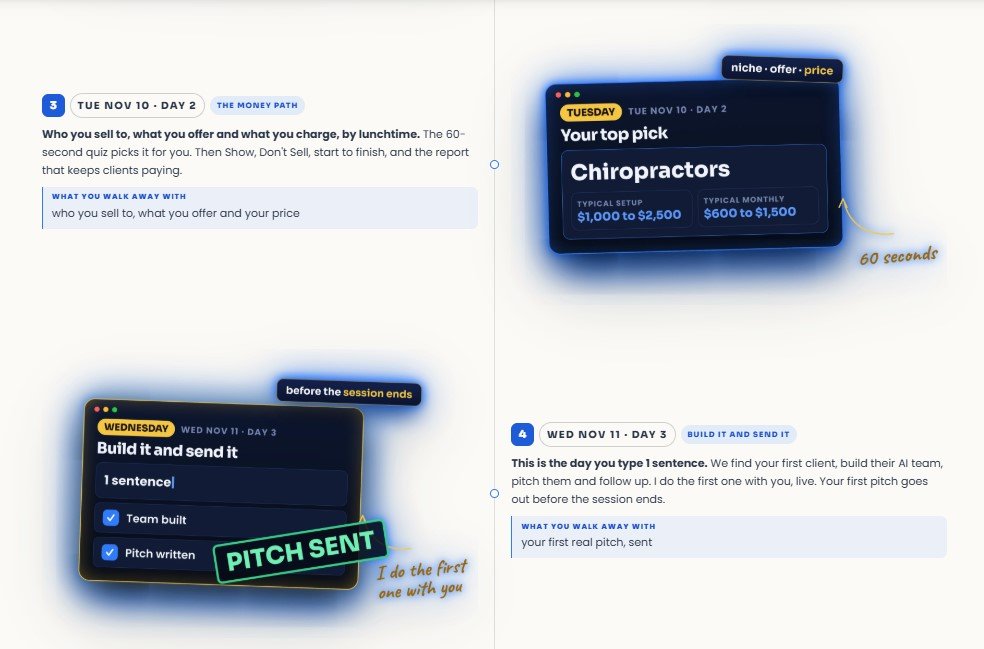
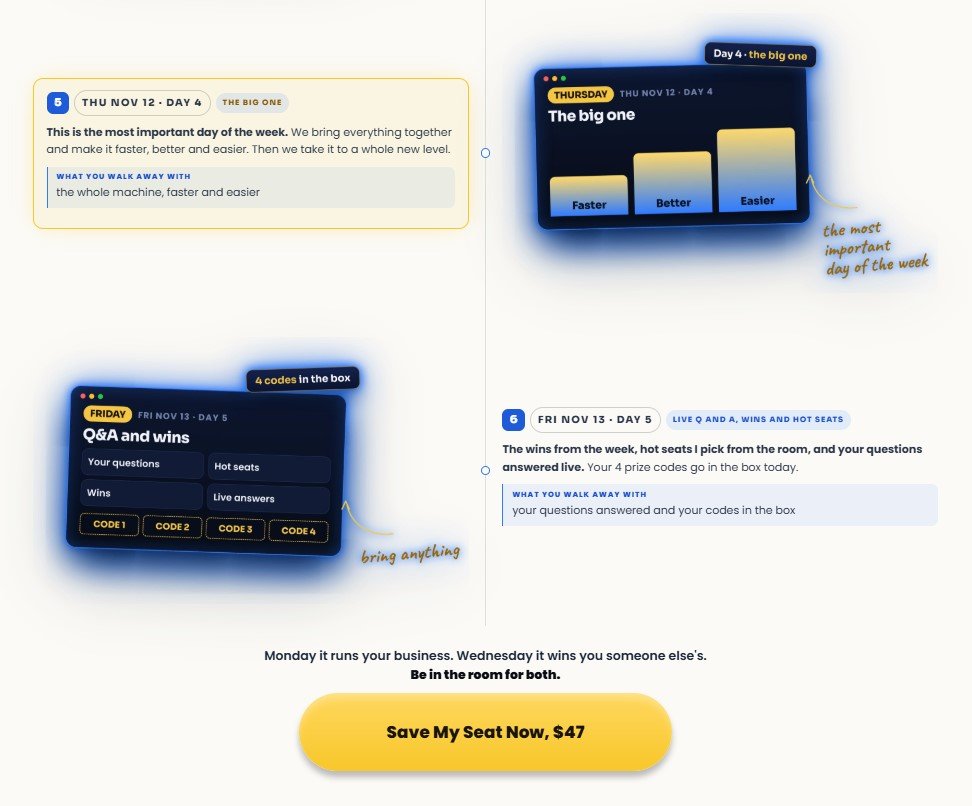
The product is structured as a five-day live masterclass. According to the sales page, creator Sean Donahoe will walk students through building an AI-powered agency step by step. The copy says he will build the system live with participants during the five days, rather than only describing it in a recorded lecture.
The core promise is a business model. You do not need to create your own product. You do not need a computer science background, according to the sales copy. Instead, you sell a service to local businesses. That service is automated lead generation and outreach, powered by AI.
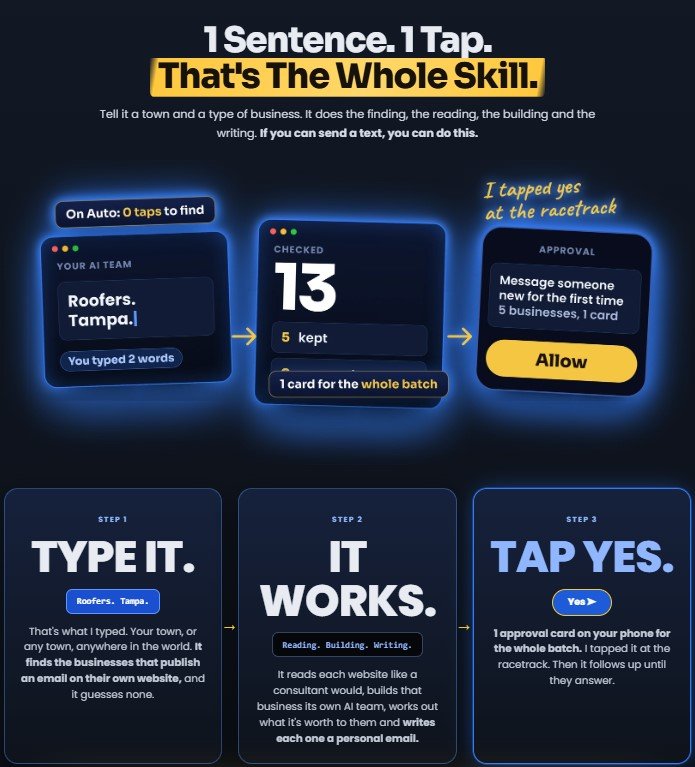
The sales page describes the workflow in plain terms. It finds prospects. It reads their websites. It writes each one a personal email. It follows up until the prospect answers. When someone says yes, you get a notification on your phone. The copy sums this up in one line: you tap yes on your phone.
The $47 entry price is a major part of the appeal. Low-cost entry offers are common in online business education. They lower the barrier to buying, and they often lead to upsells after checkout. I cover those upsells in the pricing section, because they can change the total cost substantially.
Overall, the offer is easy to understand. The harder question is whether the system works as described and whether a beginner can turn it into steady income.

What Is the AI Agency Engine?
At its simplest, the AI Agency Engine is a training program. It teaches people how to run a small AI-based agency. An agency, in this context, is a service business. You find clients, deliver a service, and get paid for it.
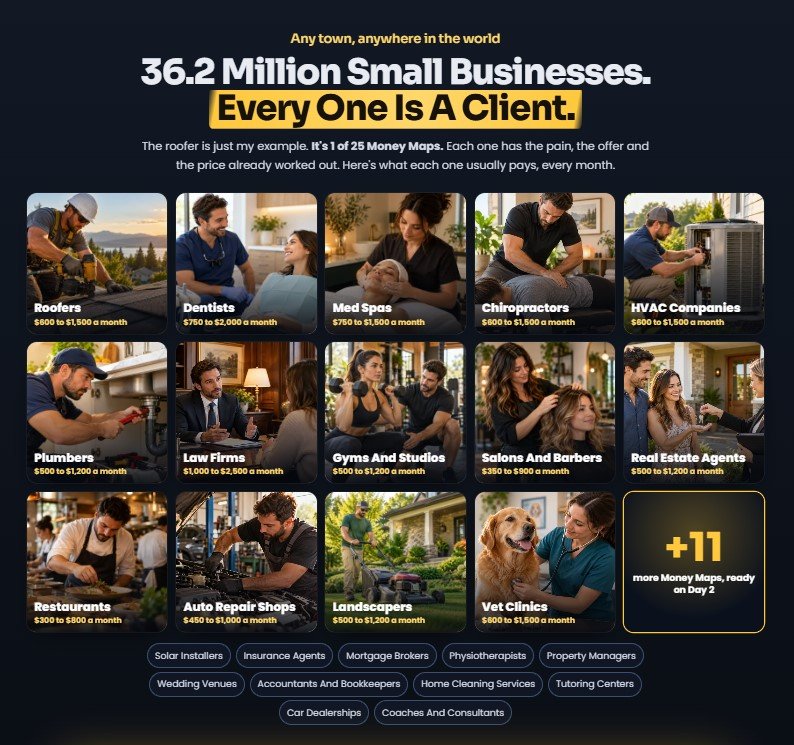
In this case, the service is outreach. The business would contact local companies on behalf of their owners, present an AI-driven solution, and try to start a conversation. The clients would be businesses that depend on steady inquiries and bookings, such as roofing contractors, dental practices, and medical spas.
The sales page frames the offer around three components. The first is the system, a workflow that handles prospecting and email follow-up. The second is the skill, the knowledge needed to sell this service to local owners. The third is the support that comes with live training, including the chance to ask questions as the system is built.
It helps to separate the training from the tools behind it. The AI Agency Engine appears to be a course and a process rather than a single program you install and forget. The tools that do the work are the ones the course shows you how to set up. Based on the sales copy, you will likely connect several services together to make the workflow run.
That distinction matters for your budget. You may need to pay for third-party AI tools, email sending platforms, data sources, automation software, or web hosting in addition to the course fee. The sales copy does not list every recurring cost, so you should ask about these expenses before you buy.
This model is common in online education. The course teaches a method. The student combines that method with tools they already own or purchase separately. The final cost is the course price plus the operating costs of the system.
Watch The Sales Video
About the Creator: Sean Donahoe

The product is presented under the name Sean Donahoe. He is the creator and host of the masterclass, and the sales page positions him as the person who will build the system with students over the five days.
I want to be careful here. Based on the sales copy alone, I cannot confirm a detailed professional history for Sean Donahoe. A sales page naturally highlights the strongest points of a creator’s story, so it should not be your only source. A trustworthy review should explain who the creator is, what they have done, and whether that experience can be checked independently.
Before buying from any online creator, take a few practical steps. Search for a consistent public presence on platforms such as YouTube, LinkedIn, or X. Look at how long the person has been publicly teaching business topics and whether their content stays consistent over time. Search for independent reviews from buyers, not just testimonials pulled from the sales page. Check whether the creator has released other products on JVZoo and how those products were rated. Look for signs that they explain both what worked and what did not.
Teaching a skill is different from proving that you can earn from it. The strongest sign of a credible educator is transparency. They show their process, explain their assumptions, and admit the limits of what they teach. A creator who only shows success stories and avoids discussing failure should prompt more questions, not fewer.
A creator’s track record matters more than the pitch. A compelling pitch can make almost any system sound simple. Real experience shows up in the details: how to handle rejection, how to price services, how to manage clients who want constant changes, and how to avoid getting flagged for sending too many emails. If the masterclass covers those details clearly, that is a good sign. If it stays at the level of promises, be cautious.
How Does the AI Agency Engine Work?
The sales page describes a workflow with four main stages. Understanding each stage helps you judge whether the system is realistic.
Stage one: the system finds prospects. A tool searches for local businesses in a chosen area and industry. The sales page uses examples like roofers, dentists, and med spas. This targeting is the foundation of the business. Local service businesses rely on phone calls, bookings, and online visibility, so they are natural candidates for lead generation and follow-up. A weak prospect list produces weak results, no matter how good the emails are.
Stage two: the system reads each prospect’s website. This is where the AI plays its most visible role. The tool reviews the business website and pulls out details that can be used in outreach. These might include the services offered, the location, the tone of the site, obvious gaps such as missing contact forms or slow pages, or recent updates. This step is what allows outreach to feel personal rather than generic. A message that mentions a specific service or a real detail from the website is far more likely to get attention than a template with a name swapped in.
Stage three: the system writes a personal email. Using information from the website, the AI drafts a message for each prospect. The sales copy describes these as personal emails. In practice, personalization can range from light to deep. A light version uses the business name and city. A deeper version references a specific page, service, or problem. The goal is to explain briefly how an AI-based service could help the business win more customers, book more appointments, or respond to leads faster.
Stage four: the system follows up until the prospect replies. Most cold outreach gets no reply to the first message. The sales copy says the system continues to follow up automatically until the prospect responds. This turns a single email into a sequence. Follow-up is often where replies come from, because busy owners may simply need a reminder. When a prospect responds with interest, the conversation moves to you.
It is important to notice what the system does not appear to do, at least according to the copy. Closing the sale, scoping the work, delivering the service, and managing the client relationship still require human effort. The phrase “you tap yes on your phone” suggests a quick approval loop. In real agency work, a positive reply is usually the start of a conversation. It may involve a call, a proposal, a trial, a contract, and onboarding.
Treat the automation as a way to fill your pipeline, not as a guarantee that money arrives on its own. The system may save time on repetitive tasks. It does not remove the need to sell, deliver, and support clients well.
Watch The Demo Video
100-Word Quick Answer
The AI Agency Engine is a $47 five-day live masterclass created by Sean Donahoe. It teaches you how to start an AI-powered agency that offers automated outreach and lead generation to local businesses. The system is described as finding prospects, reading their websites, writing personal emails, and following up until they reply. The sales page promotes monthly incomes of $5,000 to $20,000, but these are targets, not guarantees. The product may suit beginners who want a clear business model and live guidance. It will not replace effort in sales, delivery, and client management. Check the current price, bonuses, and refund terms before you buy.
Product Overview: AI Agency Engine
The AI Agency Engine is best understood as a starter program for a service business. It packages a business model, a set of tools, and live instruction into one offer. The promise is simple: learn the system, apply it to local businesses, and collect recurring revenue.
The format sets it apart from a typical self-paced course. Five days of live sessions create a deadline and a sense of momentum. Students who prefer structure may find that appealing. Live training also allows real-time questions, which can help when the technical setup gets confusing.
The product is aimed at people who want to start a business without building a product from scratch. Many people struggle with the idea of creating software, courses, or physical goods. Service businesses feel more achievable because they require skills people already use: communication, research, sales, and follow-through.
The pitch also focuses on location. The sales copy says you can work with businesses on your street or in any town, anywhere in the world. Local focus has real advantages. Many small businesses are not targeted by sophisticated outreach, and local owners often respond to a clear, relevant offer. A local niche can also make it easier to build case studies and referrals.
The product’s weakness is tied to its strength. Simplicity is attractive, but simple promises can hide real complexity. Setting up the workflow, keeping emails out of spam folders, handling replies, and closing sales all take skill and time. The masterclass may cover these topics, but a five-day format leaves limited room for deep practice.

Who Is It For?
The AI Agency Engine is not for everyone. It fits some people better than others, and it is important to be honest about that.
It may suit complete beginners who want a clear first step into online business. If you have never run a business, a defined model with a specific customer type can be easier to start than a vague idea. The live format may also help people who learn best by following along.
It may suit people with some sales or marketing experience. If you have worked in sales, customer service, marketing, or recruiting, you already understand how to communicate with prospects. You may get value from the system faster than a total beginner, because you will know how to handle objections and follow up well.
It may suit freelancers and small service providers who want to add a revenue stream. A web designer, bookkeeper, or social media manager may find that cold email outreach extends their current work. Adding an AI-driven lead generation service could help them sell more retainers to existing and new clients.
It may also suit people who are comfortable with technology but do not want to build complex software. The sales copy says no coding is needed. In practice, you will still need to set up accounts, connect tools, and troubleshoot small problems. Basic comfort with apps and online platforms will help a great deal.
On the other hand, the product is likely a poor fit for several groups. People who dislike sales or feel uncomfortable contacting strangers will struggle with the core activity. People who want passive income with no ongoing work should look elsewhere, because any service business requires attention. People who expect quick money without investing time or money in tools should also be cautious. And people who cannot commit to a five-day live schedule may struggle to get full value from the training.
Finally, the product may not suit people in regions with strict cold email rules unless they are willing to learn and follow those rules carefully. Compliance is covered in more detail later in this review.
What the Sales Page Claims and What You Should Verify
This section separates what the sales copy says from what you should confirm yourself. I did not test the live software, and I cannot independently confirm the income claims from the copy alone. Below is what can be assessed now and what still needs hands-on testing before you rely on it.
The offer itself is clear. The sales page names a specific audience, a specific service, a specific price, and a specific format. That clarity is useful. You know what you are being asked to buy, which is more than many business courses offer.
The described workflow is technically plausible. Each step in the sales copy relies on methods that already exist. AI tools can summarize web pages and extract details. Templated email systems can personalize messages using fields pulled from data. Automated sequences can send follow-ups on a schedule. Many cold email outreach platforms and automation tools offer similar features. The basic mechanics are believable. Whether the system performs well in practice is a separate question.
The listed price is $47. Prices change, so confirm the current figure on the live page before purchasing.
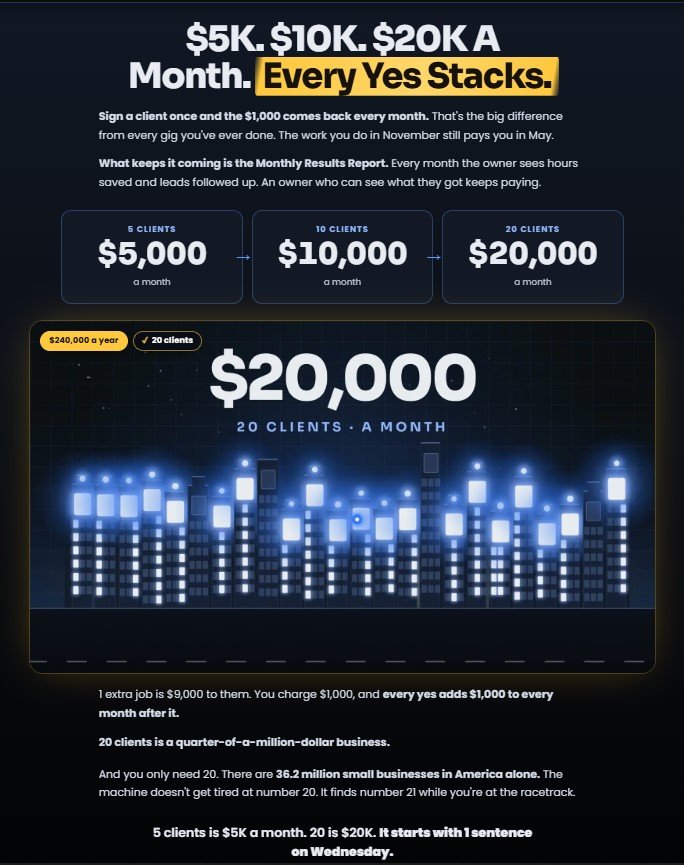
The income claims are unverified. The sales page mentions monthly incomes from $5,000 to $20,000. The copy does not include audited earnings or a breakdown of how many clients or how much outreach produced those figures. Treat these numbers as aspirational. They may be possible for some people, but they are not a reasonable expectation for everyone.
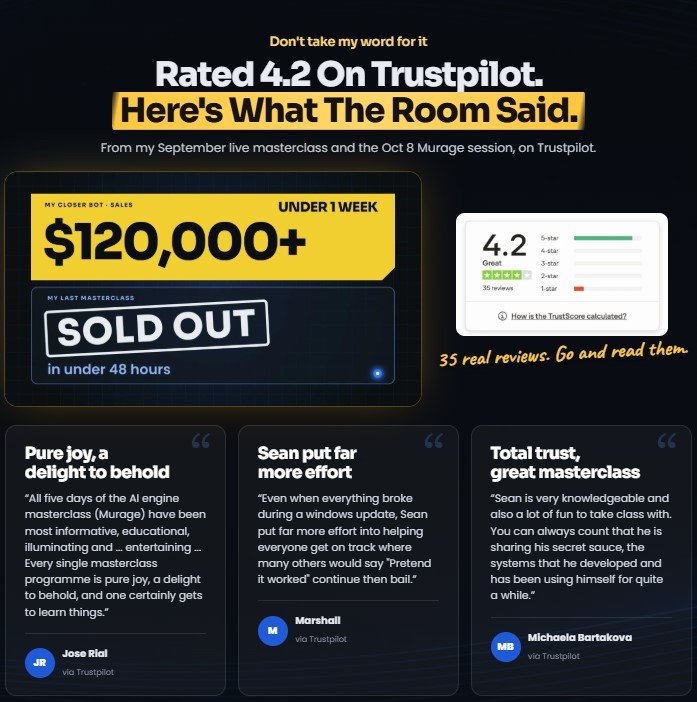
The testimonials cannot be independently confirmed. Sales pages often include reviews and student stories. These help show what the product is meant to deliver, but they are not evidence of typical results. Look for testimonials that describe both wins and difficulties, and look for buyer feedback on third-party platforms.
The guarantee terms need checking. A refund policy matters if the course does not meet your expectations. Read the terms on the live sales page and confirm how refunds are handled, including time limits and conditions.
Your own test is the final check. The most reliable way to evaluate the AI Agency Engine is a small trial. Set up the workflow with a limited prospect list, send a small batch of emails, and track open rates, reply rates, and booked conversations. Measure the time each step takes. If the system produces replies but consumes most of your week, the economics look very different.
Here is a simple checklist to use before and during your evaluation: AI Agency Engine
- Confirm the current price and the full list of OTOs.
- Confirm the refund policy and its time limit.
- Identify every tool you will need and its monthly cost.
- Test the email workflow on a small list.
- Track replies, bookings, and time spent.
- Compare your results with the creator’s claims after 30 days.

Key Features
The sales copy highlights several features. These are the ones that matter most, along with what each means in practice.
Five-day live masterclass. The core of the offer is live training. Live instruction can make a complex setup easier to follow, especially for beginners. It also creates a fixed schedule, which some learners find motivating. Check whether replays are available, because not everyone can attend in real time.
Prospect discovery for local businesses. The system identifies businesses in a chosen area and industry. This is the starting point for every campaign. The quality of this step shapes everything else, so ask how the list is built and how often it needs updating.
Website analysis. The AI reviews each prospect’s website to find details for personalization. In theory, this is one of the most useful features, because it lets outreach reference real information about the business. Its value depends on the quality of the website data and how well the AI interprets it.
Personalized email writing. The system drafts individual emails based on what it finds. Personalization can improve reply rates, but only when the message is relevant and concise. A simple name swap is less effective. Review a sample of generated emails before sending any at scale.
Automated follow-up sequences. The system keeps following up until the prospect responds. Follow-up is one of the most important parts of cold email outreach, since most replies come after the first message. Automation makes persistent follow-up practical, but it also raises the risk of sending too many messages. Set limits on frequency and make sure each message adds value.
Reply notifications. The sales copy suggests you will receive a notification when a prospect says yes. Fast responses tend to create better conversations than delayed ones, so this feature can matter.
Beginner-friendly positioning. The sales copy stresses that you do not need to be technical. Whether that is fully true depends on the tools you use and how much setup is involved. Expect some learning curve, even if the course explains each step.
Key Benefits: AI Agency Engine
The benefits of the AI Agency Engine are easiest to see when you consider what a beginner would otherwise have to figure out alone. Each benefit has a practical side, and each has limits.
A clear business model. One of the biggest problems for new online business owners is deciding what to sell and to whom. This offer answers both questions. The service is outreach. The buyers are local service businesses. That focus can save weeks of confusion.
Low entry cost. At $47, the front-end price is low compared with many business training programs. That makes the initial decision less risky, though the total cost may rise if you buy upsells or pay for tools. The low price is a real benefit, but only if you do not stack additional costs without a plan.
No product creation required. Service businesses avoid many challenges of product creation. You do not need to design software, produce inventory, or build a course. You need to find clients, communicate clearly, and deliver a service. For many people, that is a more realistic starting point.
Learning by doing. Live building shows how each part of the system fits together. Watching a workflow come together in real time can be more useful than reading a long manual. Hands-on practice also reveals problems early.
Scalable structure. Once a process works, it can be repeated across many prospects. Automation lets you contact far more businesses than you could manually. This scalability is the main reason outreach businesses can grow beyond a few hours of work per week. The catch is that scaling without quality control can damage your reputation and your email deliverability.
Transferable skills. Even if the program is not right for you, the skills it teaches apply elsewhere. Prospecting, personalization, follow-up, and client communication are useful in many businesses. Learning to sell a service well is valuable regardless of the tool stack.
Local market focus. Local businesses are often easier to research and understand than distant prospects. You can read their reviews, see how they operate, and learn what their customers care about. That context can make outreach more relevant. It can also make in-person meetings easier if they fit your plan.

Practical Analysis
The most useful way to evaluate the AI Agency Engine is to run the numbers. Income claims are easy to make and hard to judge without figures. A simple model shows what would need to happen for the business to generate meaningful revenue.
Start with the course price. At $47, the front-end cost is small. The bigger costs usually come from software, data, and your time. A realistic budget might include monthly fees for an email sending platform, an AI writing tool, a lead data source, and an automation tool. Those fees vary widely, so add them up before you commit. Your total monthly cost determines how many clients you need to break even.
Now consider revenue. Suppose you charge a local business a monthly fee for outreach management and lead follow-up. The exact price depends on your market, your results, and the level of service you provide. For illustration only, imagine a service priced at $500 per month per client.
At $500 per client, earning $5,000 per month requires ten paying clients. Earning $10,000 per month requires twenty. At $1,000 per client, the same targets require five and ten clients. The income goal depends heavily on price and client volume.
Next, consider the outreach volume needed to win those clients. Cold outreach performance varies widely by industry, list quality, offer, and email deliverability. Many campaigns see low reply rates. For a simple illustration, imagine that 500 prospects receive a sequence of emails, 2 percent reply with interest, and 20 percent of those conversations become paying clients. That produces about 10 interested prospects and 2 clients. At $500 per month, that is $1,000 in monthly recurring revenue.
This example is not a prediction. It shows the scale of the work. To win ten clients from the same funnel, you would need roughly five times as many prospects, or you would need to improve your reply rate, close rate, or price. Each lever requires testing and effort.
The math also explains why early results can be uneven. A campaign may produce no replies for a while, then a burst after a follow-up sequence. It may also produce many replies that never convert. The business can feel slow at the start even when the process is working. That is why a 30-day test is more useful than a single week of experiments.
Time is another part of the analysis. Automation reduces some work, but you will still spend time on list building, reviewing messages, handling replies, scheduling calls, writing proposals, and delivering results. Estimate your weekly hours before you start. If the business requires more time than you can give, the effective hourly return may be low, even if the income looks good on paper.
Finally, consider risk. The downside is limited if the front-end price is your only cost. The downside grows if you buy several upsells, sign up for expensive tools, and then find that outreach does not produce clients. A safer approach is to buy the front end, test the workflow with a small budget, and add paid tools only after you see a signal that the process works.
Limitations
Every honest review should spend real time on weaknesses. The AI Agency Engine has several limitations that buyers should understand before committing.
Income claims are not guaranteed. The sales page uses a range of monthly income figures. These numbers are attractive, but they do not show typical results. Many beginners in online business earn less than expected during their first months, and some earn nothing. Your results depend on your effort, market, skills, and consistency.
Recurring costs add up. The course fee is only part of the total cost. Email platforms, AI tools, data services, automation software, and possibly a domain or sending infrastructure may all require monthly payments. Ask for a complete list before you buy.
Email deliverability is a serious risk. Cold emails can land in spam folders if they are poorly written, sent too quickly, or sent from unprepared domains. Automated systems can make this worse by sending high volumes without enough care. Poor deliverability damages your sending reputation and reduces results for everyone who relies on the same setup.
Compliance rules vary by country. The sales page says the system can work anywhere in the world. Commercial email is regulated differently across jurisdictions. In the United States, the CAN-SPAM Act sets rules for commercial email, including opt-out requirements and accurate sender information. In the United Kingdom and European Union, data protection and electronic communications rules can be stricter, particularly for unsolicited messages to individuals. Canada and Australia have their own anti-spam laws. Before sending any campaign, research the rules that apply to your location and your prospects. Consulting a local professional is wise if you plan to operate at scale.
AI-generated messages can be wrong. The system reads websites and writes emails based on what it finds. Websites can be outdated, poorly written, or missing key information. The AI may misread a business, misstate a service, or produce an awkward sentence. Human review is necessary, especially for high-value prospects.
Cold outreach is not always welcome. Some local owners ignore cold emails entirely. Others prefer phone calls, referrals, or in-person visits. Local service businesses often run on relationships, and an automated message may not match how they buy. Expect a lot of silence before you find the right fit.
Market saturation is growing. Selling AI services to local businesses is a popular idea. As more people pitch similar offers, owners may grow skeptical or tired of generic messages. Differentiation will matter. A vague offer may struggle, while a specific, well-researched offer may stand out.
Sales skills still matter. Automation can start conversations, but it cannot replace good judgment. You will need to qualify leads, handle objections, explain your value, and set expectations. Many people underestimate how much effort closing takes. A course can teach the basics, but practice builds the skill.
The live schedule may be inconvenient. Five days of live sessions require time and attention to time zones. If you cannot attend every session, check whether replays are included and how long they remain available.
Upsells can change the decision. Many digital products use one-time offers after checkout. These can add significant cost. Decide what you need before you see the upsells, and do not feel pressured to buy more than you can use.
Bonuses
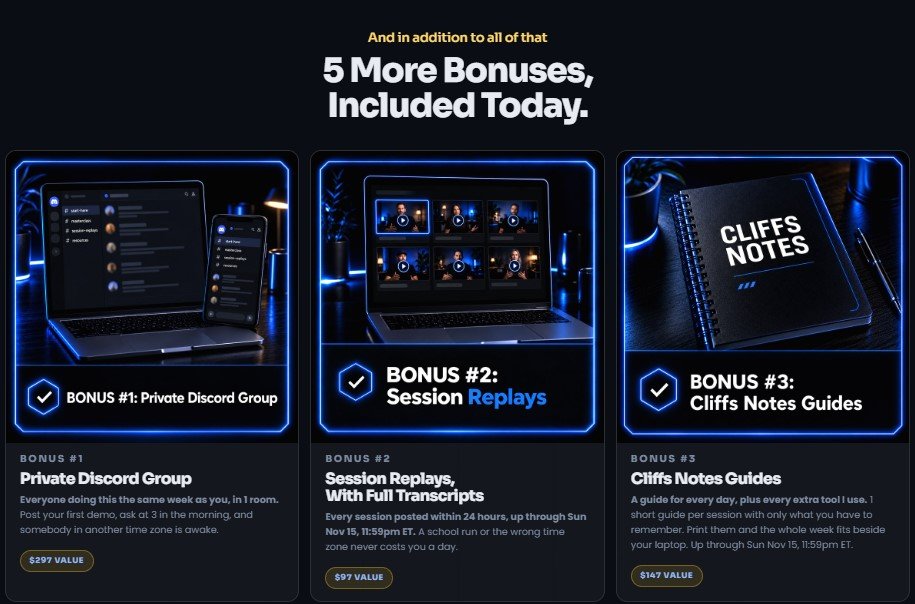
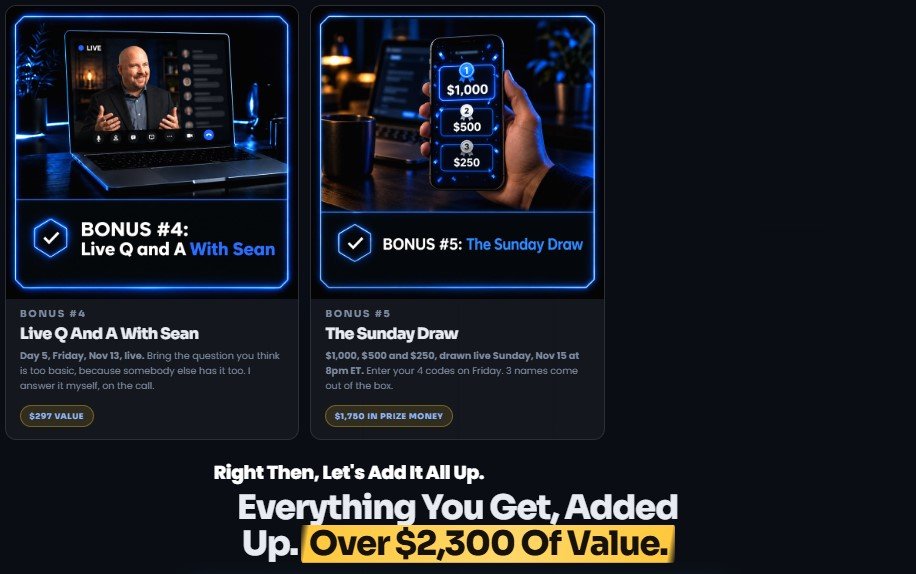
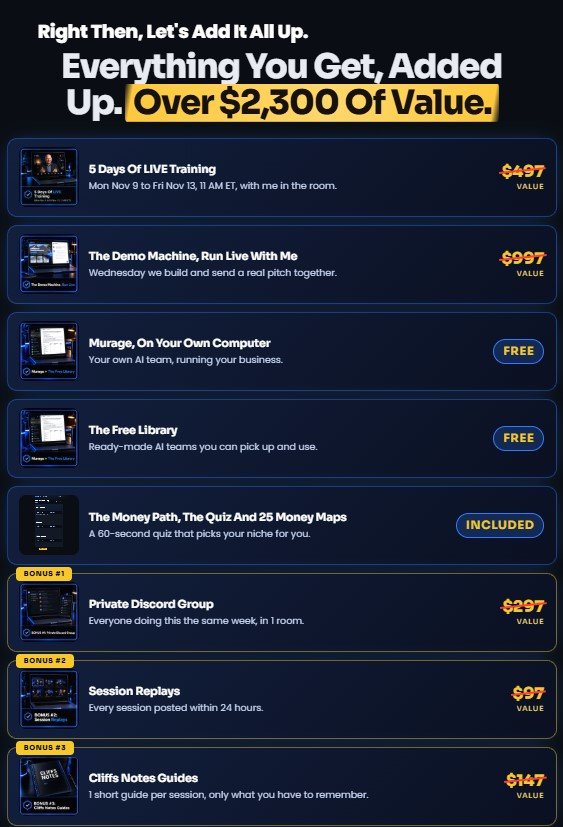
Bonuses are a common part of digital product launches. They are often included to increase the perceived value of the main offer or to encourage buyers to act quickly. The sales copy I reviewed does not describe the bonuses in enough detail for me to report them accurately. Check the live sales page for exact bonus names, descriptions, and deadlines.
When you evaluate bonuses, focus on how useful they are for execution rather than how impressive they sound. Practical bonuses may include email templates, prospect research worksheets, objection-handling scripts, onboarding checklists, or setup guides for tools. These save time and reduce mistakes. Bonuses that promise secret methods or guaranteed results deserve caution.
Also check whether bonuses come with conditions. Some are available only during a limited launch window. Some may require purchasing an upsell. Others may be digital files that are easy to find elsewhere. A bonus is valuable only if it helps you complete the work.
If bonuses matter to your decision, write down what you expect each one to provide. After purchase, compare the delivered materials with that list. This habit can prevent buyer’s remorse and help you judge the real value of the offer.
Pricing & OTOs: AI Agency Engine
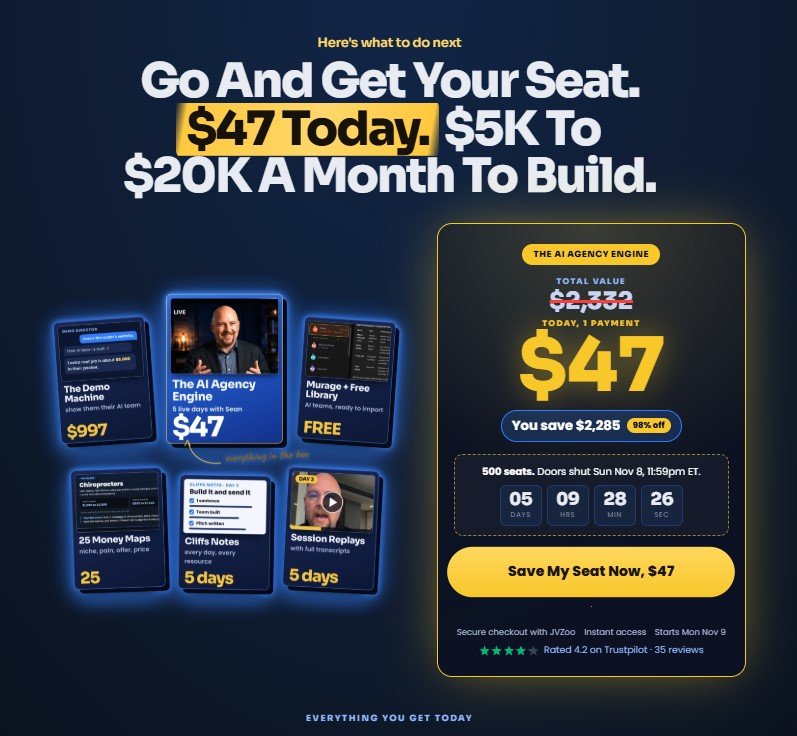
The table below shows the pricing structure as described in the sales copy. Several details could not be confirmed from the copy, so replace the placeholders with exact figures from the live sales page before publishing.
| Offer | Price | What It Includes | Required? |
| AI Agency Engine 5-Day Live Masterclass (Front End) | $47 | Live five-day training with system build walkthrough | Entry offer |
| OTO 1 | [Verify on sales page] | [Verify on sales page] | No |
| OTO 2 | [Verify on sales page] | [Verify on sales page] | No |
| Bonuses | [Verify on sales page] | [Verify on sales page] | No |
| Third-party tools (estimated) | Varies | Email sending, AI writing, data, automation | Likely required |
OTO stands for “one-time offer.” These are presented after you buy the front-end product, often on the next page or in a follow-up email. They are usually more expensive and often promise faster results, advanced training, or additional tools. Some OTOs help certain buyers. Others are unnecessary for beginners.
The safest approach is to buy only the front-end offer first. Complete the training, test the workflow, and see whether the business model fits your situation. If you later find a clear gap that an upsell would fill, decide then. Purchasing under time pressure is one of the most common ways buyers overspend on digital products.
Before buying any OTO, ask a few questions. Does it solve a specific problem you have now? Is the price justified by the value described? Does the refund policy cover upsells? Can you get the same information from a free or lower-cost source? If the answer to most of these is no, skip the offer.
Comparative Analysis
The AI Agency Engine sits in a crowded category. Comparing it with other options shows what you gain and what you give up.
Compared with other AI agency courses, the main differences are price and format. Many courses in this space cost far more than $47 and offer longer curricula, mentorship, or community access. Some higher-priced programs may provide deeper training, but they also carry more financial risk. The advantage here is a low entry cost and a focused five-day structure. The disadvantage is that five days may not be enough time to master every step.
Compared with done-for-you lead generation agencies, this is a training product rather than a service. A done-for-you agency handles outreach for you, usually for a monthly retainer. That option costs more up front and offers less control, but it requires less setup. If you want to learn the business and own the process, the course may fit better. If you want results quickly and do not want to manage the work, the agency model may suit you.
Compared with building a do-it-yourself stack, the course offers guidance. A DIY stack means choosing your own tools, writing your own prompts, designing your own workflow, and figuring out deliverability alone. That approach can be cheaper and more flexible, but it requires more research. The course may save time by giving you a structure to follow. You still need to verify that the tools and methods suit your market.
Compared with free content, the course offers organization. You can find free videos, articles, and forum threads about cold outreach, AI tools, and agency building. Free content can be excellent, but it is scattered and sometimes outdated. A structured course helps you avoid gaps. Still, a motivated learner can gather a surprising amount of practical knowledge for free.
Compared with traditional freelance marketing, the course focuses on a more automated model. Traditional freelancing relies on manual pitching, portfolio building, and referrals. Automation increases volume, but it can reduce the personal touch some clients value. A blended approach, where automation handles first contact and a human handles the conversation, may work best.
Overall, the AI Agency Engine makes the most sense as a low-cost, structured entry point. It is not the cheapest way to learn, and it is not the most comprehensive. Its main value is that it puts a specific business model in front of you and gives you a path to test it.

Alternatives
If the offer does not feel right, several alternatives are worth considering. Each involves trade-offs, and the best choice depends on your budget, skills, and goals.
Build your own outreach stack. You can research cold email platforms, AI writing tools, and automation software on your own. Many offer free trials or lower-cost plans. This approach gives you full control over your tools, but it requires careful research and testing. Start with one small campaign before expanding.
Learn cold outreach from established sales resources. Books, sales training programs, and long-running courses on B2B prospecting teach principles that apply regardless of tool. These resources can improve your copywriting, follow-up strategy, and objection handling. Principles often outlast trends.
Choose a niche service you already understand. If you have experience in a specific field, you may be better off selling a service you can deliver confidently. For example, a former receptionist might offer appointment-booking support to dental offices. Familiar expertise makes sales conversations easier and more credible.
Try a done-for-you model first. If you want to see how lead generation works before running it yourself, hire an agency to run a small campaign for your own business. This shows you what good outreach looks like from the receiving end. It can also teach you about pricing and realistic results.
Start with manual local outreach. Visit local businesses, call them, or send handwritten notes. This approach is slower, but it builds relationships and gives you direct feedback. Many successful local businesses started with manual outreach before adding systems.
Consider a longer-term training program. If you are serious about building an agency, a longer program with mentorship, community support, and detailed case studies may serve you better than a five-day course. Compare total cost, time commitment, and the creator’s track record before enrolling.
Pros & Cons: AI Agency Engine
Pros: AI Agency Engine
- Low front-end price compared with many business courses
- Clear, specific business model focused on local service businesses
- No product creation required
- Live training may help beginners follow along
- Automation can increase outreach volume
- Skills learned are transferable to other sales and marketing work
Cons: AI Agency Engine
- Income claims are not guaranteed and are not independently verified in the sales copy
- Recurring tool costs can add up quickly
- Cold email carries deliverability and compliance risks
- AI-generated messages may need human review
- Five days may not be enough time to master the full process
- Upsells may increase total cost substantially
- Success still depends on sales skill, persistence, and client delivery
Who Will Benefit From This Product?
The AI Agency Engine is most likely to benefit people who fit a few specific profiles.
Complete beginners who want a structured start. If you have been stuck choosing a business model, a clear offer can help you move forward. The live format can make the process feel less overwhelming. You will still need to put in work, but you will have a path to follow.
Sales-minded people looking for a new model. If you have experience in sales, recruiting, or account management, you already know how to communicate with prospects. You can apply that experience to a service business that relies on outreach. Automation can add leverage to skills you already have.
Freelancers and small agency owners. If you already provide a service, outreach can be a natural addition. You could offer AI lead generation alongside your existing work. This can create recurring revenue and help you grow your client base without starting from zero.
Technically comfortable people who want to test an idea. If you enjoy working with apps and online tools, the setup may feel manageable. The product may be a practical way to test whether AI-driven outreach fits your skills and interests.
People with a local network. If you know business owners in your community, you have an advantage. A personal introduction combined with a relevant offer can be more effective than cold outreach alone. The local focus of the product can help you combine automation with relationships.
People who should think twice include those who want guaranteed income, those who dislike selling, and those who cannot invest time or money in tools. The product will not suit anyone who expects results without consistent work.
Final Verdict: AI Agency Engine
The AI Agency Engine is a specific, low-cost entry point into an AI-driven service business. Its strongest feature is clarity. It tells you who to sell to, what to sell, and how the system is meant to work. For beginners who need structure, that clarity can be valuable.
Its weakest feature is the income promise. The monthly figures on the sales page are not guaranteed, and the copy does not offer independent evidence to support them. Results will depend on your effort, your sales skill, your local market, and the quality of your tools and outreach. Some people may do well. Many will need time, testing, and persistence before seeing meaningful income.
The total cost is also more than the front-end price suggests. You will likely need to pay for tools and possibly upsells. Those costs belong in your decision. A business that requires several monthly subscriptions needs enough clients to cover them, and that takes time.
My balanced view is this. The AI Agency Engine may be worth testing at $47 if you are willing to do the work, understand the risks, and verify the terms before buying. It is not a shortcut to wealth, and it should not be treated as one. If you go in expecting a structured starting point rather than guaranteed income, you are more likely to be satisfied with what you receive.
Before you buy, check the live refund policy, confirm all OTOs and bonuses, research the creator’s track record, and plan a small test with a clear budget. If the system produces replies, bookings, and a sustainable workflow within a reasonable period, you will have real evidence to guide your next step. If it does not, you will have learned something useful for a modest cost.
Frequently Asked Questions: AI Agency Engine
Is the AI Agency Engine a scam?
I cannot confirm that from the sales copy alone, and I would avoid labeling any product a scam without evidence. A more useful question is whether the offer is transparent. Check the refund policy, the creator’s public track record, independent buyer feedback, and whether income claims come with clear context. A product that hides its terms or relies only on dramatic promises deserves more caution.
How much does the AI Agency Engine cost?
The sales page lists the front-end masterclass at $47. Additional costs may include upsells, bonuses with conditions, and third-party tools. Confirm the full list of costs on the live sales page, and estimate your monthly tool expenses separately.
Do I need technical skills to use it?
The sales copy says you do not need to be technical. In practice, you will likely set up accounts, connect tools, and troubleshoot minor issues. Basic comfort with apps and online platforms makes the process much easier. Expect a learning curve, even with step-by-step guidance.
Can I really make $5,000 a month with this?
It may be possible for some people, but it is not guaranteed. Reaching $5,000 per month typically requires several paying clients, consistent outreach, reliable delivery, and good client management. The number of clients you need depends on your pricing. Treat the sales page figures as goals to work toward, not promises.
Is the masterclass live or recorded?
According to the sales copy, the masterclass is a five-day live training. Check the live page to see whether replays are included and how long they remain accessible. Live sessions may be most useful if you can attend them in real time.
Is it legal to send cold emails to local businesses?
In many places, B2B cold email is allowed, but the rules depend on where you and your recipients are located. In the United States, CAN-SPAM sets requirements for commercial email. In the UK and EU, data protection and electronic communications rules can be stricter. Canada and Australia have their own anti-spam laws. Research the rules that apply to you, include accurate sender information, and provide a clear way to opt out.
Do I need to pay for other tools?
Most likely, yes. Cold outreach systems usually involve email sending platforms, AI writing tools, data sources, and automation software. Some have free tiers, but serious campaigns often require paid plans. Budget for these tools before you start.
How long does it take to see results?
There is no reliable universal timeline. Some people see replies within the first few weeks, while others need months to find a working message, audience, and offer. A 30-day test with a defined budget and clear metrics gives you a useful early picture.
Is there a refund policy?
The sales page should include refund terms. Read them carefully before purchasing. Pay attention to time limits, conditions, and whether upsells are covered. Save your receipt and any confirmation emails.
Who should avoid this product?
People who dislike sales, want guaranteed passive income, cannot invest in tools, or cannot commit time to a live schedule may find it difficult. Anyone who expects quick results without ongoing work should also reconsider.
How is this different from hiring a lead generation agency?
Hiring an agency means paying someone else to run outreach for you. You get results without building the system yourself, but you pay ongoing fees and have less control. The AI Agency Engine is a training product that teaches you to run the system yourself. It may cost less at the start, but it requires your time and skill.
Can I do this part-time?
Yes, in principle. Many people start service businesses while keeping another job. Part-time work makes the early stages slower, but it also reduces financial pressure. Plan your weekly schedule for prospecting, follow-up, calls, and client delivery.
What should I do before buying?
Check the live sales page for current pricing, OTO details, bonus terms, and the refund policy. Research the creator independently. List all the tools you will need and their monthly costs. Choose a small test budget and a clear success metric, such as reply rate or booked calls within 30 days. Buy the front end first, and consider upsells only after you have tested the core system.
Disclosure: AI Agency Engine
This article contains affiliate links. If you buy through them, I may earn a commission at no extra cost to you. My analysis is based on the sales page copy, and I recommend checking the live offer before you buy.